Your living room holds everything you need for elite fitness—no machines, no memberships, no excuses. Discover how to workout at home without equipment using scientifically proven bodyweight techniques that build real strength. Every rep against your own resistance develops functional power that translates directly to daily life, from carrying groceries to climbing stairs. The best part? You can start today in whatever space you have available, transforming idle moments into transformative results.
Bodyweight training eliminates fitness barriers by requiring zero gear while engaging multiple muscle groups simultaneously. This methodology leverages progressive overload through strategic manipulation of leverage, tempo, and range of motion—proven to deliver professional-grade results. Whether you’re avoiding gym crowds or maximizing time, your body becomes the ultimate training tool. Let’s unlock your living room gym’s full potential with actionable strategies you can implement immediately.
Master Essential Bodyweight Movements for Home Workouts Without Equipment

Push Your Strength Forward
Horizontal pressing movements build chest, shoulder, and triceps power while teaching critical core stability. Start with wall push-ups at a 45-degree angle, focusing on scapular retraction as you lower your chest toward the surface. Progress systematically: move to counter-height incline push-ups, then standard floor variations as strength increases. For targeted development, diamond push-ups emphasize triceps by positioning hands in a narrow triangle, while wide-grip versions maximize chest activation. Pike push-ups—hips elevated in an inverted “V”—build shoulder strength essential for advanced vertical pressing.
Pro Tip: Keep elbows at 45 degrees from your torso during all push variations. This protects shoulder joints while maximizing muscle engagement. Film yourself monthly to ensure your body maintains a rigid plank position without hip sagging.
Master Lower Body Power
Squats and hip hinges develop explosive leg and glute strength using gravity as resistance. Perform air squats by sitting back as if lowering into a chair, keeping your chest proud and weight through your mid-foot. Single-leg variations like Bulgarian split squats (rear foot elevated on a chair) address muscle imbalances while building serious strength. For posterior chain development, glute bridges—lying supine while lifting hips through hip extension—activate your powerhouse muscles with zero equipment.
Daily Lower Body Circuit: Complete 15 air squats, 10 lunges per leg, 20 glute bridges, and a 30-second wall sit. This requires less than 5 minutes but delivers comprehensive lower body development.
Core Stability Without Crunches
True core strength prevents movement rather than creates it. Planks teach your entire midsection to work as a unit—start with 20-second holds, progressing to extended-arm variations. Hollow body holds (lying supine with ribs depressed and legs elevated) build the foundational strength needed for handstands. Pair these with dead bugs: lying on your back, slowly extend opposite arm and leg while maintaining pelvic stability. Avoid traditional crunches—they isolate the rectus abdominis without developing functional core resilience.
Beginner Sequence: 20-second standard plank → 10 dead bugs per side → 15-second side plank each side → 10 superman holds (prone position lifting arms and legs simultaneously).
Build Your First 4-Week Home Workout Without Equipment Program
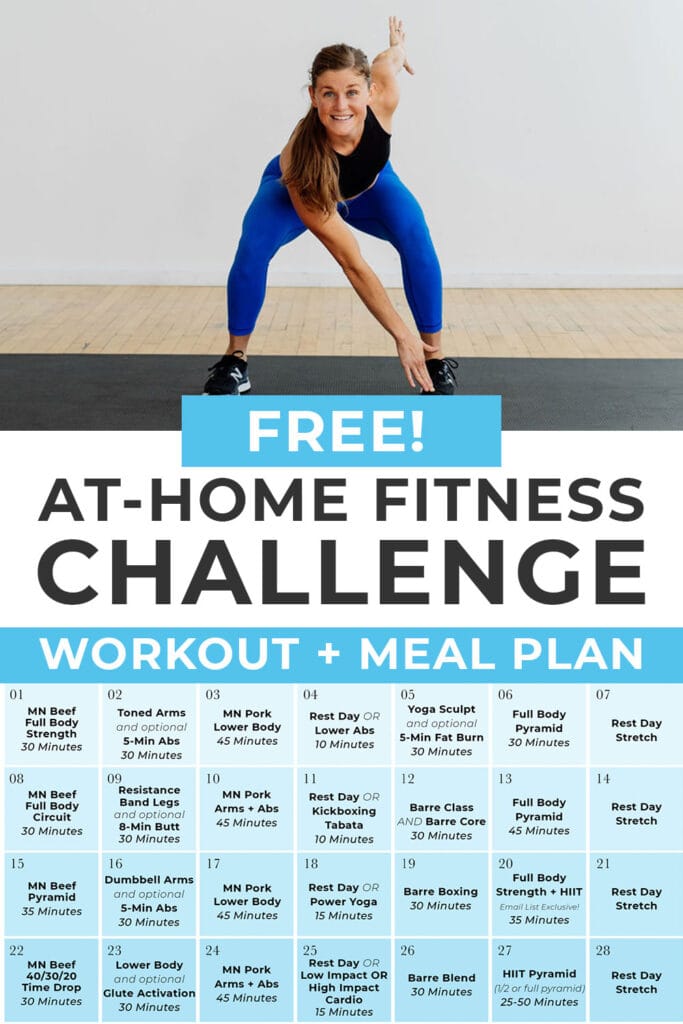
Week 1-2: Foundation Phase
Frequency: 3 sessions weekly (Monday/Wednesday/Friday)
Structure: Full-body circuits with controlled tempo
Volume: 2 rounds of 8-12 reps per exercise
Sample Session:
– Wall push-ups: 10 reps (3-second lowering phase)
– Chair squats: 15 reps (sit-to-stand from kitchen chair)
– Knee planks: 20 seconds
– Bird-dogs: 8 reps per side
Focus on perfect form over speed. Rest 90 seconds between circuits. This phase builds movement patterns while minimizing soreness—critical for long-term consistency.
Week 3-4: Progression Push
Frequency: 3-4 sessions weekly
Structure: Movement pattern splits
Volume: 3 rounds of 12-15 reps
Push Day Example:
– Standard push-ups: 12 reps
– Decline push-ups (feet elevated on couch): 8 reps
– Pike push-ups: 6 reps
– Diamond push-ups: 8 reps
Introduce tempo variations: lower for 3 seconds, pause 1 second at bottom. This micro-progression builds strength without new equipment. Rest 60 seconds between exercises to maintain metabolic stress.
Advanced Home Workout Without Equipment Templates
EMOM Power Circuits
Every Minute on the Minute (EMOM) maximizes efficiency in minimal time. At the start of each minute, perform the designated reps, then rest the remainder.
20-Minute EMOM Protocol:
– Minute 1: 15 squats
– Minute 2: 10 push-ups
– Minute 3: 20 mountain climbers
– Minute 4: 10 burpees
This structure builds cardiovascular endurance while maintaining strength stimulus—ideal for time-crunched professionals. Track your rest time weekly; decreasing rest indicates improving fitness.
AMRAP Fat Burners
As Many Rounds As Possible (AMRAP) challenges mental and physical stamina. Set a 15-minute timer and complete this circuit repeatedly:
Brutal 15-Minute AMRAP:
– 10 jump squats
– 5 decline push-ups
– 20 walking lunges
– 15-second handstand hold (against wall)
Beginners modify with step-back lunges and wall walks instead of handstands. Record your total rounds monthly—increasing rounds demonstrates measurable progress.
Tabata Protocol
This scientifically validated 4-minute protocol delivers maximum results: 20 seconds all-out effort, 10 seconds rest, repeated 8 times per exercise.
Tabata Finisher:
– Round 1: Squat jumps
– Round 2: Push-up jacks (alternating jumping feet while in plank)
– Round 3: High knees
– Round 4: Burpees
Perform immediately after strength work for metabolic boost. The extreme density builds work capacity unmatched by traditional cardio.
Fix Common Form Mistakes in Home Workouts Without Equipment
Push-Up Perfection
Most compromise shoulder health by flaring elbows wide or letting hips sag. Maintain a rigid plank position with head neutral and eyes slightly forward. Lower until your chest nearly touches the floor, driving through palms to full extension. Keep elbows at 45 degrees from your torso—this aligns joints properly while maximizing chest engagement. Film side-profile videos to verify your body forms one straight line from head to heels.
Critical Check: If your lower back arches during push-ups, regress to knee push-ups until core strength improves. Never sacrifice form for reps.
Squat Depth Secrets
Breaking parallel (hip crease below knees) maximizes muscle activation, but depth must match mobility. Sit back as if lowering into a chair, pushing knees outward—not forward—to track over toes. Drive through heels to stand while keeping chest proud. If you can’t reach parallel pain-free, elevate your heels on books temporarily while working on ankle mobility.
Quality Cue: Place a chair behind you for “touch-and-go” squats. Lightly tap the seat before standing—this ensures proper depth without compromising form.
Troubleshoot Real-World Home Workout Without Equipment Problems
Small Space Solutions
Transform any 4×4 foot area into a complete gym. Wall sits build quad endurance against vertical surfaces. Handstand progressions use wall space efficiently. Single-leg exercises like pistol squat progressions require minimal footprint. Use furniture strategically: chairs enable Bulgarian split squats, while couch edges facilitate hip thrusts.
Space-Saving Circuit: Complete 10 wall sits (30 seconds), 8 single-leg glute bridges per side, and 6 wall walks in under 10 minutes.
Silent Apartment Workouts
Preserve neighbor relationships with low-impact protocols. Replace jumping movements with isometric holds: 45-second planks instead of mountain climbers, 30-second wall sits instead of jump squats. Perform slow-tempo variations (4-second lowering phases) on carpeted areas to absorb sound. Schedule workouts during daylight hours when ambient noise is higher.
Quiet Core Routine: 3 sets of 10 dead bugs, 30-second side planks per side, and 15 hollow body holds—zero noise, maximum results.
Measure Progress Without Scales in Home Workouts Without Equipment
Monthly Fitness Tests
Track these benchmarks every 4 weeks:
– Maximum push-ups in 2 minutes
– Maximum bodyweight squats in 2 minutes
– Longest plank hold
– Single-leg balance duration (each leg)
Improvements here indicate functional strength gains more reliably than scale weight. A 20% increase in push-up capacity signals significant upper body development.
Workout Density Tracking
Time your standard circuit monthly. When you complete the same workout 20% faster with better form, you’ve made substantial progress. For example, if your Week 1 EMOM circuit took 20 minutes with 20 seconds rest per minute, but Week 4 takes 16 minutes with 40 seconds rest, you’ve dramatically improved work capacity.
Pro Tip: Film identical exercises monthly. Visual comparisons reveal subtle form improvements—like deeper squats or straighter plank lines—that numbers alone miss.
Sample Weekly Home Workout Without Equipment Schedules
Time-Crunched Professional
Mon/Wed/Fri: 20-minute EMOM circuits
Tue/Thu: 10-minute core focus (planks, dead bugs, hollow holds)
Weekend: 30-minute active recovery walk
This 70-minute weekly commitment delivers comprehensive fitness. On workdays, complete one EMOM protocol; core days require no equipment beyond floor space.
Weekend Warrior
Saturday: 45-minute full-body strength (push-ups, squats, lunges, planks)
Sunday: 30-minute conditioning (AMRAP circuit)
Weekdays: 5-minute daily minimums (20 squats, 10 push-ups, 20 lunges, 30-second plank)
This leverages weekend energy for intense sessions while maintaining daily movement. The weekday minimums prevent skill decay and build habit consistency.
Final Tips for Home Workouts Without Equipment
Start where you are, not where you want to be. Perfect air squats before attempting pistol progressions—quality trumps quantity every time. Film yourself monthly to track form improvements and celebrate small wins. Remember, consistency beats intensity: ten minutes daily outperforms one killer session weekly. Your body adapts to regular stimulus, so commit to showing up even when motivation fades. The strongest people aren’t those with access to fancy gyms—they’re the ones who train consistently regardless of circumstances. Your living room gym is open 24/7. Start today with one set of push-ups. Tomorrow, do two. The journey to elite fitness begins with a single rep.