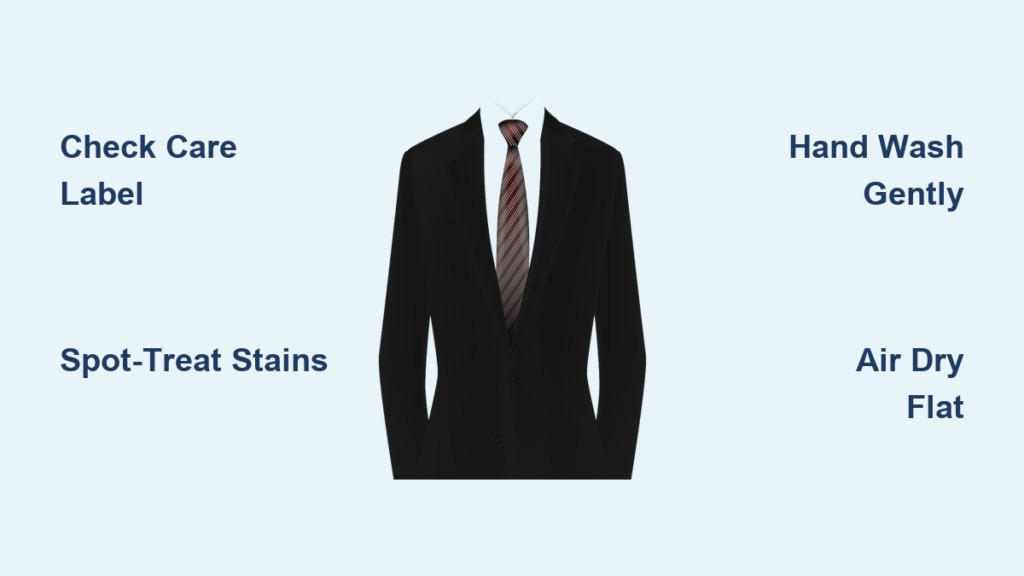
Your navy blue suit just survived a dinner meeting disaster—red wine splashed across the lapel, and the dry cleaner closes in 10 minutes. Before you resign yourself to wearing stained clothes all week, take hope: modern suit fabrics often allow safe home washing when you follow precise steps. The difference between a refreshed suit and a shrunken disaster hinges entirely on fabric identification and technique execution. This guide delivers actionable methods to wash suits at home while preserving structure and color, saving you money between professional cleanings.
For suits made from wash-safe fabrics, proper home care extends garment life by years. You’ll learn to identify washable materials, execute damage-free washing, and dry suits without shoulder dimples or stretched seams. Most importantly, you’ll recognize when professional help is non-negotiable. Let’s transform your panic into confidence with science-backed suit care.
Identify Your Suit Fabric Before Adding Water
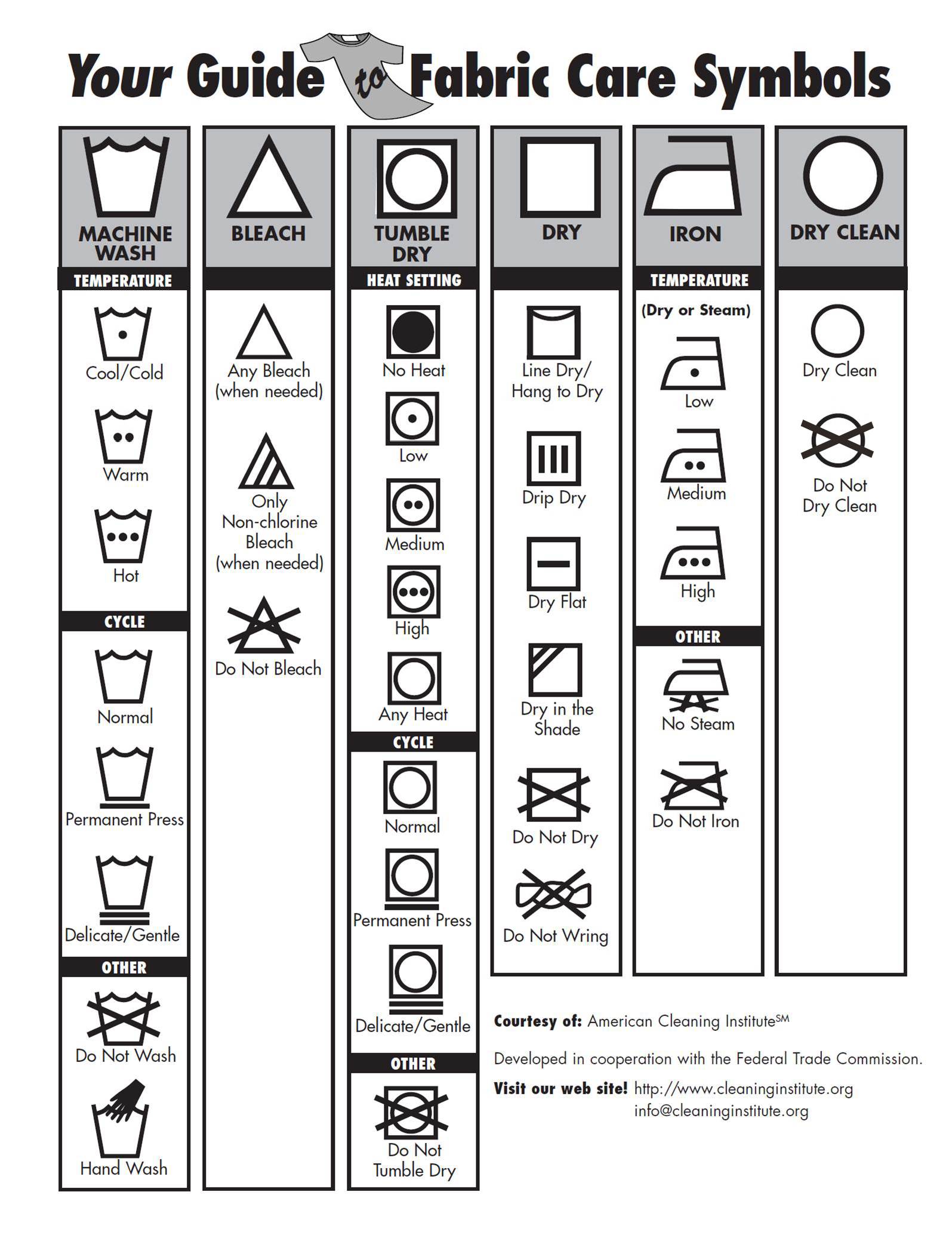
Check the care label inside the jacket lining immediately—this tiny tag dictates your entire washing approach. Hold it under bright light to spot symbols: a tub with water means home washing is possible, while a circle indicates dry-clean only. Never skip this step; misidentifying fabric ruins suits permanently.
Wash-safe fabrics include:
– Polyester blends (common in modern business suits)
– Cotton twill (ideal for casual summer suits)
– Rayon performance fabrics (designed for travel)
– Synthetic blends (specifically labeled machine-washable)
Never attempt home washing for:
– Pure wool or cashmere (shrinks irreversibly)
– Silk blends (loses sheen and structure)
– Vintage suits (pre-1990s construction fails with moisture)
– Suits with canvas interlining (water destroys internal architecture)
Quick fabric test: Place a drop of cold water on an inner seam. If it beads up like on a raincoat, wool content is high—seek professional cleaning. If it absorbs slowly, proceed cautiously with hand washing.
Prepare Your Suit for Washing Like a Pro
Spot-Treat Stains Before Submerging
- Blot fresh stains with a clean white cloth—never rub, which grinds particles deeper
- For oil stains (grease, makeup): Cover with cornstarch immediately, wait 30 minutes, then brush off
- Protein stains (sweat, blood): Dab only with cold water—heat sets these permanently
- Water-based stains (wine, coffee): Apply club soda with upward blotting motions
- Test colorfastness: Dab detergent solution on an inner hem, then press with white cloth—any color transfer means stop
Critical Suit Prep Checklist
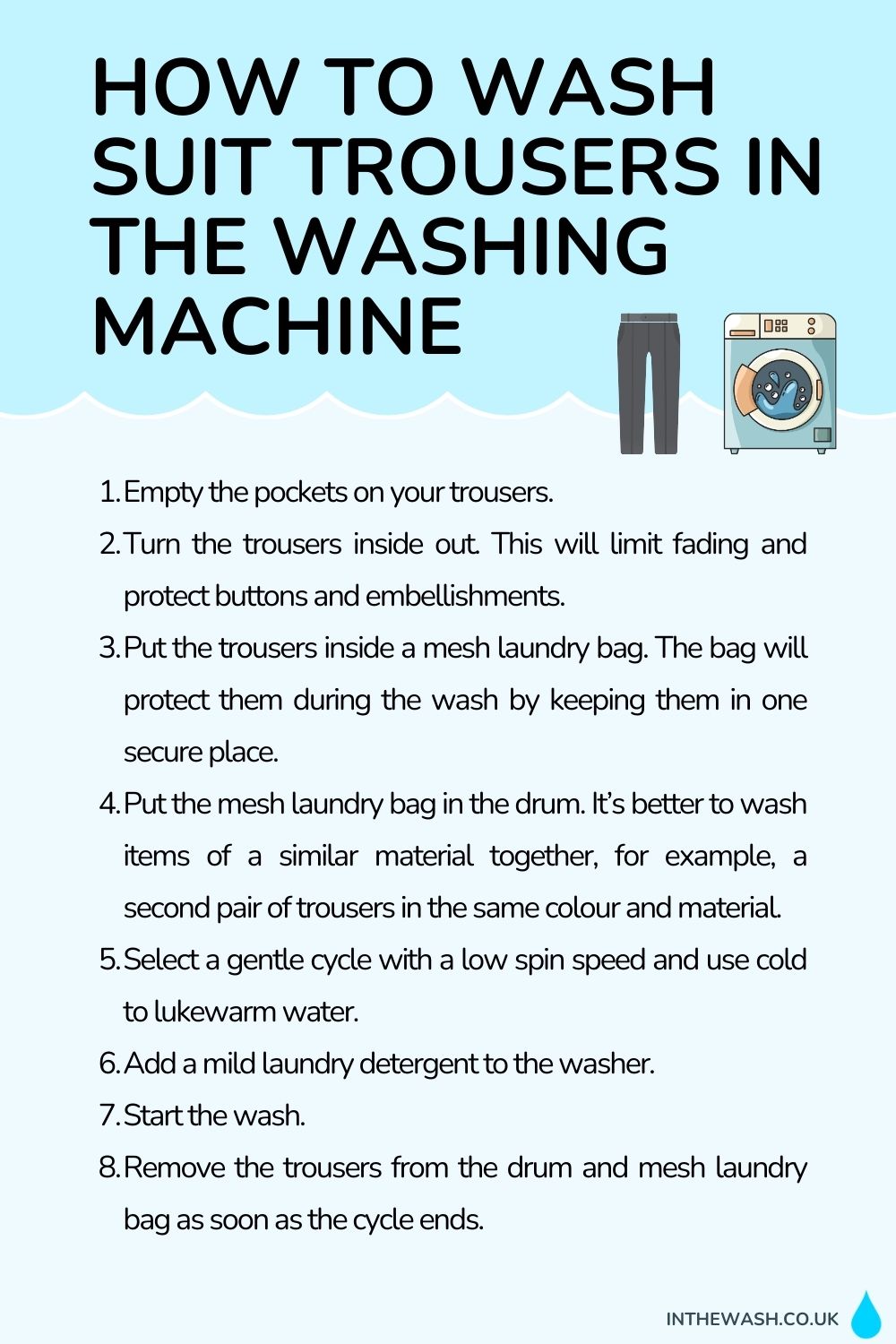
- Empty all pockets completely (coins or keys cause fabric tears)
- Fasten every button and zipper to prevent snagging during agitation
- Turn jacket and trousers inside out protecting outer fabric from abrasion
- Remove detachable shoulder pads if present (prevents water trapping)
- Pre-treat high-risk zones: Collar, cuffs, and lapels with diluted detergent
Warning: If colors bleed during testing, professional cleaning is mandatory. Dye instability can’t be fixed at home.
Hand Wash Delicate Suits Without Distortion
Fill and Soak Correctly
Fill your clean bathtub with cold water (below 86°F/30°C)—warmth shrinks fibers. Add precisely one teaspoon of wool-safe detergent per gallon. Submerge the jacket first, pressing gently until fully saturated. Add trousers only after jacket soaks for 5 minutes. Never exceed 15 minutes total soak time—wool blends need only 10 minutes.
Gentle Cleaning Motion That Works
Use your palms to create slow underwater currents—no scrubbing or twisting. Move hands like paddles for 3 minutes max, focusing on stained areas. Critical mistake to avoid: Wringing or aggressive agitation stretches shoulder seams. Visualize calming ocean waves, not washing machine turbulence.
Rinse and Water Removal
Drain soapy water and refill with fresh cold water. Press suit against tub walls 5 times to rinse—repeat until water runs clear (usually 3 rinses). Remove water properly: Roll jacket in clean towels like a burrito, applying even pressure. Never lift a dripping suit—it stretches shoulder points.
Machine Wash Only These Suits Safely
:max_bytes(150000):strip_icc()/how-to-select-the-correct-cycle-2145866-04-54a22f92935645008e17318ec55616d8.jpg)
Machine Settings That Prevent Damage
Use front-loading machines only—top-loader agitators destroy suit structure. Set:
– Cycle: Delicate/Wool (never “Normal”)
– Temperature: Cold (30°C/86°F max)
– Spin speed: 400-600 RPM (lowest setting)
– Detergent: ¼ normal amount of gentle formula
Pro tip: Run an empty test cycle first. If you hear banging, add towels to balance the drum—uneven loads twist suit fabric.
Protection During the Wash Cycle
Place jacket and trousers in separate mesh bags (zippers closed) to prevent tangling. Add 2-3 clean towels to cushion impacts. Critical timing: Remove suits within 5 minutes after cycle ends. Leaving them crumpled creates permanent creases impossible to steam out.
Dry Suits Without Shoulder Dimples or Stretching
Never Do These 3 Things
- Use a dryer (high heat melts synthetic fibers)
- Hang wet suits immediately (weight stretches shoulders)
- Place near radiators (rapid drying causes fabric shrinkage)
Air-Drying Process That Preserves Shape
- Lay flat on dry towels for 90 minutes, reshaping sleeves and trouser legs
- Transfer to wide wooden hangers—jacket shoulders must align perfectly with hanger edges
- Hang trousers by cuffs using clamp hangers (never clip waistbands)
- Position away from windows—UV rays fade colors in 2 hours
Steam finishing shortcut: When 80% dry (still slightly damp), steam from shoulders downward. This sets creases without ironing.
Press and Store Suits to Extend Lifespan
Ironing Temperatures by Fabric Type
| Fabric | Iron Setting | Steam | Critical Tip |
|---|---|---|---|
| Wool | Medium | Yes | Always use pressing cloth |
| Cotton | High | Yes | Iron while slightly damp |
| Polyester | Low | No | Lift-and-press—never slide |
Focus pressing on lapels and front creases first. Never iron suit buttons—heat cracks resin. For stubborn wrinkles, hang suit in bathroom during a hot shower—steam naturally releases creases.
Storage Protocol After Washing
- Rest suits 48 hours before wearing (allows fibers to stabilize)
- Store in cotton garment bags—plastic traps moisture causing mildew
- Place cedar blocks inside (not touching fabric) to repel moths
- Rotate suits weekly—prevents permanent crease formation
When Professional Cleaning Is Non-Negotiable
Skip Home Washing If Your Suit Has:
- “Dry Clean Only” label (law requires accurate labeling)
- Canvas construction (water delaminates internal layers)
- Embroidery or beading (threads unravel in water)
- Never been cleaned before (first cleaning must be professional)
Emergency Stop Signs During Washing
Halt immediately if you see:
– Color bleeding beyond test spot (dyes are unstable)
– Fabric stiffening like cardboard (water damage occurring)
– Seams rippling or separating (structure failing)
– Shoulder pads shifting position (interlining compromised)
Spot Clean Stains in 5 Minutes Flat
Immediate Stain Response Guide
Wine/coffee: Blot with club soda-soaked cloth using outward motions. Follow with white vinegar dab (1:1 water ratio).
Grease stains: Cover with cornstarch, wait 30 minutes, brush off. Repeat until oil lifts.
Ink marks: Dab only with rubbing alcohol on cotton swab—test hidden area first.
Pro tip: Keep stain wipes in your briefcase. Acting within 60 seconds prevents 90% of permanent stains.
Long-Term Suit Care That Saves Money
Washing Frequency by Fabric
- Wool suits: Every 3-4 wears (odor-resistant by nature)
- Cotton suits: Every 2 wears (absorbs more sweat)
- Synthetics: Every 4 wears (quick-drying properties)
Always air suits 24 hours between wears—hanging in a steamy bathroom removes odors naturally. Own at least 3 suits to allow 72-hour recovery periods between wears. Before seasonal storage, clean thoroughly and store with cedar blocks in a cool, dark closet.
Final reality check: Home washing costs pennies but risks $500 suits. If your fabric isn’t explicitly washable, the dry cleaner’s fee is cheaper than replacement. But for modern polyester or cotton blends, this method safely refreshes suits between professional cleanings—keeping you sharp without breaking the bank.