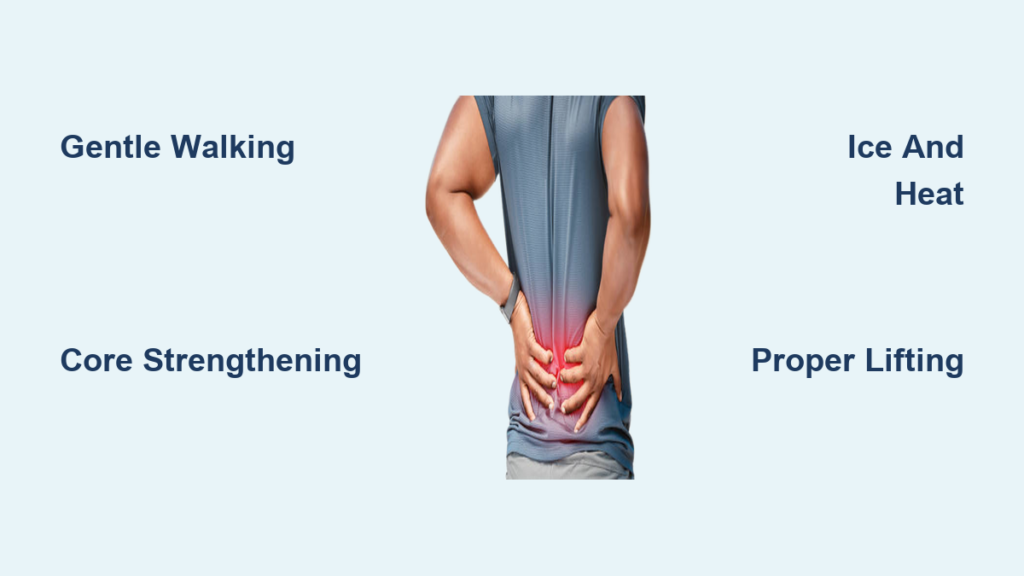
That sharp twinge in your lower back strikes without warning—whether you’re lifting groceries or simply bending to tie your shoes. Back pain affects 80% of adults at some point, but the good news is most cases resolve with simple home remedies within a few weeks. This comprehensive guide transforms proven medical advice into actionable steps you can implement today to find relief and prevent future episodes.
While rest might seem intuitive, research shows staying active actually speeds recovery. The key lies in knowing which movements help versus harm your healing back. From targeted exercises to proper lifting techniques, you’ll discover exactly how to treat your backache without expensive equipment or complicated procedures. Most people experience significant improvement within 2-4 weeks by following these evidence-based strategies.
Skip Bed Rest for Faster Recovery
Most people instinctively want to lie down when back pain hits, but this outdated advice actually delays healing. Healthcare providers no longer recommend bed rest for typical low back pain. Instead, maintaining gentle activity keeps your spine mobile and prevents muscles from weakening.
Activity balance during recovery:
– Continue daily activities at a reduced intensity
– Walk short distances every hour while awake
– Avoid prolonged sitting (over 30 minutes)
– Stop any movement that sharply increases pain
The sweet spot involves staying active without overdoing it. Think of your pain as a guide—mild discomfort during movement is normal, but sharp or worsening pain signals you to modify the activity. Critical mistake to avoid: Don’t push through severe pain, as this can worsen inflammation and prolong recovery.
Safe Exercises That Heal Your Back
Start with Gentle Walking
Walking serves as your primary recovery exercise because it improves blood flow to injured tissues without jarring impact. Begin with 5-10 minute strolls on flat surfaces, gradually increasing duration as pain decreases.
Proper walking form for back pain:
– Keep shoulders relaxed and down
– Engage core muscles slightly
– Land on your heel, roll through your foot
– Swing arms naturally at your sides
Aim for three short walks daily during your first week, increasing to 20-30 minutes per session by week two. Pro tip: Set a timer to remind yourself to move every hour—sitting for more than 30 minutes stiffens spinal joints.
Swimming for Pain-Free Movement
Water’s buoyancy removes up to 90% of your body weight from your spine, making swimming an ideal exercise during recovery. The horizontal position decompresses vertebrae while gentle resistance strengthens supporting muscles.
Best swimming strokes for back pain:
– Freestyle: Provides gentle spinal rotation
– Backstroke: Strengthens upper back muscles
– Water walking: In chest-deep water for beginners
Start with 10-15 minute sessions three times weekly, focusing on smooth movements rather than speed. Warning: Avoid breaststroke if you have disc-related pain, as the leg kick can strain your lower back.
Stationary Bike Guidelines
An upright stationary bicycle offers cardiovascular benefits while maintaining proper spinal alignment. Avoid recumbent bikes initially, as the reclined position can aggravate certain back conditions.
Bike setup for back comfort:
– Adjust seat height so knees bend slightly at bottom pedal stroke
– Keep handlebars at seat level or slightly higher
– Maintain upright posture, avoid hunching
– Start with 5-minute sessions at low resistance
Ride for 10-15 minutes daily during acute pain phases, gradually increasing to 30 minutes as discomfort decreases. Expert note: If pain increases while cycling, stop immediately—this exercise isn’t appropriate for all back conditions.
Strengthen Your Core Without Strain
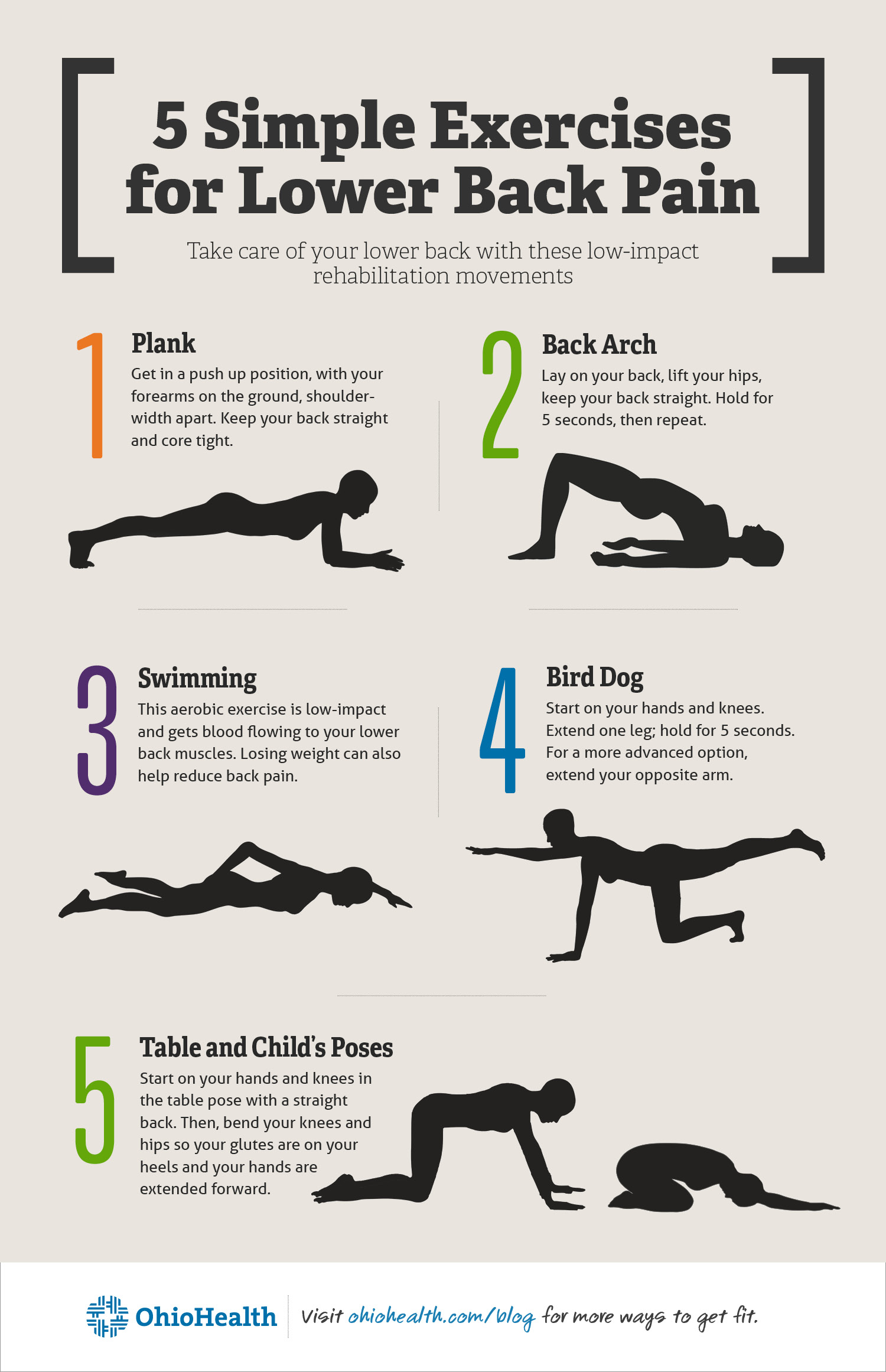
Strong abdominal muscles act like a natural corset for your spine, but timing matters. Starting core exercises too early after injury can worsen pain. Wait until acute pain subsides—typically 3-7 days—before beginning gentle strengthening.
Safe Core Activation Sequence
Week 1: Gentle engagement
– Lie on back with knees bent
– Tighten abdominal muscles by pulling navel toward spine
– Hold for 5 seconds, release for 5 seconds
– Repeat 10 times, 3 sets daily
Week 2-3: Bridge progression
– Maintain abdominal engagement from week 1
– Lift hips slowly, creating straight line from knees to shoulders
– Hold 5 seconds, lower with control
– Perform 2 sets of 10 repetitions
Critical mistake: Avoid traditional sit-ups during recovery—they place excessive strain on lumbar discs. Focus on controlled movements with proper form rather than quantity.
Stretching for Flexibility
Gentle stretching restores range of motion and reduces muscle tension. Perform these stretches only after acute pain decreases.
Cat-camel stretch:
– Start on hands and knees
– Arch back upward (like a cat), hold 5 seconds
– Let back sag downward, hold 5 seconds
– Repeat 10 times slowly
Knee-to-chest stretch:
– Lie on back with knees bent
– Bring one knee toward chest, hands behind thigh
– Hold 20-30 seconds, switch legs
– Keep opposite foot flat on floor
Time commitment: Spend 10-15 minutes daily on stretching during recovery. Pro tip: Perform stretches after a warm shower when muscles are more pliable.
Prevent Future Back Pain Episodes
Master Proper Lifting Technique
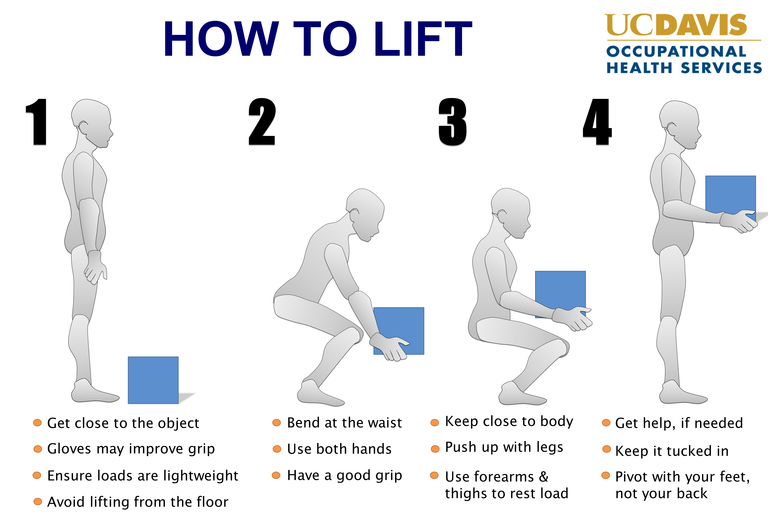
Most back injuries occur during everyday activities, not heavy lifting. Learning proper mechanics protects your spine long-term.
The squat-lift method:
1. Position: Stand close to object, feet shoulder-width apart
2. Bend: Squat down by bending knees and hips, keeping back straight
3. Grip: Firmly grasp object with both hands
4. Lift: Use leg muscles to stand, keeping object close to body
5. Move: Pivot with feet instead of twisting at waist
Red flags that indicate you’re lifting incorrectly:
– Feeling strain in lower back
– Object held away from body
– Twisting while lifting
– Using back muscles instead of legs
Real-world application: Practice this technique even with light objects like laundry baskets to build muscle memory.
Optimize Your Sleep Environment
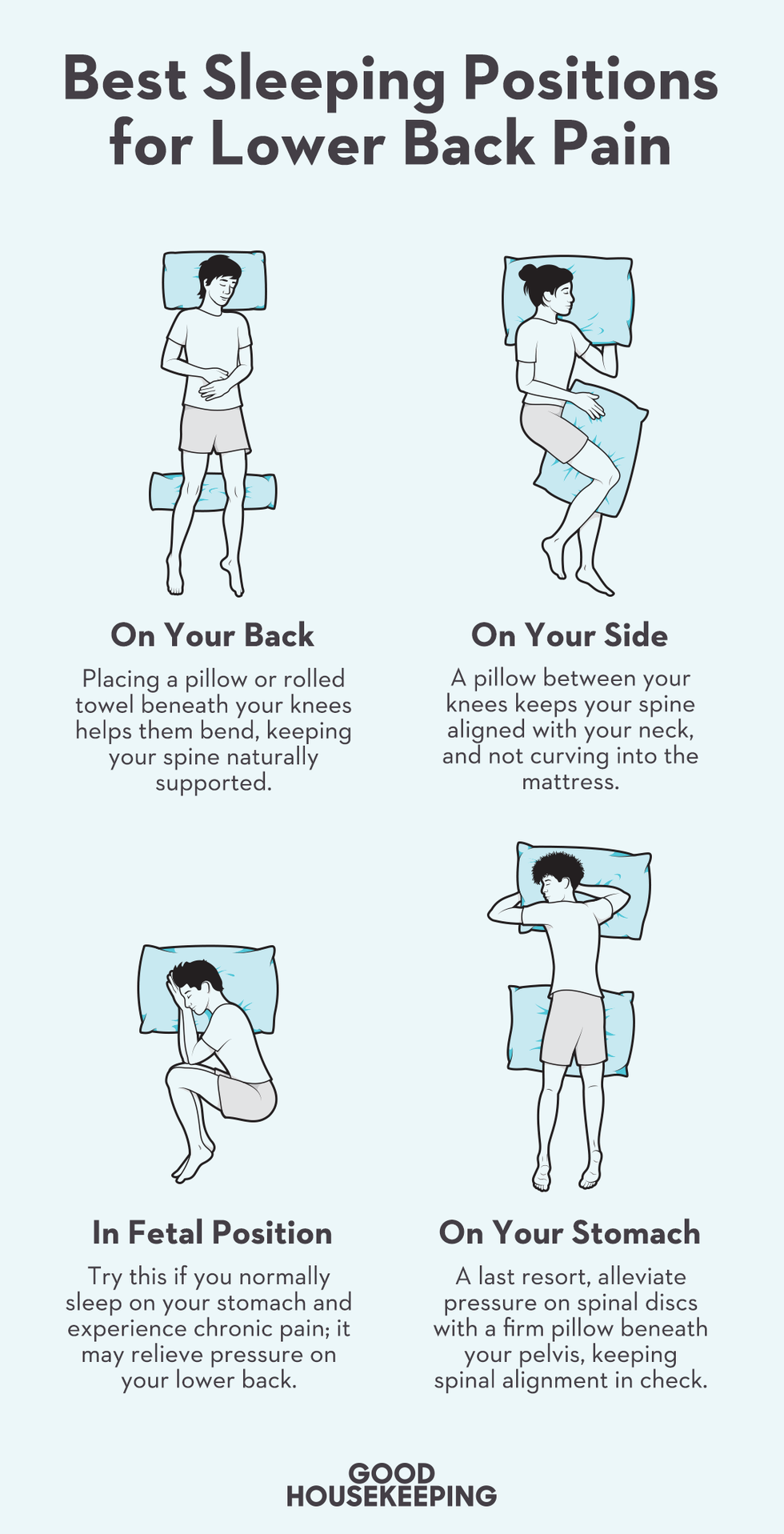
Your mattress significantly impacts spinal health. A supportive surface maintains natural spinal curves without creating pressure points.
Mattress selection criteria:
– Medium-firm: Provides support without being too hard
– Age factor: Replace mattresses over 8 years old
– Test period: Try new mattress for at least 30 nights
Sleep positions for back pain:
– Back sleepers: Place pillow under knees
– Side sleepers: Pillow between knees to align hips
– Stomach sleepers: Thin pillow under pelvis (least recommended)
Immediate fix: If replacing your mattress isn’t feasible, add a supportive topper to extend its life while providing better spinal alignment.
Warning Signs Requiring Medical Attention
While most back pain resolves with home treatment, certain symptoms require immediate professional evaluation. These red flags indicate potentially serious underlying conditions.
Seek emergency care for:
– Bowel/bladder changes: Inability to control urination or bowel movements
– Progressive weakness: Leg weakness that worsens over time
– Numbness: Loss of sensation in groin or inner thighs
– Fever: Temperature over 101°F with back pain
– Unexplained weight loss: Losing weight without trying
Schedule doctor appointment for:
– Pain persisting beyond 4-6 weeks
– Pain worse at night or when lying down
– History of cancer with new back pain
– Pain radiating below knee with numbness
Critical distinction: Most back pain improves within 2-4 weeks with home treatment. If you don’t notice improvement after three weeks of consistent home care, consult a healthcare provider.
Quick Relief Toolkit for Immediate Pain Reduction
Ice and Heat Therapy Protocol
Ice therapy (first 48 hours):
– Apply ice pack wrapped in thin towel
– 15-20 minutes every 2-3 hours
– Reduces inflammation and numbs pain
Heat therapy (after 48 hours):
– Use heating pad on low-medium setting
– 15-20 minutes sessions
– Relaxes muscle spasms and increases blood flow
Pro tip: Alternate between ice and heat if you’re unsure which works better for your specific pain—some people respond better to one than the other.
Over-the-Counter Pain Management
Medication guidelines:
– Ibuprofen: 200-400mg every 6-8 hours (with food)
– Acetaminophen: 500-1000mg every 6 hours
– Topical creams: Apply directly to painful area
Timing matters: Take medication before pain becomes severe—don’t wait until pain peaks. Warning: Never exceed recommended dosages, and consult your doctor if you have kidney, liver, or stomach issues.
Create Your Personalized Recovery Plan
Week 1: Acute phase
– Focus on gentle walking and maintaining daily activities
– Apply ice/heat as directed
– Avoid sitting longer than 30 minutes
– Sleep with pillow support
Weeks 2-3: Recovery phase
– Gradually increase walking duration
– Begin gentle core exercises
– Introduce stretching routine
– Monitor posture throughout day
Week 4+: Prevention phase
– Establish regular exercise routine
– Practice proper lifting techniques daily
– Maintain healthy weight
– Schedule ergonomic workplace assessment
Key takeaway: Consistency matters more than intensity. Ten minutes of proper movement daily yields better results than one hour of sporadic exercise. Your spine will thank you for the investment in proper care and prevention techniques—most people experience significant improvement within 2-4 weeks by following these evidence-based strategies for how to treat backache at home.