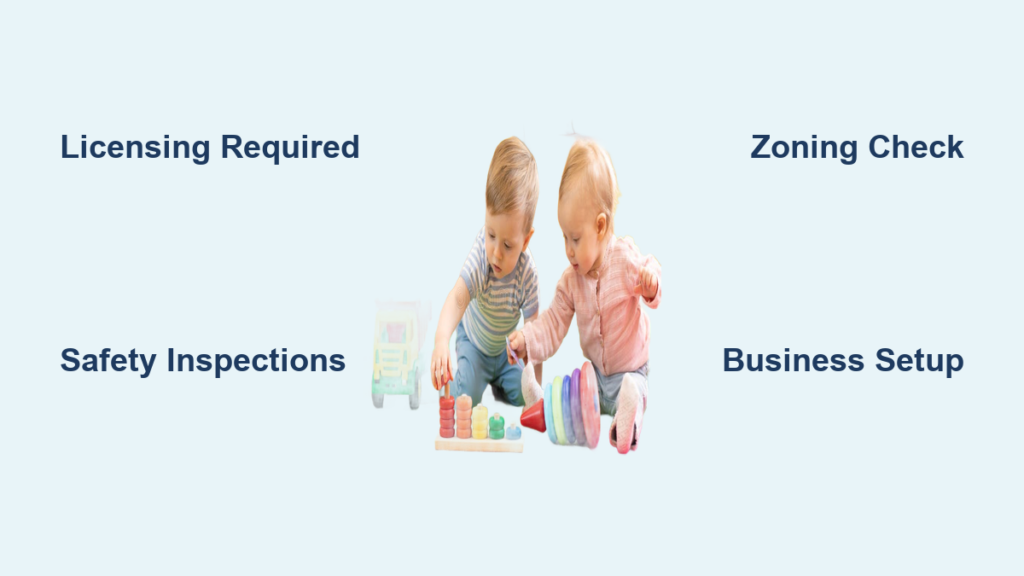
Your living room could be generating $40,000 annually while caring for neighborhood children—but skipping licensing steps risks fines or shutdowns within weeks. Home daycares aren’t just babysitting; they’re regulated businesses requiring specific safety modifications, business planning, and state compliance. Whether you’re a stay-at-home parent seeking income or an educator branching out, this guide cuts through the confusion to show exactly how to start a daycare at home legally and profitably. You’ll discover the universal licensing steps every provider must complete, the safety upgrades that pass inspections on the first try, and financial systems that prevent burnout before your first enrollment.
State Licensing Requirements That Can’t Be Skipped

Operating without proper authorization violates child care laws in every state, yet 30% of first-time providers face delays by missing critical documentation. Your exact requirements depend on location, but universal compliance steps apply nationwide before accepting a single child.
How to Pass Background and Safety Inspections
All states mandate background checks for every household member 18+ through state-specific channels like Michigan’s hotline (1-844-765-2247). Simultaneously, prepare for health department inspections requiring:
– Medical clearances including TB testing for all 14+ household members
– Current CPR/First Aid certifications (infant/child-specific)
– Fire safety compliance with two exit routes per room and posted evacuation plans
– Radon testing showing levels below 4 picocuries/liter
In Florida, you’ll need 35 hours of certified training before approval—30 hours for family day care plus 5 hours focused on early literacy. Georgia requires providers to be at least 21 years old, while Connecticut offers flexible pathways: family homes (6-9 children), group homes (12 children), or centers for larger operations.
Zoning Checks That Prevent Costly Mistakes
Never assume your home qualifies. Michigan providers must contact local zoning authorities before applying—especially for Group Child Care Homes (7-12 children). The Zoning Enabling Act prevents overly restrictive ordinances, but you still need official sign-off. In Georgia, Florida, and Connecticut, HOA bylaws or deed restrictions often prohibit commercial activity entirely. One provider lost $2,000 in safety equipment after discovering her neighborhood banned daycares post-renovation. Always verify zoning compliance before purchasing supplies.
Home Safety Modifications That Pass Inspections

Fire marshals use detailed checklists that surprise unprepared providers. Your home must function as a commercial facility while maintaining livable space, requiring strategic modifications beyond basic childproofing.
Critical Electrical and Furniture Safety Upgrades
Cover all outlets with tamper-resistant receptacles—not just plastic plugs—and secure TV and furniture to wall studs using anti-tip brackets. Inspectors specifically check for these during Michigan licensing visits. Separate kitchen areas from play spaces with safety gates, and install step stools at sinks within arm’s reach of changing stations.
Pro Tip: Create three first aid stations—in the main play area, kitchen, and outdoor space—with kits restocked monthly. Log expiration dates prominently since inspectors verify current supplies.
Health Protocol Systems Parents Demand
Sanitation requires complete separation of diaper changing and food prep zones. Install dedicated changing tables with built-in hand-washing access. For food safety, maintain breastmilk/formula at 35-40°F in labeled containers using separate cutting boards for meat and produce—inspectors always check these details. Post clear illness policies showing fever thresholds (100.4°F+) and vomiting guidelines to protect your business from liability while building parent trust.
Business Setup That Generates Profit, Not Panic
Treating your daycare as a hobby causes 60% of failures within the first year. Successful providers separate personal and business finances from day one using systems that maximize income while minimizing stress.
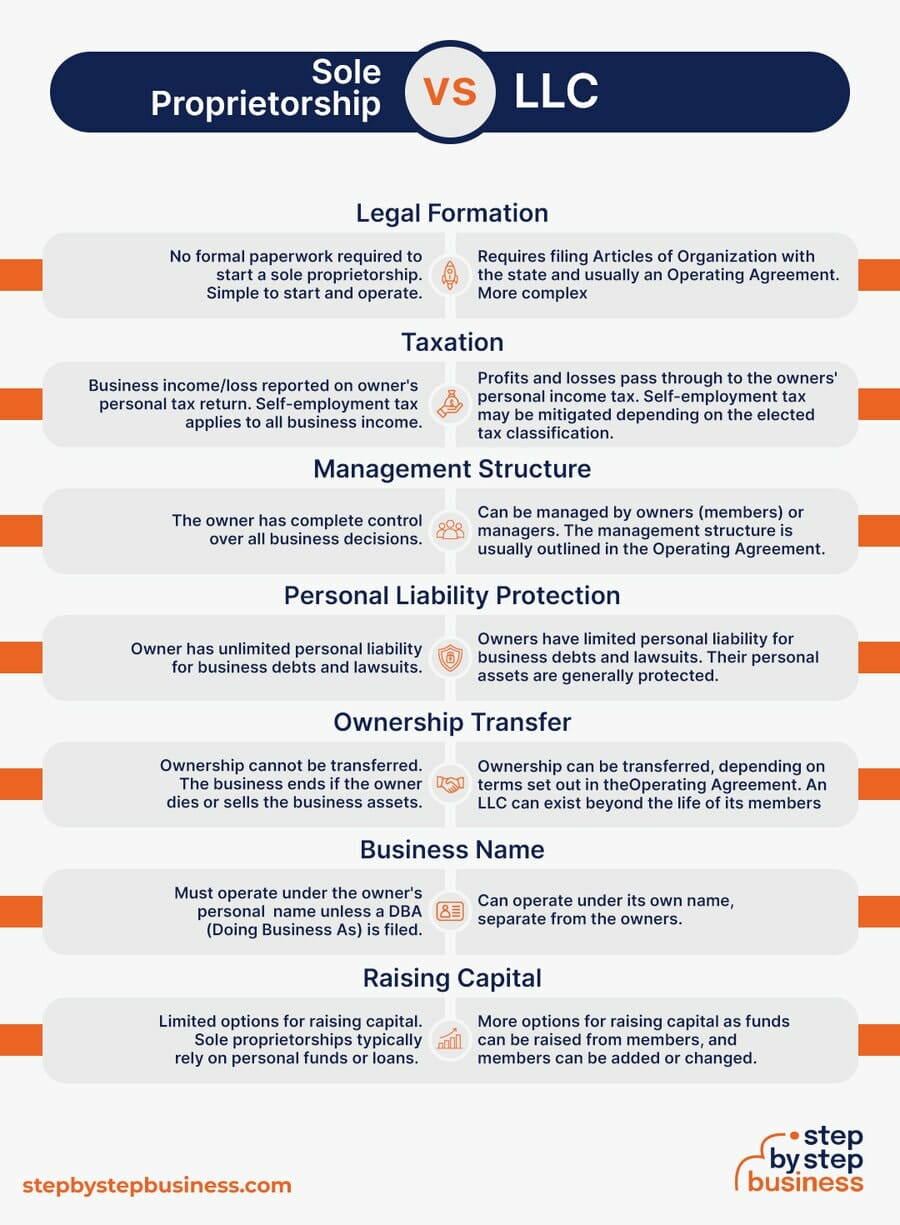
Choosing Your Legal Structure Wisely
Sole Proprietorship offers simplicity but exposes personal assets to lawsuits if a child is injured. Most providers start here due to low setup costs. LLC status ($50-$500 depending on state) protects your home and savings from business liabilities—a non-negotiable for serious operators. Avoid partnerships without written agreements; document everything to prevent conflicts when expanding.
Pricing Strategy That Covers Real Costs
Calculate your minimum weekly rate using this formula:
(Total monthly expenses ÷ enrollment capacity) × 1.4 = minimum weekly rate
This covers expenses plus 40% industry-standard profit margin. Most overlook hidden costs like:
– 30-50% utility increases with full enrollment
– Background check renewals every 2-3 years ($50-$100)
– Equipment replacement as children age (cribs to big-kid tables)
Pro Tip: Start with 4-6 children to test systems. Charge weekly payments due Monday mornings with 10% sibling discounts and $5/day late fees. Digital systems like HiMama ($30/month) automate billing and track expenses for tax time.
Marketing Tactics That Fill Your Waitlist
Relying solely on word-of-mouth leaves money on the table. Strategic marketing creates enrollment pipelines before your license arrives.
Branding That Builds Instant Trust
Avoid cutesy names like “Happy Tots Playhouse”—choose professional names like “Maple Street Home Daycare” that include location identifiers for local search. Develop consistent visual branding:
– Simple logo for signage and parent handbooks
– Professional photos of your space (no children’s faces)
– Branded daily report templates showing learning activities
Critical Move: Claim your Google My Business listing immediately. 70% of parents search “home daycare near me” first—without this, you’re invisible to local families.
Open House Events That Convert
Schedule tours during peak parent availability (evenings/weekends) with:
– Facility walkthroughs highlighting safety features
– Sample daily schedules showing learning activities
– Printed rate sheets with enrollment incentives
One Michigan provider filled her 6-child capacity in 3 weeks by offering $100 referral credits. Partner with pediatricians and schools—they often maintain referral lists for working parents.
Your Immediate Next Steps
Don’t wait for “perfect” conditions. The 3-6 month licensing timeline starts the moment you submit documentation—delays cost potential income. Take these actions today:
-
Contact your state licensing agency: Call Michigan’s hotline (866-685-0006) or Florida DCF (850-488-4900) to request application packets. Ask about required training sessions.
-
Conduct a zoning self-audit: Search “[Your County] zoning ordinance child care” online. Note restrictions before investing in modifications.
-
Open a dedicated business account: Separate finances immediately using a free business checking account. Track every expense from day one.
Starting how to start a daycare at home requires treating it as a business first, childcare service second. Your love for children creates the foundation, but systems, compliance, and financial management build lasting success. With 50% of parents preferring home-based care for its personalized attention, your properly licensed operation could be the solution families desperately need—while generating steady income from your living room. The difference between a thriving business and a costly shutdown comes down to completing these steps before hanging your “Open” sign.