Your garden shears feel like they’re fighting you through every cut. Instead of slicing cleanly through stems, they crush and tear, leaving ragged wounds that invite disease. You’re squeezing harder than ever just to get through basic pruning tasks, and your hands ache from the effort. If this sounds familiar, your shears desperately need sharpening—and the good news is you can restore them to razor-sharp condition right in your garage.
This guide walks you through proven methods to transform dull, frustrating garden shears into precision cutting tools using simple equipment you probably already own. You’ll learn exactly when to sharpen, which technique works best for your situation, and how to maintain that edge for months of effortless cutting. No expensive professional service required—just follow these steps and reclaim the smooth, clean cuts that keep your plants healthy.
When Garden Shears Need Sharpening
Visual Signs of Dull Blades
Hold your shears up to the light and inspect the cutting edge closely. A sharp blade shows a thin, crisp edge that reflects light evenly along its entire length. Dull blades appear rounded, nicked, or show visible flat spots where the edge should be razor-thin. Run your finger carefully along the blade (from spine to edge, never across)—sharp edges feel crisp and clean, while dull ones feel rounded or rough to the touch.
Performance Red Flags
Crushing Instead of Cutting: Sharp shears slice cleanly through green stems like a hot knife through butter. Dull ones crush and tear, leaving frayed edges that take weeks longer to heal. This damage creates perfect entry points for diseases that can devastate your plants.
Increased Cutting Force: If you’re squeezing the handles harder than usual for the same cuts, your blades need attention. Sharp shears should cut through thumb-thickness stems with minimal pressure—if you’re straining, it’s sharpening time.
Slipping on Stems: When blades skate across stems instead of biting in cleanly, the cutting edge has rounded over. This forces you to reposition and retry cuts multiple times, wasting time and damaging plant tissue.
Essential Sharpening Tools

Primary Sharpening Options
10-Inch Mill File: The workhorse for basic sharpening. Choose a single-cut file with fine teeth for maximum control and clean results. This is your go-to tool for restoring a badly damaged edge.
400-Grit Diamond Stone: Removes metal faster than traditional stones, perfect for restoring heavily worn edges or removing nicks. Diamond stones maintain their flatness longer than water stones.
1000/4000 Whetstone Combo: Use the 1000-grit side for shaping, then the 4000-grit for mirror-polishing the final edge. Ideal for achieving surgical precision on high-quality shears.
Ceramic Rod: Your maintenance MVP for keeping shears sharp between full sharpenings. This tool realigns the blade edge without removing significant material.
Safety and Setup Gear
- C-clamp or bench vise: Secures shears during sharpening, freeing both hands for precise control
- Safety glasses: Essential for blocking metal filings from your eyes
- Cut-resistant gloves: Protects hands when handling sharp blades during assembly
- Light machine oil: Lubricates stones and prevents rust during storage
- Wire brush: Cleans sap and debris from blades before sharpening
Pre-Sharpening Preparation
Clean Before You Sharpen
Remove sap, dirt, and debris that interfere with sharpening. Mix warm water with dish soap and scrub blades using a stiff brush. For stubborn sap buildup, apply rubbing alcohol and let it soak for 5 minutes before scrubbing. Dry thoroughly with a clean cloth to prevent rust during the sharpening process.
Disassembly Steps
- Locate the pivot bolt or nut at the shear’s center
- Hold the top blade stationary while loosening the bottom nut
- Note washer positions and orientations for reassembly
- Separate blades completely for full access to cutting edges
Pro Tip: Take a photo with your phone before disassembly to reference washer positions later—this saves frustration during reassembly.
File Sharpening Method
Secure and Position
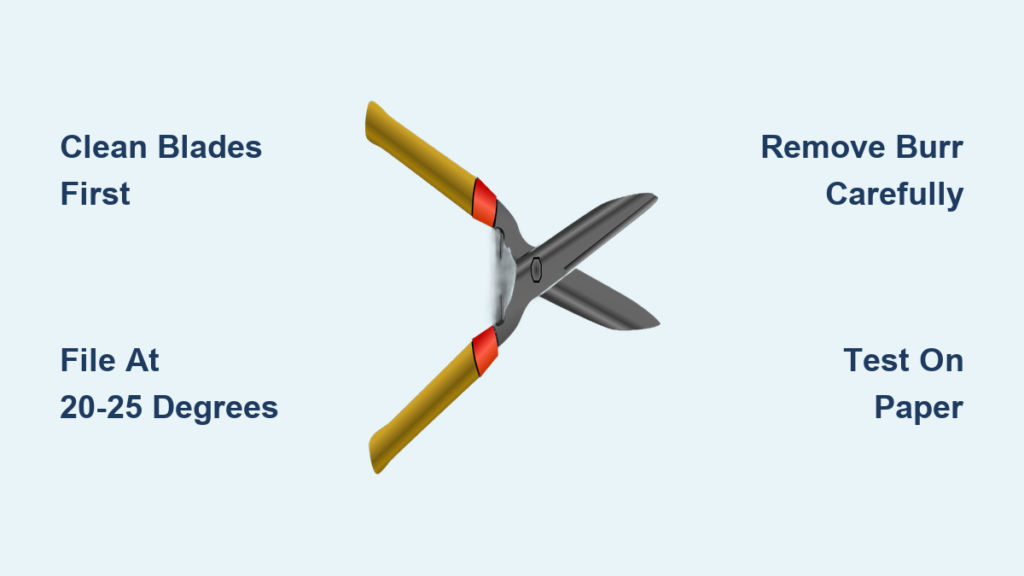
Clamp one blade in your vise with the beveled edge facing up. The blade should sit at comfortable working height—typically elbow level when standing. Position the file at a 20-25 degree angle, matching the original bevel on your shears.
Filing Technique
- Start at the base: Position file at the blade’s pivot end
- Maintain angle: Keep file flat against the bevel throughout each stroke
- Single-direction strokes: Push file away from you in smooth motions, lift on return
- Count strokes: Apply 10-15 strokes per inch of blade length for consistent results
- Check progress: Look for consistent burr formation along the edge
Common Mistake: Using sawing motions back and forth. Always file in one direction only for the cleanest results—this prevents rounding the edge and ensures proper bevel formation.
Stone Sharpening Method
Diamond Stone Setup
Place your 400-grit diamond stone on a damp towel to prevent slipping. Add a few drops of light oil to the stone’s surface to reduce friction and clear metal particles during sharpening.
Sharpening Process
- Coarse shaping: Use circular motions with medium pressure to establish the edge
- Angle consistency: Keep the blade at 20-25 degrees throughout—use a marker on the bevel to check your angle
- Progress systematically: Work from base to tip in 1-inch sections for even sharpening
- Fine polishing: Switch to 4000-grit stone for final edge refinement with lighter pressure
Pro Tip: Run your thumb along the blade’s spine to maintain consistent angle—this tactile feedback helps prevent wobbling during sharpening.
Removing Wire Edge and Burrs

Detect the Burr
After sharpening, a thin wire edge forms opposite the sharpened side. Carefully run your finger from the blade’s spine toward the edge—never across the edge—to feel for this telltale ridge.
Burr Removal Techniques
Stone Method: Flip the blade over and make 3-4 light passes with a fine stone at a slightly steeper angle to remove the burr.
Leather Strop: Drag the blade across a leather belt or strop 5-6 times to polish and remove burrs—this creates a razor-sharp finish.
Ceramic Rod: Use light, alternating strokes to remove burr and refine the edge without removing significant material.
Reassembly and Testing
Proper Reassembly
- Lubricate pivot: Apply one drop of light oil to the pivot bolt before reassembly
- Replace washers: Return all spacers to original positions as noted during disassembly
- Tighten gradually: Snug the nut, then test blade action before final tightening
- Adjust tension: Blades should move smoothly without wobbling or excessive play
Sharpness Test
Cut through a sheet of paper held vertically. Sharp shears should slice cleanly without tearing. Test on green stems—the cut should be smooth with no crushing or tearing of plant tissue. Warning: Never test sharpness with your thumb—use paper or plant material only.
Maintenance Schedule
Usage-Based Timing
- Light gardening: Sharpen every 20-30 hours of use
- Heavy pruning: Sharpen after 10-15 hours
- Woody plants: Sharpen immediately after cutting branches
Quick Maintenance
Between full sharpenings:
– After each use: Wipe blades clean and apply light oil
– Weekly: Run a ceramic rod along the edge 3-4 times
– Monthly: Check and adjust pivot tension
Pro Tip: Keep a ceramic rod in your garden tote for field touch-ups—this extends time between full sharpenings by 50%.
Troubleshooting Common Problems
Fixing Nicked Blades
Deep nicks require removing significant metal. Use a coarse diamond stone to re-profile the edge, accepting that the blade becomes slightly shorter. For extensive damage or multiple nicks, consider professional service or replacement blades.
Correcting Uneven Sharpening
If one section is sharper than others:
1. Mark the dull areas with a marker
2. Focus additional strokes on these sections
3. Blend transitions by feathering strokes into adjacent areas
Eliminating Rust
Light rust: Scrub with steel wool and oil
Heavy rust: Apply rust remover, let sit 10 minutes, then scrub clean
Prevention: Always oil blades before storage—this simple step prevents 90% of rust issues
Safety Best Practices
Workspace Setup
- Lighting: Use bright, direct light to see the blade edge clearly
- Stability: Ensure your workbench doesn’t rock or shift during sharpening
- Organization: Keep tools within arm’s reach to avoid reaching over sharp blades
Personal Protection
- Eye protection: Metal filings can cause serious eye injury—never skip safety glasses
- Gloves: Cut-resistant gloves protect during blade handling
- First aid: Keep bandages and antiseptic nearby for potential minor cuts
Critical Warning: Never test sharpness with your thumb. Use paper or plant material instead—this simple precaution prevents countless gardening injuries each year.
Storage and Longevity Tips
Proper Storage Methods
- Clean thoroughly: Remove all plant residue before storage
- Oil generously: Coat blades with light machine oil or rust preventive
- Store open: Keep blades slightly separated to prevent edge dulling
- Climate control: Store in dry location, use silica gel packets in humid areas
Seasonal Maintenance
Spring: Full sharpening before heavy use season
Summer: Touch-ups every 2-3 weeks during peak gardening
Fall: Thorough cleaning and sharpening before winter storage
Winter: Monthly oil application to prevent rust during storage
Sharp garden shears transform gardening from a chore into a pleasure. By following this guide, you’ll maintain blades that slice through stems like butter, promoting healthier plants and reducing hand fatigue. The 30 minutes you invest in sharpening will save hours of struggling with dull tools throughout the growing season. Remember, well-maintained shears aren’t just about convenience—they’re an essential investment in your garden’s health and your own gardening enjoyment.