That moment when you slice into a bright green papaya only to discover rock-hard, flavorless flesh is enough to make any tropical fruit lover sigh in frustration. Whether you grabbed an unripe specimen from the grocery store or your backyard tree dropped fruit too early, mastering how to ripen a papaya at home transforms bland disappointment into juicy, aromatic perfection. This guide cuts through the guesswork with science-backed techniques that work whether you need edible results tomorrow or can wait a few days. You’ll learn to read ripeness cues like a pro, accelerate the process safely, and avoid the mushy pitfalls that turn potential sweetness into kitchen disasters.
Identify Your Papaya’s Ripeness Stage

Visual Color Indicators
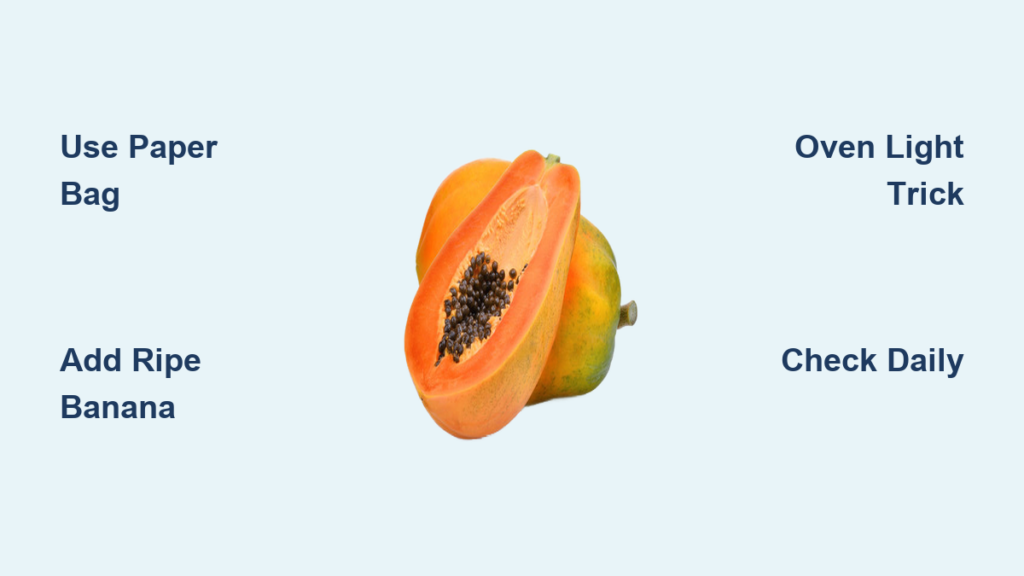
Your papaya’s skin color is the most reliable ripeness roadmap. Stage 1 papayas are completely green with zero yellow patches and feel like a baseball—these need 5-7 days minimum. Stage 2 shows 10-25% yellow mottling with slight softness at the stem end, requiring 3-4 days. Stage 3 fruits glow 50-75% yellow-orange and yield gently when squeezed—ideal for accelerated methods. Stage 4 papayas boast 80-100% golden skin with deep fragrance and are ready now. Skip any showing brown wrinkles covering over 20% of the surface; these are already overripe.
Touch and Smell Tests
Press the stem end firmly with your thumb—unripe papayas resist completely, while ripe ones create a subtle “give” without leaving dents. Lift the fruit to your nose: perfectly ripe papayas emit a sweet, honeyed tropical scent from 6-12 inches away. If you detect grassy or fermented notes, it’s either too green or past its prime. Never rely solely on color; some varieties like Mexican Red keep green shoulders even when ripe.
Speed Up Ripening with Paper Bags

Basic Paper Bag Method
Slide 1-3 papayas into a standard brown grocery bag, folding the top down twice to seal without crushing. Store at 70-75°F (21-24°C) away from windows. Single fruits ripen in 2-4 days, while grouping 2-3 together cuts time to 1-3 days by concentrating natural ethylene gas. Check daily—overripe papayas develop sunken spots and sour smells. Replace damp bags immediately to prevent mold.
Banana Acceleration Trick
Add one ripe banana to your paper bag for turbocharged results. Bananas release intense ethylene concentrations, slashing ripening time to 24-48 hours. Replace the banana if it turns mushy during the process—fresh ethylene producers work best. Avoid using green bananas; they won’t emit enough gas. For stubbornly hard papayas, add half a ripe apple too, but never seal the bag airtight.
Use Your Kitchen’s Warm Spots
Oven Light Technique
Place papayas on the middle oven rack with only the light switched on—no heat. The bulb creates ideal 80-85°F (27-29°C) warmth. Use an oven thermometer to verify temperatures stay below 90°F (32°C); crack the door 1-2 inches if it climbs higher. This method ripens green papayas in 24-48 hours, but never exceed 48 hours total. Critical warning: Tape a note to your oven controls to prevent accidental heating.
Refrigerator Top Method
The space above your fridge stays 5-10°F warmer due to compressor heat. Place papayas in a breathable basket here for consistent, gentle warmth that speeds ripening by 20-30% versus counter storage. Check every 12 hours—this spot works best for Stage 2-3 papayas but won’t rescue rock-hard Stage 1 fruit. Avoid stacking fruits; leave 2-3 inches between each for airflow.
Traditional Grain Burial Method

Rice Bowl Technique
Fill a woven basket or wooden bowl with 4-6 inches of uncooked rice. Bury papayas completely, ensuring grains surround all surfaces. The rice insulates while trapping ethylene, ripening Stage 2 papayas in 2-4 days. Gently brush away rice daily to inspect for even yellowing. Never use plastic containers—trapped moisture causes rot. Discard rice after use; it absorbs fruit oils.
Alternative Grains
Dry barley, wheat berries, or beans work as rice alternatives. The key is complete coverage without sealing—grains must breathe. Avoid oats or flours that compact and smother the fruit. This method shines in humid climates where paper bags get soggy, but skip it if your papaya has skin nicks (grains can introduce bacteria).
Prevent Over-Ripening Disasters
Daily Inspection Protocol
Check ripening papayas every 12 hours once yellowing begins. Move to the fridge immediately when 75-80% of the skin turns golden—leaving them out longer triggers fermentation. Ripe papayas left at room temperature turn mushy within 24 hours. If you spot small brown “sugar spots,” it’s peak sweetness; wrinkled skin means overripeness.
Emergency Slow-Down
If your papaya ripens too fast, separate it from ethylene-producing fruits and move it to a cooler spot (65-68°F). Refrigeration halts ripening entirely—only use this once your papaya reaches ideal softness. Never chill unripe papayas; cold temperatures permanently stall enzyme activity, leaving you with hard, inedible fruit.
Test for Perfect Ripeness
Final Ripeness Check
A perfectly ripe papaya feels heavy for its size with smooth, mostly golden skin. Apply gentle thumb pressure near the stem—it should yield slightly but rebound without bruising. The true test: sniff the stem end. You’ll detect a strong, sweet aroma like cantaloupe and honey. Cut it open only when these signs align; premature slicing exposes flesh to air and speeds spoilage.
Quality Red Flags
Reject papayas with these dealbreakers:
– Mushy spots that leave deep thumb indentations
– Fermented or alcoholic smells (indicates bacterial decay)
– White streaks in flesh (needs more ripening time)
– Skin wrinkles exceeding 20% coverage (already overripe)
Storage After Ripening
Refrigeration Best Practices
Store whole ripe papayas in your crisper drawer at 50-55°F for 3-5 days max. Never wash before refrigerating—surface moisture accelerates rot. Once cut, wrap pieces tightly in beeswax wraps or store in airtight containers; they’ll last 2-3 days. For longer preservation, freeze chunks on a tray first, then transfer to bags (good for 8 months in smoothies).
Counter Storage Limits
Ripe papayas survive just 1-2 days at room temperature. Keep them in a cool, dark spot like a pantry—not on sunny counters where heat causes rapid fermentation. Check twice daily: if the skin feels sticky or emits vinegar-like smells, it’s time to cook it into jam immediately.
Fix Common Ripening Problems
Slow Ripening Solutions
If your papaya isn’t yellowing after 3 days, move it to a warmer spot above 70°F—cold kitchens below 68°F stall ripening. For Stage 1 papayas, combine the paper bag method with a ripe banana. If it stays stubbornly hard after 7 days, it was likely harvested too early; use it shredded in green papaya salad instead.
Uneven Ripening Fixes
Rotate papayas 180° daily to prevent flat spots and ensure even color. Space multiple fruits 2-3 inches apart in bags or bowls—crowding traps moisture on contact points, causing rot. If one side ripens faster, place that side down on a towel to slow further softening.
Long-Term Storage Options
Freezing Ripe Papaya
Cut flesh into 1-inch cubes and spread on a parchment-lined tray. Freeze 2 hours until solid, then transfer to labeled bags. For smoothies, blend ripe papaya with lime juice and freeze in ice cube trays. Thawed papaya gets watery but retains flavor for baking or blending. Never refreeze thawed fruit.
Preservation Methods
Extend shelf life with these tricks:
– Jam: Simmer diced papaya with ½ cup sugar and 2 tbsp lemon juice per pound until thickened
– Dehydrated chips: Slice ¼-inch thick, dehydrate at 135°F for 8-10 hours
– Canned chunks: Pack into jars with light syrup, process in a water bath for 15 minutes
Quick Reference Timeline
| Method | Time to Ripen | Best For |
|---|---|---|
| Room temperature | 5-7 days | Stage 1 papayas |
| Paper bag (single) | 2-4 days | Stage 2 papayas |
| Paper bag + banana | 1-2 days | Stage 2-3 papayas |
| Oven light technique | 24-48 hours | All stages |
| Rice burial | 2-4 days | Humid climates |
| Fruit bowl strategy | 1-2 days | Stage 3 papayas |
Mastering how to ripen a papaya at home means never wasting another fruit. Remember: daily checks prevent overripening disasters, refrigeration pauses the process once perfection is reached, and ethylene-rich companions like bananas are your secret weapon. When your papaya glows golden, yields gently to touch, and fills the room with tropical perfume, you’ve hit the sweet spot. Slice it open, squeeze fresh lime juice over the vibrant orange flesh, and savor the reward of your patience—nature’s candy, perfectly timed.