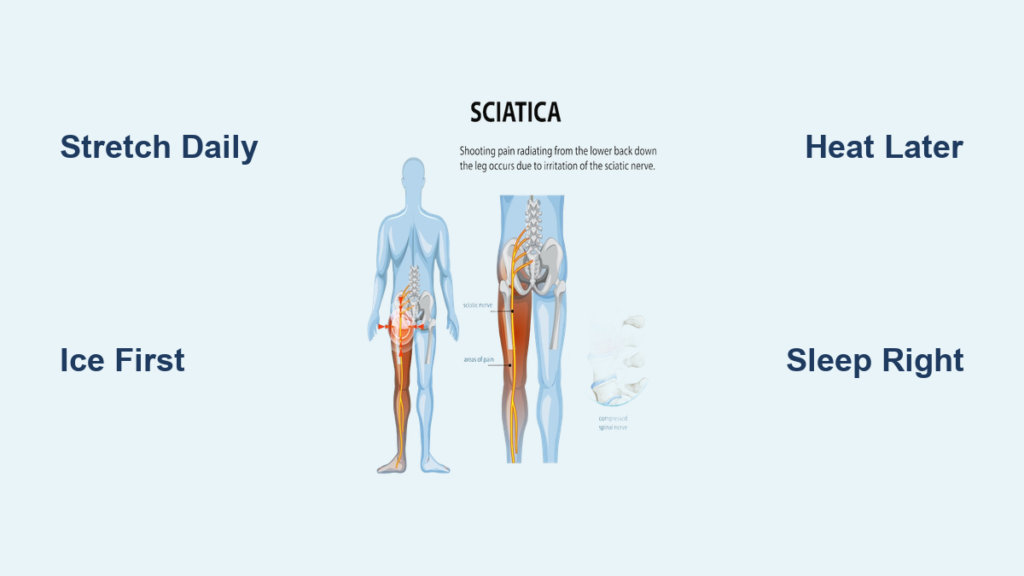
That sharp, shooting pain radiating from your lower back down your leg can bring your day to a screeching halt. Sciatica affects millions of people, transforming simple activities like sitting at your desk or walking the dog into painful challenges. While professional care is sometimes necessary, most mild to moderate sciatica cases respond well to consistent home treatment you can start immediately.
This guide delivers practical, proven techniques you can implement today using everyday household items. You’ll discover exactly which stretches target your specific pain pattern, how to time heat and ice for maximum relief, and sleep positions that help you wake up pain-free. By following these evidence-based approaches, you’ll calm irritated nerves and regain mobility faster.
Pinpoint Your Sciatica Pain Pattern for Targeted Relief
Understanding your specific sciatica symptoms helps you select the most effective home treatments rather than wasting time on approaches that won’t address your particular nerve irritation.
Acute vs Chronic Sciatica: Different Approaches Needed
Acute sciatica strikes suddenly—often after lifting something heavy or twisting awkwardly—and typically lasts days to weeks. You’ll experience intense, sharp pain that often improves with gentle movement. Chronic sciatica persists for months, featuring dull aching that worsens throughout the day with activity. Acute cases respond best to ice and gentle mobility work initially, while chronic cases often need heat therapy and consistent stretching to address long-standing tension.
Nerve Root Location Determines Your Best Stretches
Pay close attention to where you feel symptoms to target your treatment effectively. Pain traveling down the back of your leg to your foot indicates L5-S1 nerve root involvement. Numbness affecting your shin and big toe suggests L4-L5 is the culprit. Tailoring your stretches to your specific pain pattern delivers faster results than generic approaches. For example, L5-S1 sciatica responds better to seated spinal decompression, while L4-L5 benefits more from supine hamstring releases.
Critical Warning Signs Requiring Immediate Medical Attention
Stop home treatment immediately and seek professional care if you experience loss of bladder control, severe weakness in both legs, or numbness in your groin area. These indicate serious nerve compression that requires medical intervention. Don’t risk permanent damage by continuing home remedies when your symptoms suggest a more serious condition.
Daily Stretching Routine for Immediate Sciatica Relief
Performing these five targeted stretches consistently delivers significant pain reduction by releasing pressure on the sciatic nerve.
Standing Piriformis Stretch for Buttock Tension
Stand facing a table or counter for balance. Cross your affected leg over your other knee, creating a figure-4 shape. Slowly bend your standing leg while keeping your torso upright until you feel a deep stretch in your buttock. Hold for 30 seconds, then repeat 3 times on each side. Stop immediately if you feel sharp pain—this stretch should create tension, not nerve pain.
Seated Spinal Decompression for Nerve Pressure
Sit on a sturdy chair with feet flat on the floor. Slowly arch your back while gently pulling your knees toward your chest. Hold this position for 10 seconds, then release. Perform 10 repetitions whenever pain flares—this creates space between vertebrae to relieve nerve compression. This move works particularly well after prolonged sitting.
Supine Hamstring Release for Leg Pain
Lie on your back near a doorway. Raise your affected leg and rest your heel against the doorframe while keeping your other leg flat on the floor. Slide closer to increase stretch intensity. Hold for 30 seconds, then repeat twice daily. This gentle stretch addresses hamstring tightness that often exacerbates sciatic nerve irritation.
Knee-to-Chest Mobilization for Lower Back Relief
Lying on your back, gently pull one knee toward your chest using both hands while keeping the other leg extended. Hold for 30 seconds, then switch legs. For broader relief, pull both knees simultaneously toward your chest to decompress your lower spine. Perform this stretch first thing in the morning to reduce stiffness from overnight positioning.
Cat-Camel Spine Movement for Overall Mobility
Start on hands and knees with wrists under shoulders and knees under hips. Slowly arch your back upward (like a cat), then dip your belly downward while lifting your head (camel pose). Move gently through 10-15 repetitions to restore spinal mobility and reduce nerve compression. This dynamic movement works better than static stretches for many sciatica sufferers.
Strategic Heat and Ice Application Protocol

Temperature therapy dramatically reduces sciatic nerve inflammation when applied according to specific timing principles that match your pain phase.
Ice Therapy for New Sciatica Flare-Ups
Apply ice packs wrapped in a thin towel to your lower back for 15-20 minutes every 2-3 hours during the first 48-72 hours after pain onset. Focus on the area of maximum tenderness, not necessarily where you feel leg symptoms. Ice reduces inflammation around the nerve root—crucial for acute pain relief. Never apply ice directly to skin to avoid frostbite.
Heat Therapy for Ongoing Muscle Tension
After the initial inflammatory phase subsides (typically after 3 days), switch to heat therapy. Use a heating pad on low-medium setting for 15-20 minutes, 3-4 times daily. Morning application helps reduce stiffness from overnight positioning. Heat relaxes tight muscles surrounding the sciatic nerve, providing significant relief for chronic cases.
Contrast Therapy for Stubborn Sciatica
Alternate ice and heat for persistent cases that haven’t responded to single-modality treatment. Apply ice for 10 minutes, then heat for 10 minutes, ending with ice to prevent rebound inflammation. This cycle works particularly well for piriformis-related sciatica where both inflammation and muscle spasm contribute to nerve compression.
Optimal Sleep Positions for Nighttime Sciatica Relief

Your sleeping position dramatically impacts sciatica recovery—adjust these immediately to wake up with less pain.
Side-Sleeping Position with Strategic Pillow Placement
Lie on your non-painful side with a pillow between your knees. Add another small pillow under your waist to maintain spinal alignment. This position reduces nerve tension significantly compared to sleeping without support. If pain persists, try placing a rolled towel under the pillow between your knees for additional support.
Back-Sleeping Modifications for Spinal Alignment
If you prefer sleeping on your back, place a pillow under your knees to maintain your spine’s natural curve and take pressure off the sciatic nerve. Add a small rolled towel under your lower back for additional support. Avoid sleeping flat on your back without support, as this increases pressure on lumbar discs.
Morning Movement Strategy Before Getting Up
Before swinging your legs out of bed, perform gentle knee-to-chest stretches while still lying down. This warms up your spine and reduces the sharp pain that often occurs with first movement of the day. Take 30 seconds for these simple movements to set a pain-free tone for your morning.
Critical Daily Movement Adjustments for Faster Healing
Your everyday movements either heal or aggravate sciatica—implement these changes immediately to support recovery.
Sitting Duration Limits and Posture Corrections
Never sit longer than 30-45 minutes without standing and moving. Set phone alarms as reminders. When sitting, keep both feet flat on the floor and avoid crossing legs, which rotates the pelvis and increases nerve compression. Use a small rolled towel behind your lower back for additional support during necessary prolonged sitting.
Standing Desk Setup for Sciatica Sufferers
If possible, alternate between sitting and standing every 30 minutes. When standing, keep one foot slightly elevated on a small box or book. This reduces lower back strain significantly by taking pressure off the sciatic nerve pathway. Standing too long without support can be as problematic as sitting for sciatica sufferers.
Walking Technique Modifications
Take short, frequent walks throughout the day rather than one long walk. Focus on shorter strides to avoid overextending your sciatic nerve. Walk on flat surfaces initially—avoid hills until symptoms improve. Even 5-minute walks every hour can significantly reduce sciatic pain compared to remaining sedentary.
Warning Signs That Require Professional Evaluation
Certain symptoms indicate your sciatica needs medical attention rather than continued home treatment.
Progressive Weakness and Foot Drop
If leg weakness worsens despite consistent home treatment, or if you notice foot drop (inability to lift your foot when walking), seek medical care within 24-48 hours. These indicate significant nerve compression that requires professional evaluation to prevent permanent damage.
Severe Night Pain and Systemic Symptoms
Pain that consistently wakes you from sleep, especially when accompanied by fever or unexplained weight loss, needs medical evaluation to rule out serious conditions. Normal sciatica typically improves with position changes and doesn’t cause systemic symptoms.
Realistic Sciatica Recovery Timeline
Understanding expected healing timeframes prevents frustration and premature return to normal activities.
Week 1-2: Acute Phase Focus
During the first 1-2 weeks, focus on gentle movement and inflammation reduction. Most people notice 20-30% improvement in pain levels within the first week when following consistent stretching protocols. Pushing too hard during this phase often prolongs recovery.
Week 3-6: Subacute Recovery Period
Gradual improvement continues as inflammation subsides. Expect 50-70% improvement during weeks 3-6. Begin adding gentle strengthening exercises as pain allows, but continue prioritizing stretches that provide immediate relief.
When to Seek Professional Help
If minimal improvement occurs after 4-6 weeks of diligent home treatment, or if symptoms fluctuate significantly, consider professional evaluation. Persistent sciatica may indicate underlying issues like herniated discs that require specialized treatment beyond home remedies.
Consistent application of these targeted home treatments delivers significant sciatica relief for most sufferers. Start with the stretches that feel most comfortable for your specific symptoms and track your progress daily. Remember that pushing through sharp pain delays healing—work within your pain threshold for best results. Most cases resolve within 6-8 weeks with dedicated home treatment, but listen to your body and seek professional help if warning signs appear.