Every American throws away nearly 5 pounds of garbage daily—enough to fill a small car annually. That staggering 1,000+ pounds per person heads straight to landfills where food scraps churn out methane (84 times more potent than CO₂). But here’s the breakthrough: systemic changes in just three rooms can eliminate 70% of household waste. You’ll not only shrink your trash can but also save $500+ yearly through smarter shopping and reusable swaps.
This isn’t about perfection—it’s about progress. Within weeks, you’ll stop creating 71 upstream trash cans for every can of household waste. We’ll dive into proven tactics that target the real culprits: food scraps (30% of waste), packaging (25%), and paper products (20%). Start with one strategy today, and by month’s end, you’ll see tangible results in your overflowing bins.
Conduct a 7-Day Waste Audit
Stop guessing what you’re throwing away. For one week, place separate containers for trash and recycling beside every bin in your home. Sort items daily into four categories: food scraps, packaging, paper, and “miscellaneous.” Critical tracking tip: Note the top five items discarding daily—most households discover plastic wrappers, food containers, and paper towels dominate their waste stream.
Analyze Your Trash Patterns
- Identify hotspots: Does your bathroom generate 30% of paper waste? Is takeout packaging overwhelming your kitchen?
- Calculate compostables: Food scraps and yard trimmings make up 30% of household waste—composting these is your fastest win
- Spot single-use traps: Track disposable items like coffee pods or produce bags that could be replaced
Most families find 60% of their “trash” is actually recyclable or compostable. Use this data to prioritize your first action: if food waste tops your list, start composting tomorrow. If plastic packaging dominates, build a bulk shopping kit this weekend.
Transform Kitchen Waste Production
:max_bytes(150000):strip_icc()/ses-brabantia-sort-go-small-countertop-compost-bin-cheyenne-elwell-09-e8eece4ba40d445680a45f597bc96a94.jpeg)
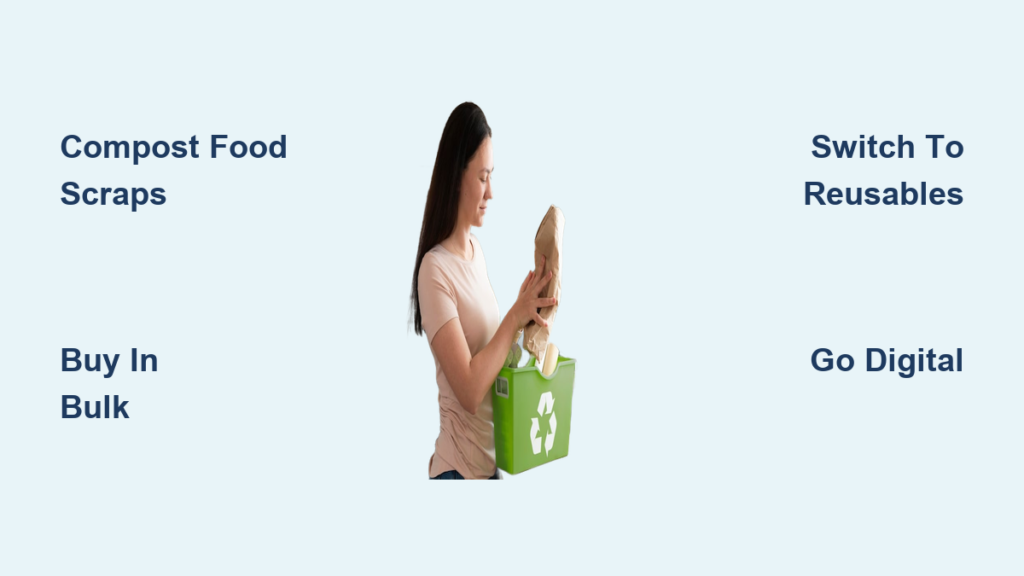
Compost Food Scraps Immediately
Composting diverts 30% of household waste while creating garden gold. Skip complicated setups: begin with a countertop container featuring a carbon filter to neutralize odors. What to compost now: fruit/vegetable peels, coffee grounds, eggshells, and herb stems. Avoid meat/dairy in home systems. Choose your method based on space:
– Apartment dwellers: Worm bins (vermicomposting) work indoors and produce nutrient-rich castings
– Yard owners: Tumbling composters finish in 3-6 months—twice as fast as static piles
– Urban residents: Check for municipal curbside pickup or local drop-off sites at farmers’ markets
Prevent Food Waste Through Smart Systems
Stop edible food from becoming trash with these tactical shifts:
– Implement FIFO: Label leftovers with dates and store new items behind older ones
– Freeze strategically: Spread berries on baking sheets before bagging to prevent clumping
– Use entire produce: Roast vegetable skins for crisp snacks, zest citrus peels, or make pesto from carrot tops
– Store correctly: Keep herbs upright in water glasses (like flowers) and apples away from other produce—they release ethylene gas that speeds spoilage
Eliminate Kitchen Disposables
Replace these high-impact items immediately:
– Paper towels: Switch to Swedish dishcloths (compostable after 9 months) or microfiber cloths
– Plastic storage: Use glass containers with airtight lids or reusable silicone bags
– Plastic wrap: Opt for beeswax wraps that last a year with proper care
– Disposable cutlery: Keep bamboo utensils in your car for unexpected takeout
Shop Like a Waste Warrior

Buy in Bulk with Precision
Bulk shopping cuts packaging waste while often lowering costs. Bring these essentials: glass jars for dry goods, cloth produce bags, and stainless steel containers for liquids. Target these high-impact items:
– Staples: Beans, rice, and pasta (avoid pre-portioned bags)
– Pantry refills: Spices, baking ingredients, and coffee
– Cleaning supplies: Concentrated detergent refills
Pro tip: Many stores discount items with “ugly” produce or dented cans—these taste identical but prevent food waste.
Plan Meals to Prevent Spoilage
Wasted food represents 40% of the US food supply. Stop this leak with:
1. Pantry-first shopping: Check existing ingredients before making lists
2. Exact-quantity lists: Buy only what recipes require
3. Immediate prep: Wash/chop produce right after shopping
4. Double-batch cooking: Freeze half for future “no-cook” nights
Overhaul Bathroom Routines

Switch to Concentrated Personal Care
Replace these high-waste items:
– Shampoo/conditioner: One bar replaces 3 plastic bottles and lasts 2-3 months
– Toothbrushes: Bamboo versions compost after 3-4 months (vs. plastic lasting 500 years)
– Period products: Menstrual cups prevent 10,000+ tampons per lifetime from landfills
– Toilet paper: Choose 100% post-consumer recycled (saves 423,900 trees if all US households switch one roll)
Make 2-Minute DIY Cleaners
Create effective solutions from pantry staples:
– All-purpose spray: Mix 1 part vinegar, 1 part water, and 10 drops lemon oil
– Toilet cleaner: Sprinkle ½ cup baking soda + 10 drops tea tree oil, scrub after 10 minutes
– Glass cleaner: Equal parts vinegar and water in a spray bottle
Warning: Never mix vinegar with bleach—it creates toxic fumes.
Revolutionize Laundry Habits
Ditch Disposable Laundry Aids
- Dryer sheets: Wool dryer balls last 500+ loads, cut drying time 25%, and soften clothes
- Detergent jugs: Switch to concentrated strips that dissolve in cold water
- Plastic bags: Use mesh laundry bags for delicates (prevents microfiber shedding)
Air-Dry Strategically
Clothes dryers consume 6% of household energy. Save $85 yearly by:
– Using foldable racks in small spaces
– Hanging shirts on shower rods
– Drying outdoors when possible
– Placing racks near heating vents in winter
Build Your On-the-Go Waste Kit
Assemble a Permanent Travel Bundle
Keep these in your car or work bag:
– Stainless steel water bottle
– Collapsible food container
– Bamboo utensil set
– Cloth napkin
– Reusable coffee cup (many shops offer 10-25¢ discounts)
Navigate Takeout Without Trash
- Call ahead: “I’ll bring my own container for leftovers”
- Specify: “No plastic utensils or napkins, please”
- Choose wisely: Support restaurants using compostable packaging
- Carry containers: Hand them to servers immediately after ordering
Slash Paper Waste Systematically
Go Digital with Key Actions
- Switch to paperless billing/statements
- Request email receipts (avoid thermal paper coated in BPA/BPS)
- Opt out of junk mail at DMAchoice.org
- Use apps like Google Keep for lists and notes
Gift Sustainably
- Wrap presents in reusable fabric (furoshiki style)
- Give digital gift cards or experience vouchers
- Plant gifts in reusable pots
- Choose secondhand treasures from thrift stores
Track Progress to Stay Motivated
Measure Monthly Reduction
- Note how often trash bins go out (aim to halve frequency)
- Track compost bin fill rate (should increase as trash decreases)
- Calculate grocery savings from bulk shopping
- Photograph “avoided packaging” weekly
Celebrate Milestones
Share wins to inspire others:
– Post “trash can transformation” photos
– Calculate pounds diverted monthly
– Host zero-waste potlucks with friends
– Teach one new skill (like making beeswax wraps)
Scale Your Impact Beyond the Home
Join Community Action
- Advocate for municipal composting programs
- Start a neighborhood tool-sharing library
- Organize buy-nothing groups for unwanted items
- Push for plastic reduction policies at city hall
Remember the Big Picture
Every purchase votes for the world you want. The 42% of greenhouse gas emissions from goods manufacturing drops when consumers demand better packaging. Start with one room this week—your kitchen sink or bathroom counter. Within 30 days, you’ll see your 5-pound daily trash shrink toward 1 pound. The planet needs your action, and your wallet will thank you for the savings. Your journey to reducing garbage at home begins the moment you empty today’s trash bag.