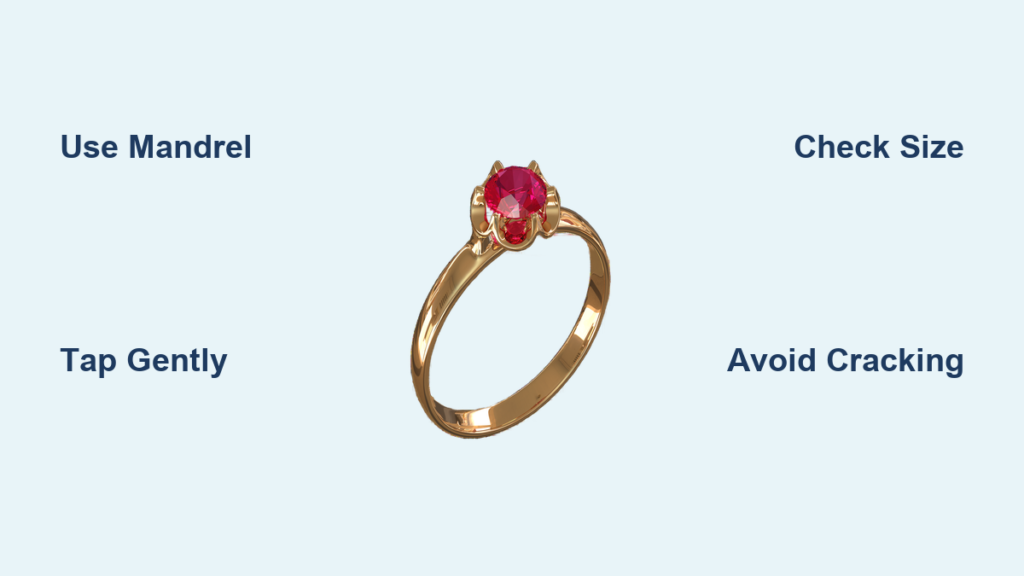
Your engagement ring suddenly feels like a vice grip on your finger. Maybe your hands swelled during pregnancy, or you inherited a beautiful heirloom that’s just half a size too small. Before you store that precious piece away forever, know this: you can safely enlarge many rings at home with basic tools and careful technique. This guide reveals proven methods to make a ring bigger at home without expensive trips to the jeweler.
Most people don’t realize that resizing a ring by up to two full sizes is possible with household items and simple techniques. You’ll discover which metals respond best to home resizing, exactly how to stretch your band safely, and when to call in a professional. Whether you’re dealing with a sentimental heirloom or a simple gold band, these methods could save you $50-$200 on professional resizing fees.
Identify Which Rings Can Be Safely Enlarged at Home
Spot Metals That Won’t Crack During Resizing
Gold rings (14k, 18k, or 24k) offer the best chance for successful home resizing—they’re soft enough to stretch without fracturing. Sterling silver also works well but requires gentler handling since it’s more prone to stress fractures. If you have a copper or brass ring, you’re in luck—these metals stretch easily but will need frequent polishing to combat tarnishing.
Avoid home resizing for titanium, tungsten, or platinum rings—these metals are either too hard or too brittle for DIY techniques. Stainless steel presents similar challenges and typically requires professional equipment. If your ring contains glued stones or uses tension settings, skip home methods entirely—these designs can’t withstand stretching forces.
Recognize Problematic Ring Designs
Solid bands under 4mm wide handle stretching best, accommodating up to 2 full sizes safely. Eternity bands with stones circling the entire circumference can’t be stretched—the continuous setting will crack under expansion. Thin shanks under 2mm wide risk breaking with even slight enlargement, limiting you to half-size increases maximum.
Wide bands over 6mm require substantial force and often deform without proper tools. Split shank designs can spread apart but risk losing alignment between the splits. If your ring has intricate engravings, stretching may distort these details—photograph them first as a reference for potential restoration.
Stretch Your Ring Using Basic Household Tools

Gather Essential Equipment Before Starting
You’ll need just five items for successful ring stretching:
– A steel ring mandrel (or tapered cone-shaped object)
– Rawhide or nylon mallet (never use metal hammers)
– Penetrating oil like WD-40
– Soft cloth and safety glasses
– Work gloves for secure grip
If you don’t own a proper mandrel, substitute with a tapered steel rod from a hardware store. Avoid wooden mandrels—they absorb oil and won’t provide smooth expansion. The mallet must be non-marring; even a rubber mallet can leave marks on softer metals.
Follow This Step-by-Step Stretching Process
1. Clean thoroughly – Wash the ring with mild soap and warm water. Any oil or debris creates uneven pressure points during stretching. Dry completely before proceeding.
2. Lubricate the mandrel – Spray a light coat of penetrating oil on the mandrel. This reduces friction and prevents metal scoring. Wipe off excess so only a thin film remains.
3. Position correctly – Slide the ring onto the mandrel’s narrow end, ensuring it sits level. The bottom of the shank should align with your current size marking.
4. Begin gentle tapping – Using light, controlled strikes (think “tap” not “hammer”), tap the ring downward while rotating it 1/8 turn after each strike. Apply consistent pressure around the entire circumference.
5. Check progress frequently – After 4-5 light taps, slide the ring up the mandrel to gauge expansion. The goal is gradual, even stretching—never exceed 2 full sizes as the metal becomes dangerously thin.
6. Polish the finish – Use a jeweler’s cloth to restore shine and remove any tool marks. For stubborn marks, a small amount of metal polish works wonders.
Master the Mandrel and Pliers Technique for Small Adjustments
Achieve Precise 0.5-1 Size Increases
This method offers more control than hammer stretching for minor adjustments. Heat the ring gently with a hair dryer for 30 seconds—this softens gold and silver slightly, making them more pliable. Place on mandrel at your current size, then use smooth-jaw pliers to apply steady, even pressure around the circumference.
Work in quarter-turn increments, checking size after each rotation. Let the ring cool naturally—never quench hot metal in water as rapid cooling can create internal stresses that lead to cracks later. This technique typically takes 10-15 minutes and produces smoother results than hammer stretching for small increases.
Implement Temporary Fixes for Immediate Relief

Emergency Solutions for Tonight’s Event
When you need to wear the ring immediately but can’t resize permanently:
Plastic ring guards slide onto the shank, reducing the apparent size by 1-2 sizes. They’re invisible from the top but can irritate skin over time. Metal spring adjusters offer more durability and adjustability, though they cost slightly more.
For quick fixes, wrap dental floss tightly around the shank, securing the end with clear nail polish. Medical tape works similarly—wrap 2-3 layers for a half-size reduction. These methods provide immediate relief but aren’t suitable for daily wear.
Know When Professional Help Becomes Essential
Critical Warning Signs You Need a Jeweler
Seek professional resizing when your ring contains diamonds or gemstones—the expansion process can loosen settings and cause stone loss. Platinum rings require hydraulic presses and specialized knowledge beyond home capabilities.
Intricate engravings may distort during stretching. Family heirlooms or rings valued over $500 deserve professional treatment regardless of simplicity. If previous resizing work is visible, another DIY attempt could worsen the appearance and structural integrity.
Cost Reality Check: Professional vs DIY
DIY investment ranges from $50-200 for basic tools, potentially saving money if you resize multiple rings. However, professional simple sizing costs $30-60—often less than your tool investment for a single ring. Complex work runs $80-200, while platinum resizing reaches $150-400.
Prevent Damage With Proper Post-Resizing Care
Immediate Inspection Protocol
Clean the ring in mild soapy water immediately after resizing. Inspect carefully for:
– Hairline cracks in the shank
– Loose stones or weakened prongs
– Uneven thickness around the band
– Discoloration from heating
Check stone security by gently tapping the ring against your palm—any rattling indicates loose settings needing professional attention. If you notice any issues, stop wearing the ring immediately.
Long-term Maintenance Schedule
Inspect resized rings every 6 months for signs of weakness. Schedule professional cleaning annually, especially for rings worn daily. Avoid harsh chemicals like chlorine or bleach, which can attack solder joints. Remove rings during heavy activities—resized areas are inherently weaker than original metal.
Troubleshoot Common Resizing Problems
Fix an Oval-Shaped Ring Immediately
Cause: Uneven hammer strikes or pressure application
Solution: Re-round on mandrel using even, gentle taps around the entire circumference. Rotate the ring constantly while applying light pressure until circular shape returns.
Address Loose Stones After Resizing
Cause: Metal expansion affecting prong tension
Solution: Prongs need retightening—this requires professional stone-setting tools. Do not wear the ring until a jeweler can secure the stones.
Emergency Ring Removal When Stuck
Safe Techniques Before Cutting
If your ring gets stuck after attempting resizing, try these removal techniques:
Ice method: Submerge your hand in ice water for 2-3 minutes. Cold reduces swelling significantly.
Lubrication: Soap, oil, or Windex provide slip. Apply generously and twist—don’t pull straight off.
Elevation trick: Raise your hand above heart level for 5 minutes to reduce blood flow and swelling.
Medical Emergency Protocol
If your finger turns blue or white, seek immediate medical help. Hospital emergency departments have ring cutters that preserve the ring while ensuring your safety. Remember: a $2000 ring isn’t worth risking a finger.
Final Expert Recommendations for Successful Resizing
Practice on a $20 silver band from a thrift store before touching anything valuable. Master the basic stretching technique before attempting soldering. For rings over $500 or those with sentimental value, professional resizing typically costs less than replacing a destroyed ring.
Document your ring’s original size and take photos before starting. This creates a baseline if you need professional restoration. Most importantly, never resize rings you’re not prepared to lose—DIY work carries inherent risks regardless of technique. Your successfully resized ring should feel comfortable but secure, sliding on with slight resistance while turning comfortably without spinning freely.