Few discoveries unsettle homeowners like finding bats in the attic. These nocturnal visitors often enter through gaps smaller than a quarter-inch, turning your peaceful home into their daytime roost. While bats provide incredible mosquito control outdoors, their presence indoors poses health risks and creates costly damage through accumulated droppings. The constant scratching and high-pitched squeaks in your walls signal an urgent need for action—especially when you consider that bat guano can harbor harmful fungi and trigger respiratory issues.
This guide walks you through proven methods to humanely exclude bats and prevent their return. You’ll learn to identify entry points, implement effective deterrents, and establish long-term protection—all while staying compliant with wildlife protection laws. Most importantly, you’ll discover how to keep bats away from home without harming these ecologically vital creatures, preserving their insect-control benefits while safeguarding your living space.
Identify Bat Entry Points
Common Entry Locations
Bats exploit the smallest vulnerabilities in your home’s exterior. Focus your inspection on these high-risk areas where gaps often form: Roofline gaps along eaves and fascia boards, especially where different building materials meet; uncapped chimneys or damaged chimney screens; attic vents, soffit vents, and gable vents lacking proper screening; and utility penetrations where electrical lines or pipes enter your home. Pay special attention to spaces around window and door frames, as loose trim creates perfect bat highways.
Visual Inspection Process
Conduct daylight inspections to spot obvious gaps, but critical entry points reveal themselves during twilight observation. Position yourself outside 30 minutes before sunset and watch for bats emerging—typically within a 15-20 minute window. Mark these locations immediately with chalk for exclusion planning. Pro tip: Look for dark staining around gaps. Bat fur leaves distinctive greasy marks that highlight frequently used entrances, making them visible even when bats aren’t actively exiting.
Seal Entry Points Permanently
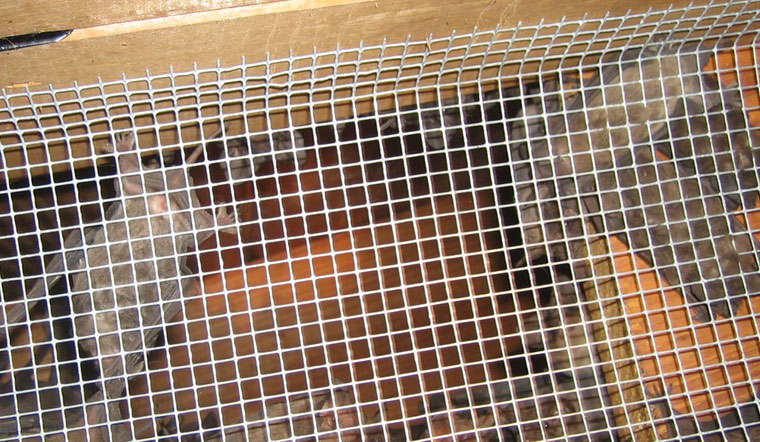
One-Way Exclusion Method
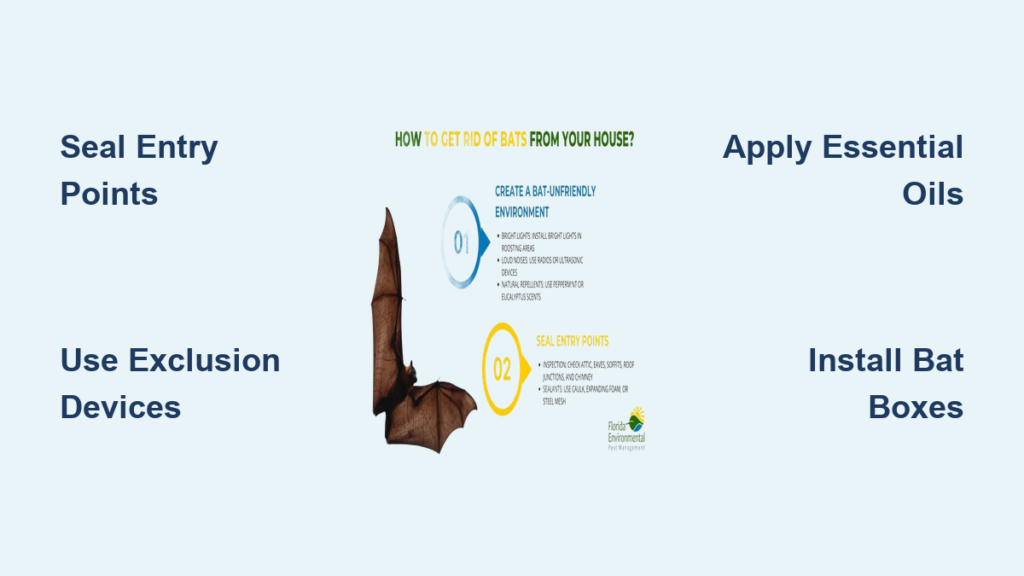
Never seal bats inside—that’s both inhumane and illegal in most regions. Instead, install one-way exclusion devices that allow bats to exit but prevent re-entry. Start by installing temporary exclusion tubes at all active entry points. Wait 2-3 nights to ensure all bats have exited (bats won’t re-enter through these one-way exits). Then remove the tubes and immediately seal openings with permanent materials. Conduct a final sunset inspection to confirm no bats remain trapped inside.
Sealing Materials That Work
For small gaps under 1/2 inch, use high-quality exterior caulk combined with backer rod for deeper cracks. For larger openings, 1/4 inch hardware cloth (galvanized steel mesh) provides durable protection when secured with corrosion-resistant screws. Always pair chimney caps with 3/8 inch stainless steel mesh, and use metal flashing for structural gaps around roof intersections. Warning: Avoid relying solely on expanding foam—bats can chew through polyurethane foam within days, rendering it ineffective as a long-term barrier.
Apply Natural Deterrents

Essential Oil Repellents
Bats detest strong menthol scents, making essential oils effective natural repellents. Create peppermint spray by mixing 15 drops of oil with 2 cups water in a spray bottle—apply weekly to potential roosting areas like attic rafters and wall voids. For sustained effect, soak cotton balls in cinnamon oil, place them in mesh bags, and hang these sachets in attic corners (replace monthly). Fresh eucalyptus branches strategically positioned in attic spaces provide continuous deterrent effects through their potent aroma.
Light and Sound Barriers
Disrupt bat navigation with LED strobe lights installed in dark attic spaces, setting them to activate automatically at dusk. These rapid flashes make roosting areas uncomfortable without disturbing household members. Supplement with ultrasonic devices emitting frequencies above human hearing range (typically 20-100 kHz), positioning units near previous entry points to ensure overlapping coverage. For immediate situations, leave talk radio playing in attics during daylight hours—the human voice frequencies deter roosting behavior.
Modify Your Home Environment

Landscaping Adjustments
Reduce bat attractants through strategic yard modifications: Trim tree branches to maintain 8-10 foot clearance from your roofline, eliminating easy access routes. Relocate birdbaths and fountains at least 25 feet from your home to remove nearby water sources. Switch outdoor lighting to yellow “bug lights” that attract fewer insects, reducing the food supply that draws bats toward your structure. Remove dead trees within 30 feet of your house that could serve as natural roosting habitat.
Create Alternative Roosting Sites
Install bat boxes 15-20 feet high on free-standing poles (not your house) positioned 20-30 feet from your home. Face these boxes south or southeast to capture morning sun for optimal warmth, and ensure 10+ feet of clear flight path for easy access. Mounting on metal poles prevents predator access while giving displaced bats a humane relocation option. This strategic approach helps keep bats away from home by providing appealing alternatives that preserve their ecological benefits.
Understand Legal Requirements
Protected Species Guidelines
Most bat species enjoy federal protection, making exclusion timing critical. Never exclude bats during maternity season (typically May-July) when flightless young would be trapped inside. The legal window for exclusion runs September through March in most regions. For colonies exceeding 10 bats, professional consultation is often legally required before any exclusion work. State variations exist significantly—always contact your local wildlife agency for specific regulations before starting any bat removal project.
Ethical Removal Practices
Humane exclusion is the only legal approach in protected areas. Never attempt direct bat handling—this risks rabies exposure and violates wildlife laws. If bats enter living spaces, isolate the room, open windows for natural exit, and contact animal control. Remember that lethal methods like poisoning or glue traps are illegal nationwide for protected species and can result in significant fines.
Establish Monitoring Systems
Monthly Inspection Routine
Create a systematic checking process: Conduct exterior walk-arounds monthly to spot new gaps or storm damage, especially after heavy winds. Check attics for fresh droppings, unusual sounds, or ammonia odors indicating reinfestation. Verify previous seals remain intact around vents and rooflines. Finally, replenish essential oil repellents and check ultrasonic device batteries to maintain continuous protection.
Early Warning Signs
Catch reinfestations early by watching for: Small, dark droppings accumulating beneath eaves (distinct from mouse droppings by their crumbly texture), grease stains around previously sealed openings, scratching sounds in walls during evening hours, and strong ammonia odors from accumulating guano. These signs indicate bats have found new entry points, requiring immediate attention to keep bats away from home.
Handle Health and Safety Concerns
Safe Guano Cleanup
Never sweep dry bat droppings—the resulting dust contains hazardous fungal spores. Instead, wear an N95 mask, gloves, and eye protection. Lightly mist droppings with a 1:10 bleach solution to suppress dust, then carefully collect using damp paper towels. Double-bag all waste in sealed plastic bags and dispose of according to local regulations. For accumulations larger than one square foot, professional cleaning becomes essential due to serious health risks.
Rabies Prevention Protocol
Never handle bats directly—even injured ones. If a bat enters living areas, close interior doors to isolate the room while opening exterior windows to encourage natural exit. Contact animal control immediately for safe removal. Seek emergency medical attention for any bites or scratches, as rabies post-exposure prophylaxis must begin promptly. Assume all bats could carry rabies; this precaution keeps both your family and the bats safe during exclusion processes.
Implement Long-Term Prevention
Annual Maintenance Calendar
Schedule critical tasks seasonally: In spring (March-April), complete exterior inspections after winter weather and repair damage before bats return. During summer (May-August), monitor for activity while maintaining bat boxes as alternative habitat. In fall (September-October), conduct exclusion work after young bats can fly and install permanent seals. Winter (November-February) is ideal for addressing interior repairs when bats are absent.
Integrated Long-Term Strategy
Combine multiple methods for sustained protection—no single deterrent provides complete security. Layer physical barriers like hardware cloth screening with natural repellents and environmental modifications. Document all exclusion dates, materials used, and inspection findings to create a maintenance history that identifies patterns. This comprehensive approach ensures you’ll successfully keep bats away from home year after year while preserving their vital role in controlling night-flying insects.
The key to lasting bat control lies in understanding these creatures’ needs and systematically removing their access to your home. By implementing these humane exclusion methods and maintaining vigilant monitoring, you’ll create an environment that naturally directs bats to alternative roosting sites—keeping both your family and the bats safe while preserving the valuable pest control benefits they provide to our ecosystem. Consistent application of these strategies transforms your home from an attractive roost into a space bats choose to avoid, solving your problem for good.