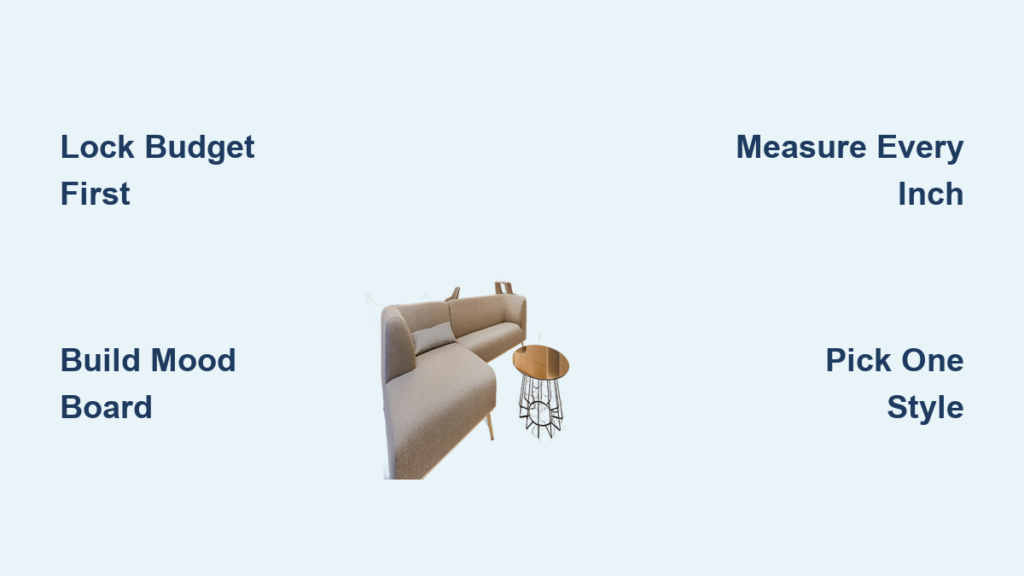
You’ve scrolled through endless Pinterest feeds, saved dozens of Instagram inspo shots, and now face your blank living room walls with overwhelming confusion. Most homeowners jump straight to paint swatches or sofa shopping—only to end up with disjointed spaces that feel “almost right” but never truly cohesive. The secret? How to design home interior successfully starts long before you touch a single throw pillow. By following a battle-tested sequence—budget first, mood boards second, measurements third—you’ll transform chaos into a space that reflects your personality while staying within financial reality. This guide cuts through the noise with actionable steps used by professional designers, so you avoid common pitfalls like furniture that blocks doorways or color schemes that clash with your heirloom rug.
Lock Your Budget Before Touching a Paint Swatch
Skipping this step guarantees heartbreak when your dream velvet sofa devours the entire budget. Open a spreadsheet now and list every expense: furniture, paint, labor, even delivery fees. Tag each item as “must-have” (like a functional dining table), “nice-to-have” (a statement chandelier), or “skip for now” (that imported Moroccan rug). Crucially, add a 10–20% contingency row—20% for older homes with hidden wiring issues, 10% for new builds. When comparing contractor quotes, don’t just pick the cheapest. Demand to see photos of their past projects and verify timelines. A $500 savings isn’t worth it if your kitchen remodel drags on for months.
Why Budget Discipline Beats Pinterest Dreams
- Real-world example: A client blew $3,200 on a rug before realizing it left no room for seating. Stick to your spreadsheet’s “must-have” column first.
- Pro tip: Allocate 45% of your budget to foundational furniture (sofa, bed, dining set), 30% to surfaces (rugs, paint, window treatments), 15% to lighting, and 10% to accessories.
- Warning: If your mood board costs exceed your budget by 25% or more, edit ruthlessly before shopping.
Build a Mood Board That Actually Guides Your Decisions
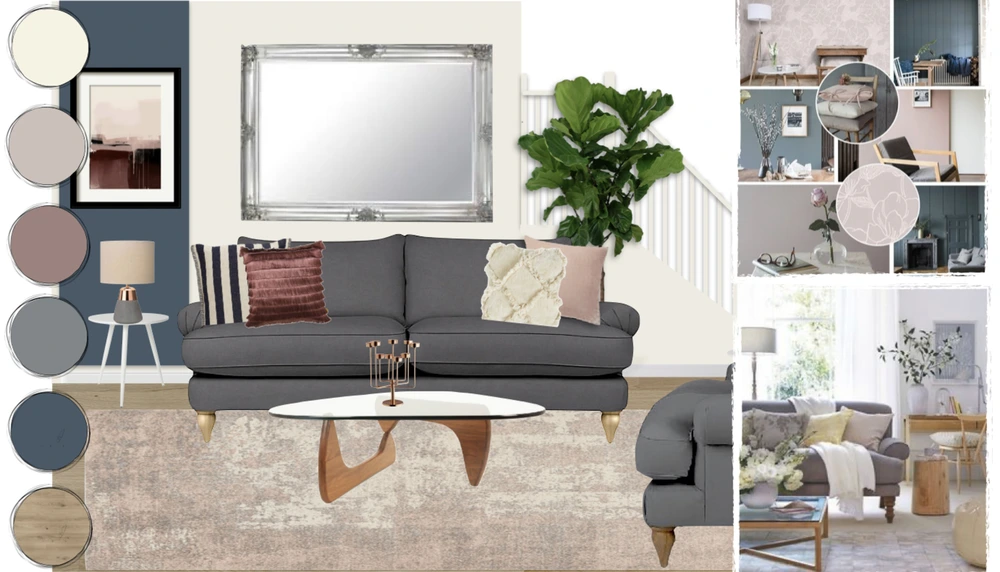
Forget slapping random “dream room” images on Pinterest. True mood boards solve problems. Start with Round 1: Pin 50 raw images—entire rooms, single chairs on white backgrounds, texture close-ups—without filtering. After a week, patterns emerge. Maybe 70% feature warm wood tones and earthy greens. That’s your authentic style, not the “Scandinavian minimalism” you thought you wanted. Now enter Round 2: Drag your strongest pins into Canva. Drop in photos of items you already own (like Grandma’s Persian rug). If the rug clashes with every sofa you love, decide now: sell it or design around it. Don’t force incompatible pieces.
How to Choose Your Design Springboard Object
- What works: A vintage brass mirror, a weathered cutting board, or a single abstract painting—not a full room photo.
- Test it: Hold the object against paint chips. If nothing feels harmonious, it’s not your anchor. Keep hunting.
- Critical mistake: Choosing an object you “should” like (because it’s expensive) versus one that genuinely excites you.
Measure Every Inch Before Moving Furniture

Your tape measure is the most powerful design tool you own. Measure walls, windows, outlets, ceiling height, and door swings—not just once, but twice. Sketch a floor plan on graph paper (1 square = 1 foot) or use free tools like Roomstyler 3D. Then, lay painter’s tape on your actual floor outlining rug and furniture shapes. You’ll instantly spot traffic jams: that “perfect” sofa might block the hallway to your bedroom. Respect these non-negotiable clearances:
- Sofa to coffee table: 14–18 inches for comfortable legroom
- Dining chair to wall: 36 inches minimum for walk-behind comfort
- Main entry path: At least 24 inches wide
Traffic Flow Fixes for Awkward Spaces
- Problem: Narrow hallway into living room.
Solution: Float furniture away from walls; use a console table instead of a full bookshelf. - Problem: Awkward corner with no natural focal point.
Solution: Place a reading nook with floor lamp and armchair—create your own destination.
Pick One Dominant Style (Not Five)
Scrolling through style guides leaves most people paralyzed. Use this shortcut: Identify two styles max from the chart below. Any more creates visual chaos. Cross out styles that clash with your springboard object (e.g., if your anchor is a rustic wooden bowl, skip “Hollywood Glam”).
| Style | Your 10-Second Shortcut | Critical Mistake to Avoid |
|---|---|---|
| Modern | Neutral walls + walnut furniture + one bold accent chair | Overdoing metallics—limit to 2 finishes max |
| Bohemian | Layered jute rug + rattan chairs + 5+ plant varieties | Clutter—use trays to corral small items |
| Scandinavian | White walls + pale wood + oversized floor lamp | Sterility—add sheepskin throws for warmth |
| Industrial | Exposed brick + leather sofa + steel pipe shelves | Coldness—soften with linen curtains |
| French Country | Cream walls + toile pillows + curved wood legs | Overdoing florals—use one pattern max |
Apply the 60-30-10 Color Rule Like a Pro

This isn’t just for walls—it’s your entire room’s visual hierarchy. Allocate:
– 60% dominant: Walls, large sofa, area rug (e.g., warm beige walls + linen sofa)
– 30% secondary: Curtains, armchairs, bookshelves (e.g., olive green velvet chairs)
– 10% accent: Throw pillows, art, vases (e.g., terracotta ceramic pots)
Test paint like a designer: Buy large samples. Paint on primed poster board (not bare wall), then move it around the room. Check it at 9 AM, 2 PM, and 8 PM—natural light shifts undertones dramatically. Avoid “pure white” unless you want clinical vibes; opt for warm whites like Benjamin Moore White Dove.
Texture Combos That Prevent Flatness
- Pair matte with gloss: Linen sofa + lacquered side table
- Mix rough with smooth: Jute rug + velvet cushions
- Pro hack: Group brass objects on a dark wood tray—this makes eclectic finds feel intentional.
Buy Foundation Furniture First (The Right Way)
Start with your largest, most expensive piece—usually the sofa. Choose a neutral, timeless silhouette in performance fabric if you have kids or pets:
– Leather: Aniline-dyed with protective finish (wipes clean)
– Fabric: Sunbrella or Crypton (resists red wine spills)
– Slipcovers: Buy two sets so one is always fresh
Scale rule: One large rug (8×10 ft) beats three tiny ones. Fewer, larger pieces make rooms feel bigger. Skip trendy sectionals—you’ll replace them in 3 years. Instead, invest in a classic 3-seater you can reupholster later.
Layer Lighting in Three Essential Stages
A single overhead fixture murders ambiance. Every room needs:
1. Ambient: Recessed ceiling lights or a central fixture (set on dimmer)
2. Task: Reading lamps, under-cabinet kitchen LEDs
3. Accent: Picture lights, sconces, or floor uplights to highlight art
Unify open-plan spaces: Repeat one finish—like brushed brass—across all fixtures. Maximize natural light with large mirrors opposite windows (Scandinavian homes double daylight this way). In dining rooms, hang pendants 30–36 inches above the table.
Inject Personality Without Clutter
Heirlooms, travel souvenirs, and kids’ art make a house a home—but only if curated. Group mismatched brass items on a single tray. Frame family photos in identical black frames. Try these character hacks:
– Refinish grandma’s side table in your new wall color (e.g., sage green)
– Swap generic lamp shades for patterned drum shades
– Hide modern tech inside vintage books (cut hollow centers)
Critical rule: If an item doesn’t spark joy and fit your color scheme, donate it now.
Use Free Tools to Avoid Costly Errors
Skip expensive software. Start with:
– Roomstyler 3D: Drag-and-drop furniture into scaled floor plans
– Houzz App: Snap photos of inspiration rooms to find similar products
– Pinterest: Create private boards for each room—label “Keep” or “Skip”
Your 5-Step Beginner Roadmap
- Measure & photograph the space (include outlets/windows)
- Pick one springboard object + three-color palette (60-30-10)
- Start with one room; buy foundation furniture first
- Add lighting, texture, personal items in layers
- Shop secondhand for unique, budget-friendly finds (Facebook Marketplace, Craigslist)
Maintain Your Design Long-Term
Design isn’t a one-time project. Cut daily stress with:
– Performance fabrics for rugs and upholstery (stain-resistant)
– Labeled paint jars stored for touch-ups (keep in garage)
– Photographed layouts before moving furniture—recreate favorites instantly
Final truth: How to design home interior successfully isn’t about expensive pieces—it’s about sequence. Lock your budget, trust your mood board’s patterns, measure obsessively, and layer personality last. Follow this order, and every room will feel intentional, cohesive, and unmistakably yours. Skip one step, and you’ll pay for it later. Start today with your tape measure and spreadsheet—you’ve got this.