
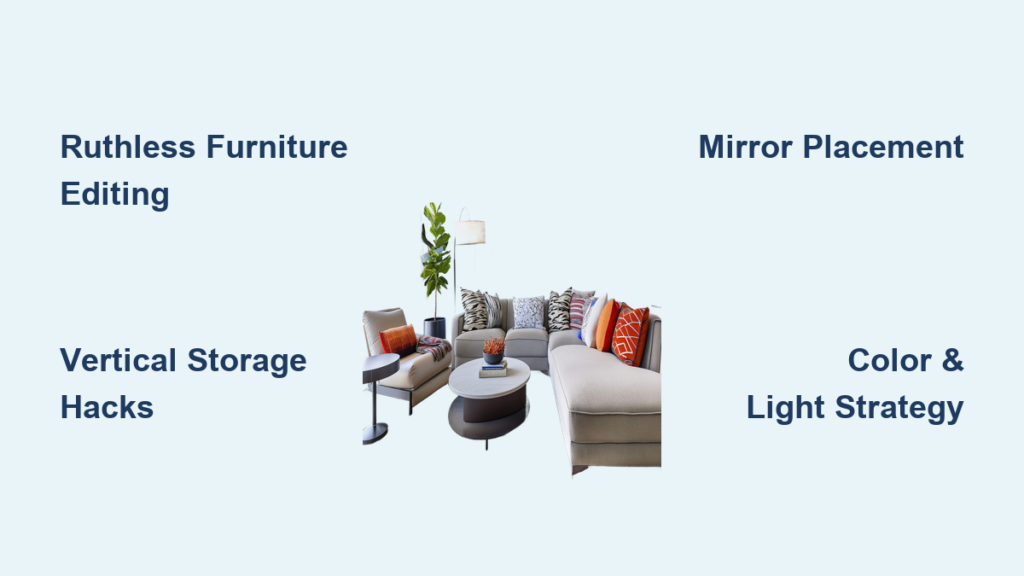
Your 450-square-foot studio feels cramped, but the secret isn’t sacrificing style—it’s strategic ingenuity. Small-space decorating demands every choice to serve double duty: your coffee table must store blankets, your walls must display art and create illusions of space, and your color palette must actively expand perceived square footage. Forget “compromise”—with intentional design, your compact home can feel luxurious, functional, and uniquely yours. By the end of this guide, you’ll transform spatial limitations into creative opportunities that even professional designers admire.
Ruthless Furniture Editing for Maximum Impact
Stop filling voids with unnecessary pieces. Small-space success starts with the Three-Question Rule: Does this item serve daily function? Does it enhance spatial perception? Could another piece perform this job better? Jennifer Jones transformed her dual-purpose guest room/office using a horizontal Murphy bed that disappears in 30 seconds—proving every square inch must earn its place. Prioritize pieces that pull triple duty: a storage ottoman becomes extra seating, coffee table surface, and blanket storage. When selecting sofas, choose low-profile frames like Habitat’s ‘Hendricks’ model to maintain sightlines, or opt for L-shaped configurations that maximize corner seating without blocking flow.
Murphy Bed Transformations That Defy Space Limits
Horizontal Murphy beds outperform vertical models in rooms under 8 feet tall, converting bedrooms into offices or gyms seamlessly. Michael Chen’s yacht-inspired installation uses a powder-blue ribbed frame that vanishes flush against cabinetry—no visible hardware. For renters, choose wall-mounted units with spring mechanisms requiring no ceiling support. Critical tip: Always measure clearance space before installation; allow 12 inches between the bed’s folded position and adjacent furniture to prevent damage.
Banquette Seating That Doubles Storage Capacity
Shapeless Studio’s custom banquette solution accommodates four diners while hiding seasonal clothing in lift-up compartments. Unlike individual chairs, built-in benches maximize seating in irregular nooks (like under-stair alcoves) and create natural room dividers. Install piano-hinge mechanisms for smooth operation, and line interiors with removable bins for easy access. Pair with a tulip table—its single pedestal base eliminates leg interference in tight walkways—to create a dining zone that feels expansive.
Vertical Storage Hacks That Create Breathing Room

Wasted vertical space is your biggest enemy. Floor-to-ceiling cabinets eliminate dust-collecting gaps above standard units while doubling storage capacity. In Brandon Schubert’s London flat, a full-wall shelving unit houses books and cabinetry without overwhelming the room because it extends uninterrupted to the ceiling. For renters, modular cube shelving systems (like IKEA KALLAX) offer similar impact without permanent installation. Pro warning: Never leave cabinet tops empty—display curated objects at eye level, but keep upper sections for infrequently used items to avoid visual clutter.
Floating Shelf Systems for Illusion of Height
Glass or open wooden shelves maintain airiness while providing critical storage. Install them strategically:
– 8 inches deep above doorframes for books or plants
– As bedside alternatives (wall-mounted nightstands free floor space)
– In grid patterns using Command hooks to avoid drilling
Amanda Jacobs amplified her cramped living room by extending a gallery wall from baseboard to ceiling. This vertical emphasis tricks the eye into perceiving greater height—use identical frames for cohesion or picture ledges for flexible reconfiguration.
Under-Stair Storage That Pays Rent
That awkward void beneath stairs is prime real estate. Convert it into:
– Pull-out drawers for off-season clothing (add casters for smooth operation)
– A compact home office with fold-down desk surface
– Pet stations with hidden food storage
In Carla Fonts’ Victorian terrace conversion, this space became an angled powder room with floating sink—proving even 36-inch depths can serve functional purposes.
Color and Light Strategies That Expand Perceived Space

Light colors aren’t your only option. While warm whites and soft sage greens reflect light to push walls outward (as Amanda Jacobs demonstrated with her fireplace transformation), deep tones like Tamsin Saunders’ chocolate-hued snug create intentional coziness. The key? Balance dark walls with abundant light sources—never let shadows pool in corners. For maximum expansion, paint walls, trim, and ceiling the same light shade to erase visual boundaries. Add texture through woven baskets or linen textiles instead of color fragmentation.
Mirror Placement That Creates Instant Depth
One oversized mirror opposite a window multiplies natural light more effectively than multiple small mirrors. For dramatic results:
– Position floor-to-ceiling mirrors to simulate doorways
– Cover non-functional fireplaces with antiqued mirrors (adds character while reflecting light)
– Choose beveled edges to diffuse reflections and soften the space
Critical mistake to avoid: Placing mirrors opposite cluttered areas—they’ll amplify visual chaos instead of space.
Room-Specific Storage Solutions That Actually Work
Kitchen: Mobile Islands and Hidden Appliances
Roll-away islands provide prep space when needed but tuck into corners during meals. Amie Corley’s tiny kitchen hides appliances behind matching cabinet panels for seamless cohesion. Install magnetic rails on backsplashes to hang knives and utensils—freeing counter space while keeping tools accessible. For dining, pair a banquette with a round pedestal table; the curved edges improve circulation in narrow walkways.
Bathroom: Floating Fixtures and Bold Accents
Wall-mounted sinks create openness underneath, while recessed medicine cabinets eliminate protruding hardware. Small bathrooms thrive with personality: Carla Fonts’ under-stair powder room uses bold wallpaper to distract from tight quarters. Install glass shelving instead of cabinets to maintain sightlines, and choose glossy tiles that bounce light around the room.
Bedroom: Storage Beds and Ceiling-High Wardrobes
Platform beds with built-in drawers eliminate the need for dressers—store off-season clothing in rolling bins underneath. Pair with floating nightstands (wall-mounted shelves or small desks) to free floor space. In Victorian conversions, custom wardrobes extending to the ceiling maximize storage without visual bulk; use light-colored interiors to amplify brightness.
Rental-Friendly Upgrades That Landlords Approve

You don’t need permanent changes to transform rentals. Peel-and-stick tiles create instant kitchen backsplashes, while removable wallpaper adds pattern without damage. Hang curtains at ceiling height using tension rods to create taller window illusions, and define zones with area rugs layered over existing carpet. For storage, use over-door organizers on closets and furniture risers to access under-bed space legally. Command hooks installed in grid patterns support gallery walls—no nail holes required.
Daily Maintenance Rituals That Sustain Small-Space Sanity
Clutter multiplies faster in compact homes. Implement a 5-minute nightly reset: return items to designated homes immediately, wipe surfaces, and clear walkways. Use tray systems on consoles to corral keys and mail. Adopt a “one in, one out” rule for new purchases—when you buy a sweater, donate an old one. Every season, purge under-bed storage and rotate decorative items to keep spaces feeling fresh. Remember: surfaces should display only three curated objects; tuck functional items into hidden compartments.
Your immediate action step: Start with your entryway. Install high-mounted hooks (positioned above eye level to maintain sightlines), add a slim console with hidden shoe storage, and place a coir rug to anchor the zone. This single transformation will prove how intentional choices create outsized impact. Your small home isn’t a constraint—it’s a canvas for design brilliance. When you master these techniques in one room, scale them throughout your space. You’ll discover that decorating a small home isn’t about limitation; it’s about liberation through creativity.