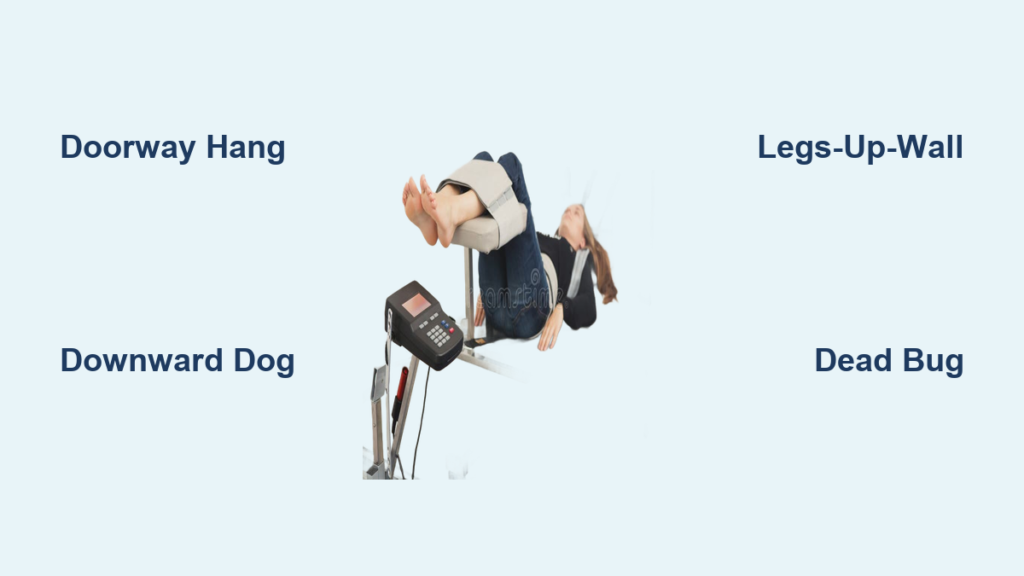
Waking up with that familiar stiffness in your lower back or feeling that midday ache creep up your spine? You’re not alone—spinal compression affects nearly everyone, especially those who sit for extended periods or lift heavy objects regularly. The good news is that you can effectively decompress your spine at home using simple techniques that don’t require expensive equipment or professional assistance.
This guide walks you through proven methods to create space between your vertebrae, reduce nerve pressure, and restore your spine’s natural alignment—all from the comfort of your living room. You’ll learn everything from quick daily routines to advanced equipment-based protocols, all backed by practical safety guidelines and measurable progress tracking.
Why Your Spine Needs Daily Decompression
Gravity relentlessly compresses your spinal discs throughout the day, reducing their height by up to 1% during waking hours. This compression squeezes nerves, dehydrates discs, and creates the stiffness and pain you feel by evening. Office workers lose nearly 20mm of height by day’s end due to spinal compression alone. Without counteracting this force, you risk long-term disc degeneration, nerve impingement, and chronic pain that limits your mobility and quality of life.
Your spine naturally decompresses during sleep, but modern sedentary lifestyles often prevent full recovery. Consistent home decompression techniques provide essential relief that sleep alone can’t deliver. The right approach rehydrates discs, creates space for compressed nerves, and restores your spine’s shock-absorbing capabilities.
Immediate Safety Checks Before Starting
Absolute Contraindications to Avoid
Stop decompression immediately if you have:
– Acute spinal injuries or fractures
– Severe osteoporosis diagnosed by bone density scan
– Recent spinal surgery (less than 6 months)
– Uncontrolled high blood pressure (over 160/100)
– Glaucoma or retinal detachment
– Pregnancy beyond first trimester
– Herniated discs with leg weakness or numbness
Warning Signs That Require Medical Attention
- Shooting pain down your arms or legs during exercises
- Numbness or tingling that persists after stopping
- Dizziness or blurred vision when changing positions
- Loss of bladder or bowel control (seek emergency care)
- Progressive weakness in your hands or feet
Five-Minute Doorway Hang for Instant Relief
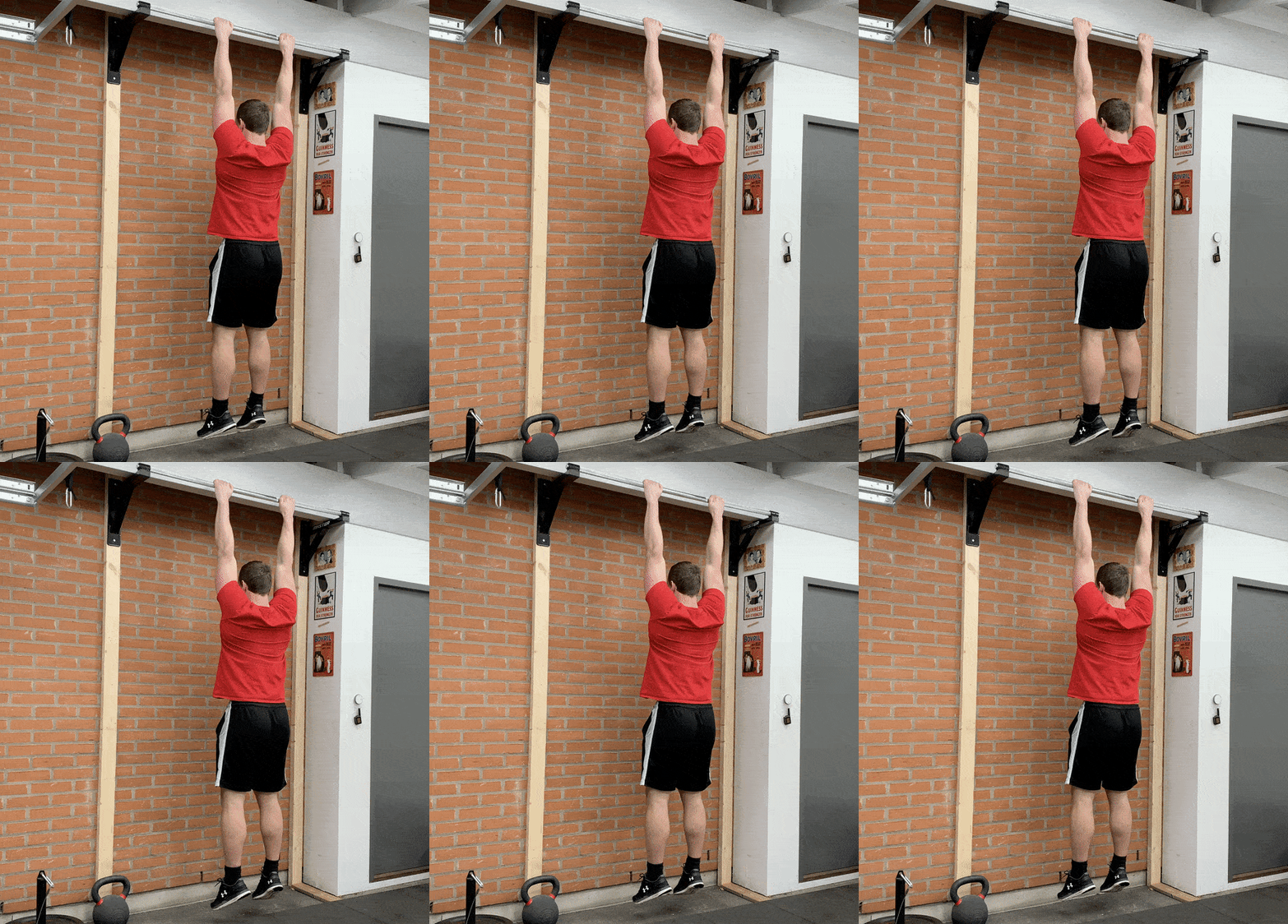
Grab a sturdy doorway pull-up bar rated for your body weight plus 50 pounds. Grip with hands slightly wider than shoulders using an overhand grip. Completely relax your shoulders and let gravity pull your body downward. Start with 20-second hangs for 3 sets, building to 30 seconds as your grip strengthens.
Pro Tip: Bend your knees slightly to prevent swinging. For deeper decompression, add 2-5 pound ankle weights once you’re comfortable with basic hanging. Never jerk or bounce during hangs—smooth, controlled movements only.
Active vs. Passive Hanging Techniques
Passive hangs maximize decompression by fully relaxing your muscles. Active hangs engage your back muscles by pulling your shoulder blades down and back while hanging. Alternate between both methods: passive for pure traction, active for strengthening supporting muscles. Perform active hangs for half your total hanging time.
Yoga Poses That Rehydrate Spinal Discs
Downward-Facing Dog for Full Spine Traction
Start on hands and knees, then lift your hips high while pressing heels toward the floor. Keep hands shoulder-width apart with fingers spread wide. Press your chest gently toward your thighs while maintaining a long spine. Hold for 5-10 deep breaths, repeating 3-5 times daily.
Modification: Place yoga blocks under your hands if you have wrist pain. Slightly bend your knees to reduce hamstring tension and focus on spinal elongation rather than perfect form.
Legs-Up-the-Wall Pose for Gentle Inversion
Lie on your back with hips 6-12 inches from a wall, legs extended straight up. This gravity-assisted inversion decompresses your entire spine while improving circulation. Stay for 5-15 minutes, focusing on deep diaphragmatic breathing. Place a pillow under your hips for enhanced decompression.
Time-Saver: Perform this pose while checking your phone or watching TV—multitask while decompressing. Morning sessions provide the most dramatic height recovery as discs rehydrate overnight.
Core Strengthening for Long-Term Spinal Support

Dead Bug Exercise for Deep Core Activation
Lie on your back with arms extended toward the ceiling and knees bent at 90 degrees. Slowly extend your right arm overhead while straightening your left leg toward the floor, keeping both 1-2 inches off the ground. Return to start and repeat on the opposite side. Complete 10 repetitions per side for 2 sets.
Critical Form Cue: Press your lower back firmly into the floor throughout the movement. If your back arches, reduce your range of motion. This exercise builds the deep core stability that naturally decompresses your spine during daily activities.
Bird Dog for Spinal Stabilization
Begin on hands and knees with neutral spine alignment. Extend your right arm forward and left leg backward simultaneously, keeping hips level. Hold for 5 seconds while focusing on minimizing rotation. Return to start and repeat on the opposite side. Perform 8 repetitions per side for 2 sets.
Expert Note: Imagine balancing a glass of water on your lower back—any excessive movement would spill it. This mental image helps maintain proper spinal alignment during the exercise.
Daily Posture Fixes That Prevent Compression

Office Chair Adjustments for Spinal Health
Position your chair so hips sit slightly higher than knees with feet flat on the floor. Use a lumbar roll to maintain your spine’s natural curve—your lower back should gently press against it. Set phone reminders to stand and stretch every 30 minutes. When seated, engage your core muscles lightly to prevent slouching.
Quick Fix: Place a rolled towel behind your lower back if you lack proper lumbar support. This simple adjustment reduces disc pressure by 40% compared to slouching.
Optimal Sleep Positions for Nighttime Decompression
Back sleepers should place a pillow under their knees to maintain lumbar curve. Side sleepers benefit from a pillow between knees to align hips and reduce spinal torsion. Choose a medium-firm mattress that supports natural curves while allowing shoulders and hips to sink slightly—test mattresses by lying on your side to ensure spinal alignment.
Pro Tip: Replace your pillow every 18-24 months. Old pillows lose support and contribute to cervical spine compression that affects your entire spinal alignment.
Building Your 7-Day Progressive Routine
Days 1-3: Gentle Mobilization Foundation
Perform 3 sets of 10 cat-camel stretches upon waking to rehydrate discs. Follow with 2-minute doorway hangs (3 sets of 20 seconds). End with 5 minutes of legs-up-the-wall pose before bed. Total time: 10 minutes daily.
Days 4-7: Adding Core Integration
Continue foundational techniques while adding 2 sets of dead bug exercises (10 reps per side). Introduce 3 sets of knee-to-chest stretches (30 seconds per leg). Total time increases to 15 minutes daily.
Progress Indicator: You’ll notice reduced morning stiffness within 3-5 days if performing techniques consistently. Track your toe-touch flexibility weekly—most people gain 2-4 inches within the first month.
Sustainable Habit Formation Strategies
Link decompression to existing routines: perform cat-camel stretches after brushing your teeth, use legs-up-wall pose while reading before bed, or take micro-break stretches when your calendar reminders pop up. Start with just 5-10 minutes daily using equipment-free techniques. As you build confidence and see results, gradually expand your routine based on your specific needs and available space.
Your spine health depends on daily attention, not occasional intensive sessions. Consistent 5-10 minute decompression practices yield better long-term results than sporadic hour-long sessions. The key is finding sustainable practices you’ll actually maintain—your future self will thank you when you’re still moving freely decades from now.
Final Note: If pain increases during any technique, stop immediately and consult a physical therapist. Proper spinal decompression should create relief, not discomfort. Once you master these fundamentals, consider adding inversion tables or decompression belts for advanced protocols as your tolerance builds.