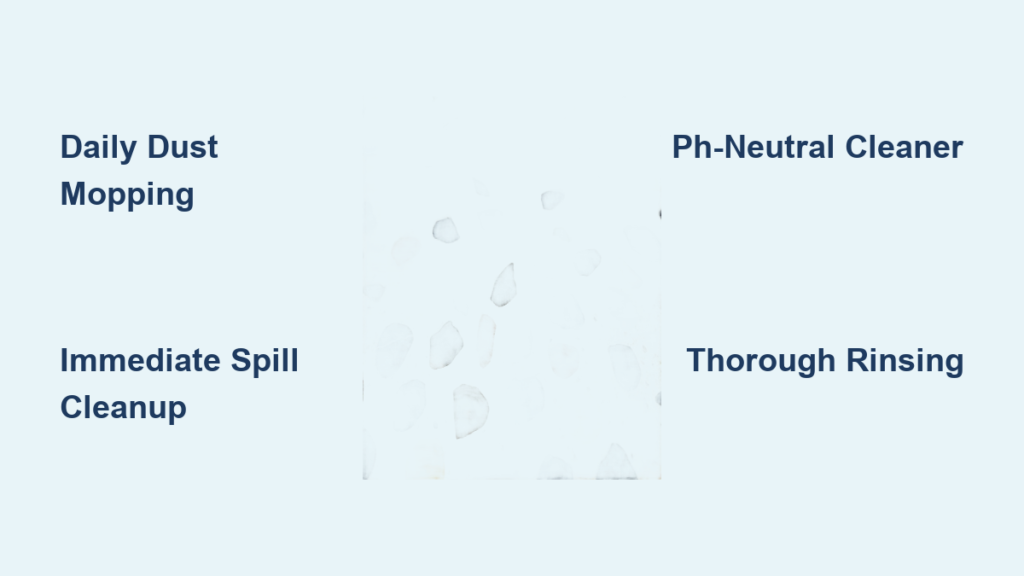
Terrazzo floors transform ordinary spaces with their distinctive blend of marble chips suspended in cement or epoxy resin, but their unique composition demands specialized care. You’ve probably noticed dull patches developing after regular mopping or a mysterious white film clouding your beautiful floors—clear signs that standard cleaning methods won’t protect this investment. These issues occur because terrazzo’s porous nature readily absorbs spills while its polished surface scratches easily from improper cleaning.
This comprehensive guide delivers proven techniques to restore your terrazzo’s natural shine while preventing costly damage. You’ll discover exactly which products work safely, when to use them, and the critical mistakes that can permanently etch your floors. Whether you’re dealing with stubborn stains or daily maintenance, these methods preserve your terrazzo’s beauty for decades.
Daily Terrazzo Care Routine That Prevents Damage
Remove Loose Debris Without Scratching
Start each morning with a soft-bristled broom or microfiber dust mop, working systematically from the farthest corner toward your exit. Use overlapping strokes to prevent tracking dirt across cleaned sections—this is crucial because grit acts like sandpaper on polished terrazzo. Focus extra attention on entryways and kitchen areas where sand and debris concentrate, as these particles become embedded in foot traffic throughout the day.
Pro tip: Dip your dust mop in a solution of water and a few drops of terrazzo cleaner for enhanced dust collection. The light coating traps fine particles that regular dry mopping misses, reducing daily wear on your floor’s surface.
Handle Spills Immediately to Prevent Permanent Staining
Blot liquid spills with a clean, dry cloth—never rub, which spreads the mess across your terrazzo surface. Work from the spill’s outer edge toward the center to contain the damage. For dropped food or solid debris, use a plastic scraper (an old credit card works perfectly) to lift without scratching the delicate surface.
Critical warning: Acidic spills like wine, coffee, or citrus require immediate attention—these can etch terrazzo within minutes. Keep a dedicated “terrazzo emergency kit” near high-risk areas with pH-neutral cleaner, plastic scrapers, and clean microfiber cloths for instant response.
Weekly Terrazzo Cleaning Protocol for Lasting Shine
Prepare Your Cleaning Station Properly
Remove all rugs and movable furniture before starting. Dust baseboards first—otherwise, you’ll simply push this debris onto your freshly cleaned floors. Set up two buckets: one with cleaning solution, one with clean rinse water. Use warm water under 100°F to prevent thermal shock that could crack the terrazzo matrix holding your decorative chips.
Time-saving shortcut: Place a damp towel at doorways to prevent tracking dirt from other rooms during your cleaning process. This simple step saves you from re-cleaning sections you’ve already finished.
Mix the Perfect Cleaning Solution
Combine 1-2 ounces of pH-neutral terrazzo cleaner per gallon of warm water. Stir gently to avoid creating suds that leave residue attracting more dirt. Hot water causes thermal shock that can crack the matrix holding your marble chips—always keep water temperature below 100°F.
Master the Professional Mopping Technique
Dip your microfiber mop, then wring until just damp—not wet. Mop in figure-eight patterns, overlapping each pass by half to prevent streaking while ensuring complete coverage. Rinse your mop in clean water after every 10-foot section to avoid redistributing dirt. Change rinse water when it becomes visibly cloudy—continuing with dirty water defeats the entire cleaning process.
Critical Final Rinse That Most Homeowners Skip
After cleaning the entire area, use a fresh mop and clean water for a thorough rinse. This removes any cleaner residue that attracts dirt like a magnet. Work quickly—standing water is terrazzo’s enemy, potentially causing staining or seepage into cracks. Dry immediately with clean towels; never allow your terrazzo to air dry.
Monthly Deep Cleaning Process for Stubborn Buildup

Assess Problem Areas Before Starting
Walk your floors in good lighting, checking for built-up grime in grout lines or dull spots that weekly cleaning can’t restore. Pay special attention to areas around furniture legs and along baseboards where dirt accumulates. Mark these trouble zones with painter’s tape for focused attention during your deep clean.
Section-by-Section Deep Clean Procedure
- Vacuum thoroughly using a soft brush attachment—never beater bars that can damage your terrazzo
- Apply stronger solution (per deep-clean concentration on product label) to 3×3 foot sections
- Agitate gently using a soft-bristled deck brush in circular motions for 30 seconds
- Let sit 3-5 minutes—set a timer, as dried cleaner creates permanent haze
- Extract dirty solution with a wet/dry vacuum to prevent re-depositing grime
- Double rinse with clean water, vacuuming after each pass to eliminate residue
- Dry completely using clean towels—air drying invites water spots and potential damage
Time estimate: 500 square feet takes approximately 90 minutes including drying time. Rushing this process compromises results—allow proper time for each step.
Remove Stubborn Stains Safely Without Professional Help
Food and Drink Stains That Won’t Budge
Mix baking soda with water into a toothpaste-like paste (2:1 ratio). Apply 1/8-inch thick layer directly on the stain, cover with plastic wrap to prevent drying, and let sit 24 hours. The paste draws the stain upward through capillary action without harsh chemicals. Remove, rinse thoroughly, and check results—repeat if necessary for deep-set stains.
Oil and Grease Marks from Kitchen Accidents
Create a poultice using diatomaceous earth mixed with a few drops of mineral spirits. Spread 1/4-inch thick over the stain, cover with plastic wrap, and wait 24-48 hours. This specialized mixture pulls oil from deep within the terrazzo matrix where regular cleaning can’t reach. Remove carefully and rinse completely before walking on the area.
Rust Removal from Metal Furniture
Use commercial rust remover labeled safe for terrazzo—test first in an inconspicuous corner. Apply with a cotton swab, let dwell 10-15 minutes as directed, then rinse thoroughly. Multiple applications may be needed for old stains, but never exceed recommended dwell times which could damage surrounding terrazzo.
Prevent Costly Damage Before It Happens
Entryway Defense System That Works
Install dual matting: outdoor scraper mats plus indoor absorbent rugs at every entrance. Clean these weekly—dirty mats grind debris into terrazzo rather than capturing it. Implement a “no shoes” policy during muddy seasons and consider placing a shoe removal bench by each exterior door.
Furniture Protection Plan Worth Implementing
Apply felt pads under every furniture leg—even that occasional chair you move once a month. Replace these pads every 6-12 months as they compress and harden into abrasive surfaces. Choose rubber wheels over hard plastic for rolling furniture; the softer material distributes weight more evenly without scratching.
Spill Prevention Strategy for Busy Households
Use coasters under all plant pots and drink containers—water rings from plants are surprisingly damaging. Place waterproof mats under pet bowls and refresh them weekly. Train family members: any spill gets immediate attention, no exceptions—create a household rule that “terrazzo spills are emergency cleanups.”
Troubleshoot Common Problems Immediately

White Film Removal That Restores Clarity
That hazy appearance? Usually cleaner residue from improper rinsing. Mix 1/2 cup white vinegar per gallon of warm water. Mop gently, rinse twice with clean water, and dry thoroughly. Important: Never use vinegar regularly—it can etch terrazzo over time. Reserve this solution for occasional mineral deposit removal only.
Streak Elimination Technique That Works
Streaks mean dirty mop water or too much cleaner concentration. Solution: change rinse water every 100 square feet and wring mop until barely damp. Work in natural light to spot streaks immediately and correct them before the floor dries. If streaks persist, your cleaner may be incompatible with your specific terrazzo type.
Crack and Chip Repairs You Can Do Yourself

Small chips? Use terrazzo repair kits matching your floor’s color exactly. For cracks wider than 1/8 inch, consult professionals—DIY fillers often fail, allowing moisture damage that compromises the entire floor section. Always clean and dry the damaged area thoroughly before attempting any repair.
Safety First During Terrazzo Cleaning
Personal Protection Essentials
Wear non-slip shoes when floors are wet—terrazzo becomes dangerously slippery when damp. Ensure good ventilation when using any cleaning products, especially during deep cleaning sessions. Keep children and pets away until floors are completely dry, placing visible “wet floor” signs as reminders.
Product Safety Rules That Prevent Disasters
Never mix different cleaning products—chemical reactions can create toxic fumes. Always test new products in a hidden corner first to check for adverse reactions with your specific terrazzo. Store all supplies in original containers with clear labels, keeping them locked away from children and pets. Critical reminder: Terrazzo floors can last centuries with proper care. These techniques preserve your investment while keeping your floors showroom-beautiful year after year.