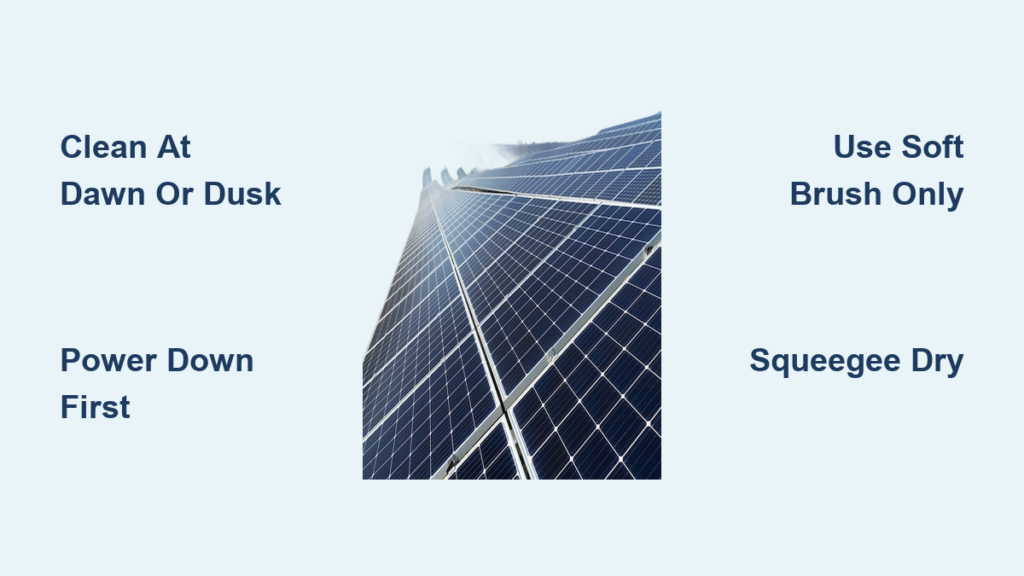
Your solar panels silently convert sunlight into electricity—until a layer of dust, bird droppings, or pollen slashes their output by 15% or more. A single dust storm in Phoenix can cripple production, while Virginia’s spring pollen leaves stubborn streaks rain won’t wash away. The fix? A $30 DIY clean taking less than an hour that restores peak efficiency without voiding warranties. Skip this biannual task, and that $25,000 system generates less power than you paid for. I’ll show you exactly how to clean solar panels at home safely, using proven methods that protect your investment and boost energy harvests.
Why Bird Droppings and Dust Slash Solar Output by 15%+
Solar cells need unobstructed sunlight to hit their rated wattage. Sticky contaminants like bird droppings, tree sap, or pollen create permanent “hot spots” that block photons and accelerate glass degradation. Research confirms heavy soiling can cut output by 15–25% in dry climates—enough to turn a 4 kW system producing 3.2 kW on sunny days into a 2.7 kW struggler. Rain handles loose dust but fails against sap or droppings clinging to low-tilt panels. Left unchecked, these residues bake onto anti-reflective coatings, permanently reducing efficiency and shortening panel lifespan.
Spot Dirty Solar Panels: 4 Visual Clues and Output Drops

Recognize These Critical Warning Signs
- White streaks or gray haze across glass surfaces (dust buildup)
- Dark splatters in corners (bird droppings trapping heat)
- Leaves wedged under frame lips (common on tree-lined properties)
- Snow coverage exceeding 50% after sunrise (blocks light absorption)
Confirm with Your Inverter App
Open your monitoring system—Dominion Energy or Sunrun apps show real-time data. If daily kWh falls below 85% of last year’s output on clear days, inspect panels immediately. A persistent 15%+ drop after rain means contaminants are stuck. Don’t guess: a 10-panel array producing 2.7 kW instead of 3.2 kW loses $150+ yearly in free energy.
Choose the Perfect Cleaning Day: Avoid Thermal Shock Cracks
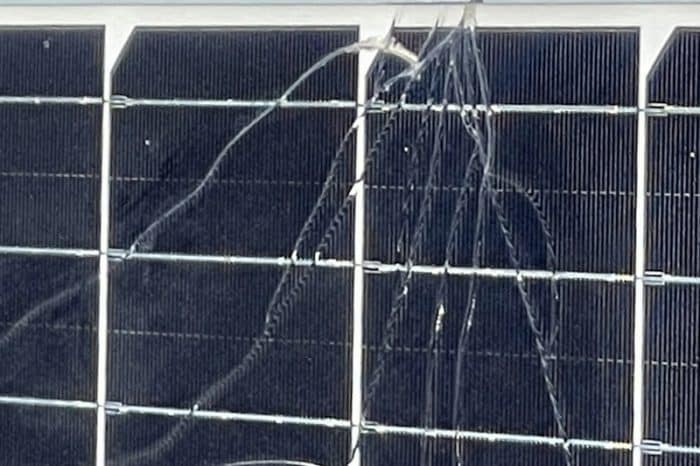
Never clean panels at noon in summer. Hot glass (150°F+) meeting cold water causes thermal shock that cracks tempered glass instantly. Instead:
– Ideal windows: Early morning (before 9 AM) or late evening (after 5 PM)
– Temperature check: Panels must feel cool to the touch (<100°F)
– Weather rules: Skip freezing days (ice creates slip hazards) or if thunderstorms are forecast within 24 hours. Let nature rinse first if rain’s coming—then clean residual spots afterward.
Critical Safety Steps: Power Down Before You Start
Shut Off Electrical Current
Flip the DC disconnect at your inverter AND the AC breaker in your main panel. Wait 10 minutes for capacitors to discharge—live panels risk electrocution even when off-grid. Skipping this voids warranties and risks inverter damage from stray currents during cleaning.
Stay Grounded Whenever Possible
Use a telescoping pole with soft brush for single-story roofs. For two-story homes:
– Never walk on panels—micro-cracks from foot pressure cause electrical shorts
– If roof access is unavoidable: Wear rubber-soled shoes, secure a harness to roof anchors, and keep three points of contact on the ladder
– Always have a spotter below to call for help if you slip
Gather Your $30 Cleaning Kit: Safe Tools for Homeowners
Essential gear (all under $30 at hardware stores):
– Soft-bristle brush or microfiber head on 18-ft telescoping pole
– Garden hose with adjustable fan-spray nozzle (<100 PSI)
– Bucket + 1 gallon lukewarm water
– 1–2 tsp biodegradable dish soap (e.g., Seventh Generation)
– Plastic squeegee with rubber blade
– Safety glasses and non-slip gloves
Never use: Pressure washers (force water into junction boxes), steel wool (scratches coatings), or Windex (clouds anti-reflective layers).
Step-by-Step: Clean Rooftop Solar Panels Without Stepping on Glass
Dry-Brush Loose Debris First
Sweep downward with a dry brush to remove leaves and grit. Skipping this step grinds dirt into glass during washing, causing irreversible scratches.
Mix Your Eco-Friendly Cleaning Solution
Combine 1 gallon water + 1 tsp soap. For mineral deposits (common in hard-water areas), use ¼ cup white vinegar + 2 cups water + ½ tsp soap. Avoid bleach—it corrodes aluminum frames.
Wash Top-to-Bottom in Straight Strokes
Dip your brush, start at the top edge, and pull downward in overlapping straight lines. Use light pressure—aggressive scrubbing won’t remove baked-on sap but WILL abrade coatings. Circular motions leave visible swirl marks.
Rinse Until Water Sheets Clear
Use gentle fan spray from hose. Rinse top-to-bottom until no soap bubbles remain. Residue attracts dust and creates streaks that reduce output faster.
Squeegee Dry to Prevent Mineral Spots
Pull the squeegee from top edge downward in one stroke. Wipe the blade between passes to avoid dragging dirt. Air-drying leaves tap water minerals that cloud glass within days.
Remove Snow Safely: Soft Rake Techniques for Winter
After heavy snowfall:
1. Use a plastic-bladed roof rake (never metal)
2. Start at the lower edge and pull upward lightly
3. Stop if resistance increases—ice buildup means stop
Never chip or scrape frozen panels. Tempered glass shatters easily under impact, and most snow slides off naturally once sun hits the lower edges.
DIY Solar Panel Cleaning Solutions That Won’t Void Warranties
| Problem | Safe Solution | Critical Tip |
|---|---|---|
| Light dust/pollen | Plain water rinse | Do monthly between deep cleans |
| Hard water spots | 1:8 vinegar-water + ½ tsp soap | Rinse within 5 minutes to prevent etching |
| Tree sap | Commercial solar-safe cleaner | Apply sparingly with microfiber cloth |
Pro warning: Vinegar solutions MUST be diluted (1 part vinegar to 8 water). Undiluted vinegar damages anti-reflective coatings over time.
When to Call Pros: Steep Roofs and Persistent Output Drops
Hire professionals if:
– Your roof pitch exceeds 6:12 (steeper than 26.5°)
– Output stays >15% low after 2 DIY rinses
– Panels have visible cracks or storm damage
– You have fragile clay tiles
Expect $100–$300 for residential cleanings. Demand providers use deionized water (prevents mineral spots) and provide a performance report for warranty records.
Climate-Specific Cleaning Schedules: Desert, Snowbelt, and Coastal
| Region | Cleaning Frequency | Trigger Events |
|---|---|---|
| Arizona/New Mexico | Every 3 months | Dust storms leave visible haze |
| Great Lakes Snowbelt | After major snow + spring rinse | Ice weight + pollen combo |
| Coastal Virginia/Florida | Annual post-summer | Salt spray corrosion |
| Pacific Northwest | Only when output <85% | Rain handles most debris |
Key insight: Flat panels (0–5° tilt) need 2x more cleaning than angled ones—rain can’t wash off debris.
Avoid These 5 Costly Cleaning Mistakes
| Mistake | Consequence |
|---|---|
| Pressure washing (>100 PSI) | Water intrusion cracks cells |
| Cleaning at noon in July | Thermal shock shatters glass |
| Using steel wool or razors | Scratches destroy anti-reflective coating |
| Skipping system shutdown | Electrocution risk from live wires |
| Walking on panels | Micro-cracks cause permanent 5–10% output loss |
Pro tip: Test cleaning methods on one panel corner first. If streaks appear, your solution’s too strong.
Complete Your Clean: Final Checklist for Peak Efficiency
- [ ] Verify output drop via inverter app before starting
- [ ] Confirm cool temps—panels must feel cool to touch
- [ ] Shut off DC disconnect AND main breaker
- [ ] Dry-brush debris downward before wetting
- [ ] Rinse until water sheets clear—no soap bubbles
- [ ] Squeegee dry to prevent mineral spots
- [ ] Log cleaning date in warranty file
A 45-minute clean twice yearly restores 97%+ of your system’s original output. Pair this with seasonal monitoring, and your panels will outlast their 25-year warranty while powering your home at peak efficiency. Skip cleaning, and you’re literally throwing money away—one dusty panel can cost $200 in lost energy over five years. Today’s $30 effort pays for itself in free electricity before summer ends.