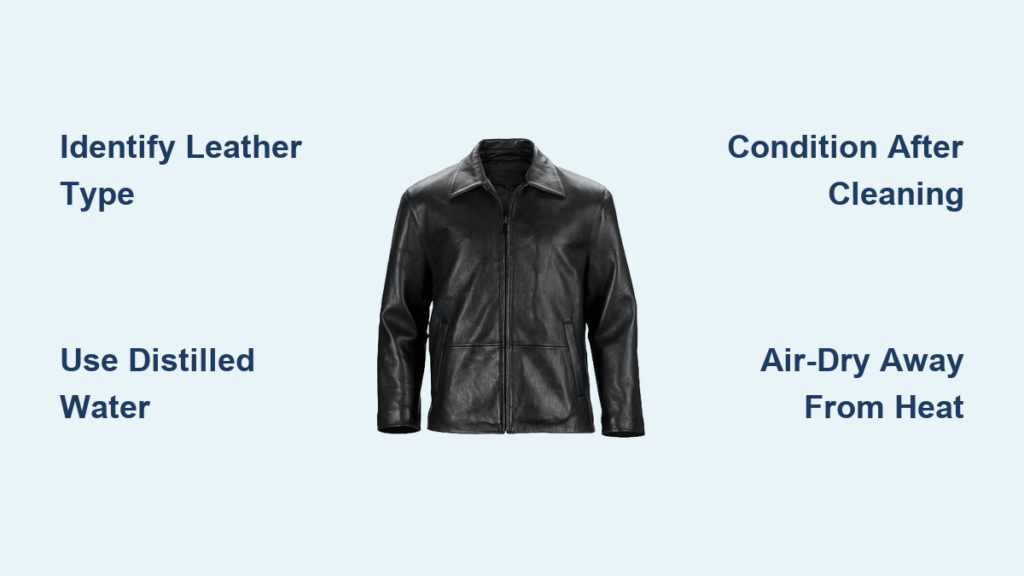
Your favorite leather jacket shows coffee splatters from morning commutes or dull patches from winter wear. Instead of expensive dry cleaning, you can safely restore it at home with the right techniques. This guide reveals exactly how to clean leather jacket at home without causing cracks, stains, or stiffness. You’ll learn to identify your leather type, tackle stubborn oil or ink marks, and condition properly—all while avoiding common mistakes that ruin cherished jackets. By the end, you’ll confidently maintain your jacket’s suppleness and shine for years.
Identify Your Leather Type Before Cleaning
Using the wrong method on delicate leather causes irreversible damage. Skip this step, and you risk fading, stiffening, or peeling—especially with suede or nubuck. Always confirm your jacket’s material first.
Check Hidden Care Labels Immediately
Flip your jacket inside out and inspect the inner seam or neck tag. Look for symbols like a bucket (water-safe), crossed-out circle (no solvents), or “P” (professional cleaning only). If you see “suede” or “nubuck,” avoid liquid cleaners entirely—these require specialized brushes and erasers.
Spot-Test Texture Within 60 Seconds
Rub a damp cotton ball on an inconspicuous area like the side seam. Full-grain leather feels slightly uneven with natural marks. Top-grain is smoother but less durable. Suede has a velvety nap that darkens when wet. Nubuck resembles suede but feels finer. Patent leather resists water absorption and shines brightly.
Perform the 24-Hour Patch Test
Dampen a hidden spot with distilled water. Wait a full day. If the area dries stiff or discolored, your leather is delicate—opt for professional cleaning. If unchanged, proceed with home methods. Never skip this test; it prevents catastrophic damage to vintage or expensive jackets.
Gather These 5 Essential Home Cleaning Supplies
Basic Kit for Immediate Use
- 8+ microfiber cloths (lint-free to avoid scratches)
- Distilled water (tap water minerals cause white salt stains)
- pH-neutral soap (1 tsp castile soap per cup water)
- White vinegar (diluted 1:2 for salt stains)
- Baking soda (for oil spills—never rub!)
Skip These Dangerous “Shortcuts”
Avoid household cleaners like Windex, vinegar straight from the bottle, or hairdryers. Ammonia and bleach permanently strip leather’s oils, while heat causes irreversible shrinkage. Even olive oil dries out leather—stick to proven conditioners.
Eliminate Fresh Oil Stains in Under 10 Minutes

Baking Soda Oil Emergency Fix
Blot excess grease with a dry cloth—press firmly without rubbing. Cover the stain completely with baking soda. Wait 4 hours (overnight for heavy spills). Brush off gently with a horsehair brush. Repeat if oil remains, then wipe with pH-neutral soap solution. Critical: Condition immediately after—oil removal strips natural oils.
Ink Removal That Won’t Spread Stains
Dip a cotton swab in 70% isopropyl alcohol. Test on an inner seam first. Dab the ink gently from the stain’s edge inward—never scrub. Blot transferred ink with a clean cloth. Repeat until gone, then clean the entire area with soap solution. Condition within 15 minutes; alcohol dries leather fast.
Deep Clean Without Over-Wetting
When to Deep Clean (Not After Every Wear!)
Only deep clean if your jacket looks dull, has multiple stains, or feels stiff. Over-cleaning wears down leather. Limit deep sessions to twice yearly—more often for city commuters exposed to pollution.
5-Step Deep Cleaning Process
- Dry brush entire jacket to remove surface dirt
- Mix solution: 1 part leather cleaner to 8 parts distilled water
- Work section-by-section: Back panel first, then sleeves, front last
- Apply with circular motions using minimal foam—never soak
- Wipe residue immediately with damp cloth, then air-dry 24 hours
Condition Like a Leather Expert

Why Conditioning Prevents Cracking
Cleaning strips natural oils, leaving leather brittle. Conditioning replaces these oils, maintaining flexibility and preventing winter cracks. Never skip this—it’s the difference between a jacket that lasts decades versus one ruined in months.
Apply Conditioner Correctly in 3 Steps
- Ensure jacket is bone-dry (touch test: no coolness)
- Rub pea-sized conditioner onto a cloth—not directly on leather
- Massage into high-stress zones (elbows, cuffs) using circular motions
Buff off excess after 30 minutes. For dry spots, repeat—but never apply thick layers.
Dry Your Jacket Without Heat Damage
48-Hour Drying Protocol
Hang on a wide padded hanger away from windows or vents. Stuff sleeves with acid-free paper to maintain shape. Never use:
– Radiators (causes irreversible shrinkage)
– Hairdryers (creates hard spots)
– Direct sunlight (fades color in hours)
Check every 12 hours; reshape creases while slightly damp.
Final Flex Test Before Wearing
After drying, gently bend the collar. If it cracks or feels stiff, apply conditioner immediately. Supple leather should flex smoothly. If white residue appears, buff vigorously with a dry cloth—it’s excess conditioner.
Specialized Fixes for Suede and Patent Leather

Suede Salt Stain Rescue
Brush salt marks with a suede eraser in one direction. Hold jacket 12 inches above kettle steam for 10 seconds—this lifts crushed nap. Brush again with a suede brush. Never use water; it leaves dark rings. Finish with suede protector spray.
Patent Leather Shine Restoration
Wipe scuffs with a cloth dampened in diluted soap. For stubborn marks, use patent leather cleaner on a cotton ball. Polish with a microfiber cloth using light pressure. Avoid petroleum products—they melt the glossy finish.
Prevent Future Stains With Smart Storage
Seasonal Storage Checklist
- Spring/Summer: Store in cotton garment bags away from humidity
- Fall/Winter: Apply water-repellent spray before first snow
- Always: Keep in closet with 40-50% humidity (use a hygrometer)
Hang jackets away from coats with zippers—they snag delicate surfaces.
Monthly Maintenance Routine
| Task | Time Needed | Critical For |
|---|---|---|
| Dry brushing | 2 minutes | All leather types |
| Light conditioning | 5 minutes | Full-grain/top-grain |
| Suede brushing | 3 minutes | Suede/nubuck only |
| Protector spray | 8 minutes | Winter prep |
When to Call a Professional Immediately
Stop home cleaning if your jacket has:
– Vintage status (pre-1980s)
– More than 25% surface staining
– Exotic leather (ostrich, snake)
– Lining damage or odors
– Previous failed home attempts
Pro tip: For $25-$50, specialists clean what you can’t—like ink on suede or mold in seams. Attempting DIY on these wastes money and risks total loss.
Your leather jacket’s character deepens with age—but only with proper care. By identifying your leather type first, using distilled water and pH-neutral cleaners, and conditioning after every clean, you’ll keep it supple through decades of wear. Remember: never soak, never heat-dry, and always patch-test. Treat those coffee spills within minutes, and your jacket will reward you with timeless style that outlasts trends. Start with one small stain tonight—you’ve got the exact steps to revive it safely.