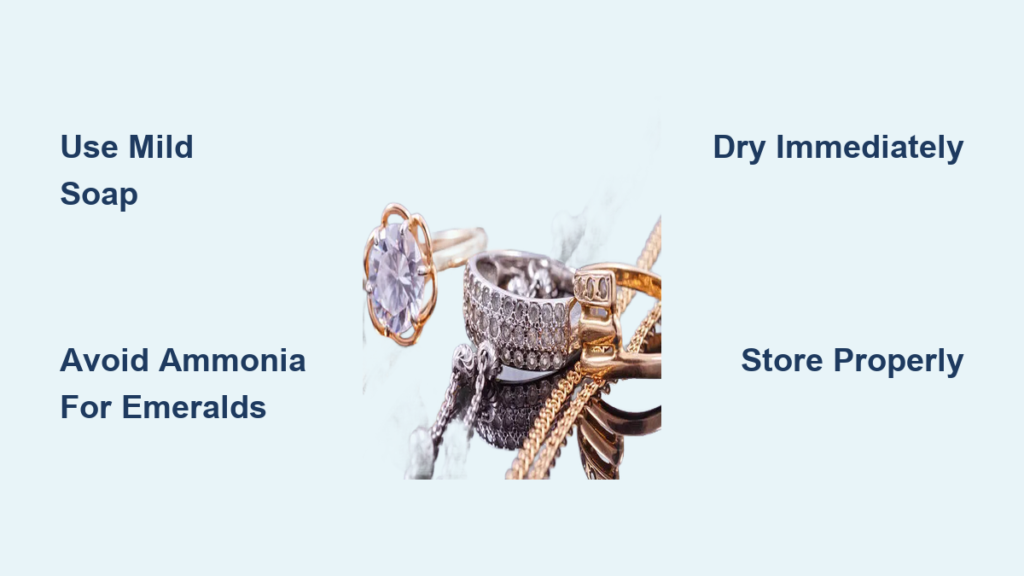
Your favourite necklace has lost its sparkle, and that ring you never take off is looking dull and lifeless. Before you rush to the jeweller, know this: most jewellery can be restored to its original brilliance with simple household items and techniques you can master tonight. From gold heirlooms to delicate pearls, this guide reveals the exact methods professionals use—adapted for your kitchen sink. Discover how to clean jewellery at home safely and effectively, saving you time and money while preserving precious pieces for generations.
Gold Jewellery Cleaning Method

Gold loses its shine through daily exposure to skin oils, lotions, and environmental pollutants. The good news? Gold responds beautifully to gentle cleaning at home.
Prepare Your Cleaning Solution
Mix warm water (never hot) with 3-4 drops of mild dish soap in a glass bowl. Avoid harsh detergents—baby shampoo or gentle dish soap works perfectly. The solution should feel barely warm to touch, as extreme temperatures can damage certain gemstones. For heavily tarnished pieces, create a paste using baking soda and water in a 3:1 ratio, but test it on a hidden area first if your gold is plated.
Soak and Scrub Technique
Submerge gold pieces for 15-20 minutes to loosen accumulated debris. Use a soft-bristled baby toothbrush to gently scrub:
– Chain links where dirt hides
– Back of rings and underneath stone settings
– Intricate details and engravings
– Clasps and connecting links
Pro tip: Hold pieces over a bowl while scrubbing to prevent loss down drains. For diamond-set gold jewellery, focus extra attention on the underside of stones where oils accumulate most.
Rinse and Dry Process
Rinse under lukewarm running water with the drain closed. Ensure zero soap residue remains—film left behind creates dullness. Dry immediately with lint-free microfiber cloth or air-dry on soft towel. For extra shine, buff with a dedicated gold polishing cloth in straight motions rather than circles to avoid highlighting microscopic scratches.
Silver Tarnish Removal Solutions
Silver tarnishes through oxidation, creating black or yellowish discoloration that’s purely surface-level. Tackle this common problem with proven home remedies.
Aluminum Foil Method for Heavy Tarnish
Line a heat-resistant bowl with aluminum foil (shiny side up). Add:
– 1 tablespoon baking soda per cup of hot water
– 1 teaspoon salt per cup of water
Submerge silver jewellery for 2-3 minutes maximum. Watch the chemical reaction transfer tarnish from silver to foil. Rinse thoroughly and buff dry. Critical timing note: Leaving silver in longer than 3 minutes can cause pitting on delicate pieces.
Daily Maintenance Cleaning
For regular upkeep, use the same mild soap solution as gold. Soak silver pieces for 10-15 minutes, then gently scrub with soft brush. This prevents heavy tarnish buildup. After cleaning, store silver in anti-tarnish pouches or with anti-tarnish strips that absorb sulfur compounds from the air.
Avoid: Commercial silver dips for intricate pieces—they can damage gemstones and remove intentional oxidation from decorative details. Always dry silver completely before storage to prevent moisture-related tarnishing.
Gemstone-Specific Care Instructions
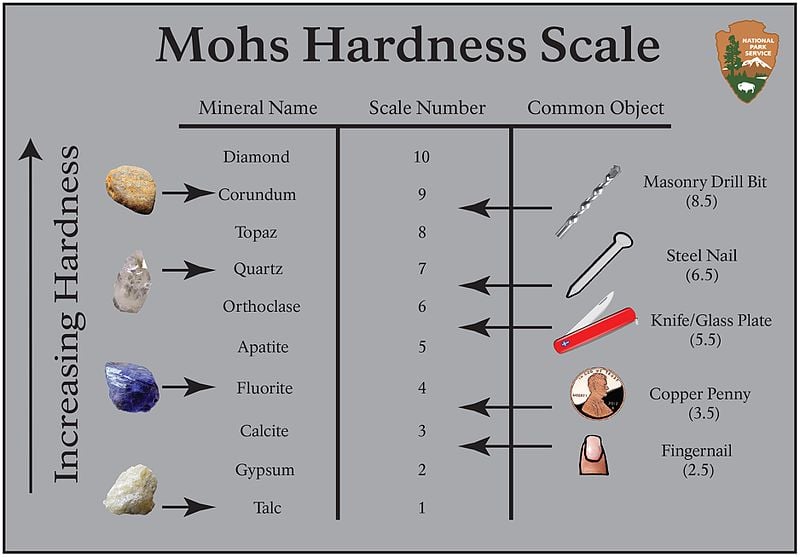
Different stones require tailored approaches. Using the wrong method can permanently damage precious gems.
Diamond Brilliance Restoration
Diamonds attract oils aggressively, losing sparkle within days of wear. Create a solution of:
– 6 parts water
– 1 part household ammonia
– 1 drop mild dish soap
Soak diamond pieces for 20-30 minutes. Focus cleaning on the diamond’s back—where light enters and brilliance originates. Use soft brush around prongs and settings. Rinse with drain closed, dry with lint-free cloth.
Frequency: Weekly cleaning maintains maximum brilliance for daily-wear diamond rings. Never use chlorine bleach—it can damage gold settings over time.
Pearl Delicate Cleaning
Pearls are organic and extremely vulnerable. Never soak, use ultrasonic cleaners, or apply chemicals.
Gentle wipe method:
1. Dampen soft microfiber cloth with lukewarm water
2. Add tiny drop of mild soap
3. Wipe each pearl individually
4. Follow immediately with clean damp cloth
5. Dry with soft towel, air-dry completely
Storage rule: Never store pearls in airtight containers—they need moisture to maintain luster. After cleaning, return pearl strands to professional every 12-18 months for restringing as silk thread deteriorates.
Colored Gemstone Guidelines
Sapphires and Rubies: Clean like diamonds but use 8:1 water-to-ammonia ratio. These durable stones handle regular cleaning well.
Emeralds: Use only mild soap and water—no ammonia, ultrasonic, or steam. These stones often contain fracture fillings that chemicals can damage. Clean gently and dry immediately.
Opals: Clean with soft, barely damp cloth only. No soaking or chemicals. Store with damp cotton ball in breathable container to prevent cracking—opals lose moisture quickly in dry environments.
Costume Jewellery Safe Cleaning
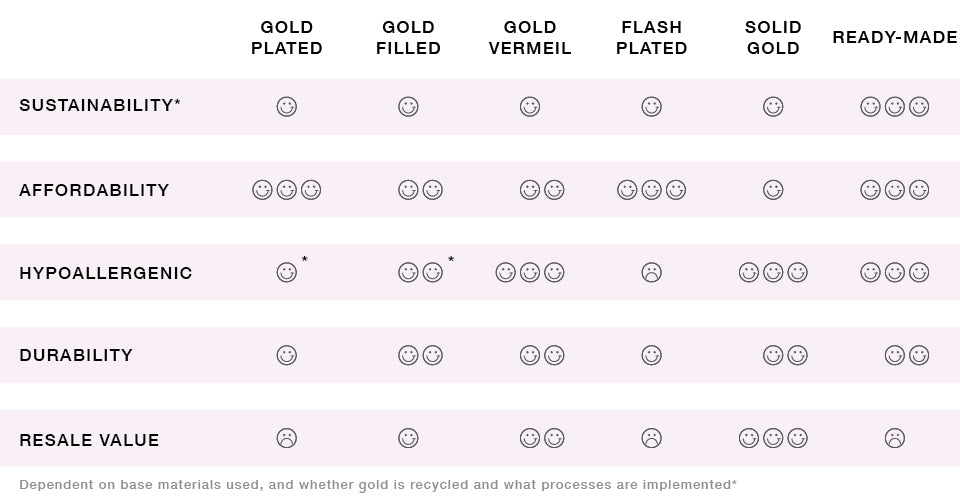
Fashion jewellery requires extreme caution—thin plating and glued stones damage easily.
Base Metal and Plated Pieces
Never use abrasives, ultrasonic cleaners, or chemical dips. Instead:
– Use soft cloth slightly dampened with water
– Add microscopic amount of mild soap
– Gently wipe surface in straight motions
– Dry immediately—moisture causes plating to lift
Glue warning: Water dissolves adhesives holding stones. Avoid soaking pieces with glued settings. For pieces with visible plating wear, limit cleaning to dry wiping only.
Rhinestone and Crystal Care
These stones have foil backing that moisture destroys. Cleaning method:
– Use only dry soft cloth for regular dusting
– For heavy soil: cotton swab barely dampened with rubbing alcohol
– Touch only the stone’s top surface
– Air-dry completely before storage
Pro tip: Store rhinestones away from moisture sources—bathrooms and kitchens accelerate foil degradation.
Essential Home Cleaning Tools
Build your jewellery cleaning kit with these proven tools:
Must-have items:
– Baby toothbrush (extra-soft bristles for delicate work)
– Lint-free microfiber cloths (separate colors for different metals)
– Small glass bowls for soaking solutions
– Cotton swabs for detailed cleaning
– Jeweller’s loupe or magnifying glass for inspection
Pro tip: Designate specific cloths for gold, silver, and platinum to prevent cross-contamination. Keep your cleaning station away from open windows where breezes could carry away small pieces.
Cleaning Frequency Schedule
Establish a routine based on wear patterns:
Daily-wear pieces: Weekly quick cleaning prevents buildup
Regular rotation pieces: Monthly thorough cleaning
Special occasion pieces: Clean before and after each wearing
Valuable antiques: Annual professional cleaning recommended
Calendar reminder: Mark cleaning dates to maintain consistent care. Wipe pieces with a soft cloth after each wearing to remove oils before they harden. For engagement rings worn 24/7, clean weekly—your diamond will thank you with renewed sparkle.
Troubleshoot Common Cleaning Problems
Dull Finish After Cleaning
Soap film is the usual culprit. Solution: Rinse pieces 3-4 times in clean water, ensuring complete residue removal. Dry thoroughly with lint-free cloth.
Stubborn Tarnish Persistence
For silver that won’t respond to home methods, try:
– Create paste with 1/4 cup baking soda + 2 tablespoons water
– Apply with damp sponge, rub gently
– Rinse and dry completely
When to stop: If tarnish remains after 2 attempts, seek professional help.
Professional Intervention Signs
Seek expert cleaning when you notice:
– Loose or damaged prongs
– Chipped or cracked stones
– Bent settings
– Heavy tarnish resisting home methods
– Unknown metal compositions or antiques
Red flag: If your jewellery develops a strange odor after cleaning, stop immediately—this indicates chemical reactions that could cause permanent damage.
Smart Storage After Cleaning
Proper storage maintains cleaning results and prevents future damage.
Immediate Storage Steps
After complete drying:
– Store silver in anti-tarnish pouches
– Keep different metals separate to prevent scratching
– Hang necklaces individually to prevent tangling
– Use padded slots for rings
Critical step: Always ensure pieces are 100% dry before storage—trapped moisture causes rapid tarnishing and potential stone damage.
Long-term Preservation Tips
Add silica gel packets to control humidity in storage areas. For silver, include anti-tarnish strips that absorb sulfur compounds. Store pearls in breathable silk bags—never plastic—to maintain moisture balance.
Documentation tip: Photograph valuable pieces after professional cleaning for insurance records. Rotate stored pieces monthly to check for any issues developing during storage.
Your jewellery box contains memories, investments, and personal style statements. With these proven home cleaning techniques, you’ll maintain their beauty while saving hundreds in professional cleaning costs. Start with your most-worn piece tonight—within 30 minutes, you’ll see the difference proper cleaning makes. Remember that knowing how to clean jewellery at home properly extends the life of your pieces while keeping them radiant for special occasions and everyday wear. By following these specific, gemstone-appropriate methods, you’ll transform dull jewellery into showstoppers without risking damage.