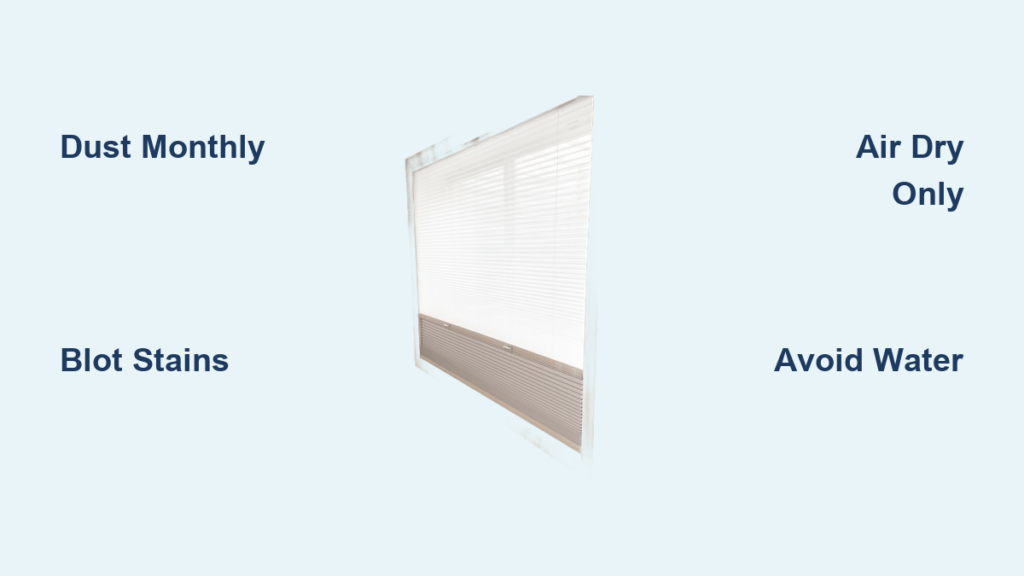
Dust settles into your cellular shades’ honeycomb pockets like uninvited houseguests, making once-crisp pleats look dull and reducing their energy-saving power. If you’ve noticed your room feeling less insulated or your shades looking dingy despite regular window cleaning, the problem likely hides in those tiny cells. Most homeowners make the mistake of treating cellular shades like regular curtains, only to discover wrinkles, stretched fabric, or worse—permanent damage to their investment.
The good news is you can safely clean cellular shades at home using methods that protect their unique honeycomb structure while restoring their insulating properties. This guide reveals exactly how to clean cellular shades at home using household items, whether you need a quick dusting fix or a deep clean for stubborn stains. You’ll learn manufacturer-approved techniques that maintain your warranty while extending your shades’ lifespan by years.
Monthly Dust Removal Methods That Actually Work
Feather Duster Technique for Quick Maintenance
Start your monthly cleaning routine by extending your cellular shades fully to access all pleats. Using a clean feather duster, begin at the top corner and sweep downward in light, vertical motions that follow the natural direction of the pleats. Never sweep against the grain—this forces dust deeper into the cells and can bend the delicate fabric walls. This 5-minute technique removes 80% of surface dust before it settles into the honeycomb structure where vacuuming becomes necessary.
Vacuum with Brush Attachment for Deep Dust Removal
Set your vacuum to the lowest suction setting and attach the soft brush head to prevent fabric damage. Working from top to bottom, move horizontally across each pleat with slow, deliberate strokes—this follows the cellular structure rather than fighting against it. Pay special attention to the headrail and bottom rail where dust accumulates most heavily. If you hear the vacuum sucking too hard, immediately reduce suction; excessive force can permanently flatten the honeycomb cells that provide insulation. This method effectively removes dust trapped inside the cellular pockets without pulling the fabric out of shape.
Compressed Air for Inaccessible Debris
For bugs or stubborn debris trapped deep inside the cells, insert the straw from a compressed air can into the honeycomb opening and use short bursts to dislodge particles. This technique works particularly well for dead insects that have crawled inside the tubes—a common problem with window treatments. Hold the can upright to prevent propellant from spraying onto the fabric, and work systematically across the shade. A cool-setting hairdryer serves as an alternative, though compressed air offers better precision for reaching deep into the cellular structure without moisture risk.
Spot Clean Stubborn Stains Without Ruining Your Shades

Prepare the Perfect Cleaning Solution
Mix one teaspoon of mild dish soap like Dawn with two cups of warm water in a spray bottle. Avoid harsh detergents, bleach, or Woolite—these chemicals break down the fabric’s protective coating and cause pleats to lose their crisp shape. Before applying to visible areas, test your solution on a hidden corner of the shade to check for discoloration or texture changes. This precaution ensures your cleaning method won’t compromise the delicate fabric that makes cellular shades energy efficient.
Blotting Technique That Preserves Fabric Integrity
Dampen a microfiber cloth with your cleaning solution, then wring it thoroughly until it’s barely moist—not dripping. Starting from the stain’s outer edge, gently blot toward the center using light pressure; never rub, as this creates pilling and stretches the fabric beyond recovery. Work in small sections, rotating to clean areas of the cloth frequently to avoid spreading the stain. For sheer fabrics, use even lighter pressure and test solutions in multiple hidden areas since these delicate materials show damage more readily.
Rinse and Dry Without Creating New Problems
After spot cleaning, use a fresh cloth dampened with plain water to remove soap residue through the same blotting motion. Immediately follow with a dry microfiber cloth to absorb excess moisture—this two-step process prevents water spots and soap residue buildup. Leave your cellular shades fully extended for 2-3 hours to allow complete air drying; this re-trains the pleats and prevents moisture from settling in the cells. Never use a hairdryer or heat source to speed drying, as this melts the fabric’s protective coating and creates permanent wrinkles.
Deep Clean Extremely Dirty Cellular Shades Safely
Safe Removal Process for Thorough Cleaning
Use a sturdy step stool to reach mounting brackets without straining. Support the shade’s full weight as you disengage it from the clips—never pull or twist, which can bend the headrail. Lay the shade flat on a clean surface covered with towels to prevent fabric damage during cleaning. For shades larger than 36 inches wide, have a helper support the opposite end to prevent sagging that could flatten the cellular structure.
Comprehensive Cleaning Steps for Heavy Buildup
Vacuum every surface using the brush attachment on lowest suction, paying special attention to the headrail and bottom rail where dust accumulates. Spot-clean visible stains using the blotting method described earlier, working systematically across the entire surface. Wipe all hardware with a slightly damp cloth, ensuring no moisture drips into the cellular structure. Let air dry completely—typically 4-6 hours—before reinstalling; rushing this step traps moisture inside the cells where mold can develop.
Reinstallation Without Warping the Structure
Align the shade’s headrail precisely with the mounting brackets and snap into place gently. Test operation slowly—if the shade hangs unevenly, recheck bracket alignment before forcing movement. Full functionality returns once completely dry, usually within 24 hours as the fabric regains its natural shape. For double-cell shades, ensure both layers of honeycomb structure reinflate properly during this period; if cells remain collapsed, leave the shade fully extended for an additional 12 hours.
Prevent Costly Cleaning Disasters with These Critical Tips

Never Use These Prohibited Methods
Skip bathtub soaking—excessive water causes metal components to rust and creates mold inside the cells. Avoid scrub brushes and spot removers that destroy the cellular structure and void warranties. Heat sources like hairdryers on warm settings melt the fabric’s protective coating permanently. Sticks or wands pushed through cells tear the delicate honeycomb walls beyond repair. These aggressive methods compromise both appearance and the energy efficiency that makes cellular shades valuable.
Moisture Control Essentials for Longevity
Excessive water is the enemy of cellular shades—always use barely damp cloths, never saturate the fabric. If shades accidentally get wet during window cleaning, extend them fully and run a fan nearby to speed drying from both sides. Never leave wet shades raised, as gravity pulls moisture into the bottom rail where it causes the most damage. Sheer fabrics require extra caution since they show water spots more readily and can stretch permanently under minimal pressure.
Delicate Fabric Handling Techniques
Light-filtering cellular shades need specialized care. Use only the lightest blotting motions with minimal solution—test on hidden areas first since these fabrics react differently to cleaning agents. When vacuuming sheer materials, keep the brush attachment hovering just above the surface rather than making direct contact. For stains on delicate fabrics, try dry cleaning methods first: sprinkle cornstarch on the stain, let sit for 15 minutes, then vacuum gently to absorb oil-based spots without moisture.
Maintain Energy Efficiency Through Proper Cleaning

Cleaning Schedule That Preserves Insulation
Vacuum or dust monthly to prevent buildup that reduces insulation by filling the air pockets that provide thermal protection. Spot-clean stains immediately—set-in dirt creates permanent shadows that affect both appearance and light control. Deep clean every 12-18 months, or sooner in high-traffic areas like kitchens where grease accumulates. This consistent maintenance ensures your cellular shades continue saving 10-20% on heating and cooling costs year after year.
Preserve Honeycomb Structure for Maximum Performance
Bent or crushed cells reduce energy efficiency by up to 40%—proper cleaning maintains the air pockets that provide insulation. Always support the shade’s weight during removal and avoid any cleaning method that compresses the cellular structure. When reinstalling, operate the shade gently for the first few cycles to help the pleats regain their natural shape. Double-cell shades require extra attention since both layers must reinflate properly to maintain their superior insulation properties.
Your cellular shades represent a significant investment in home comfort and energy efficiency. By following these precise cleaning methods—starting with monthly maintenance to prevent heavy buildup—you’ll maintain their beauty and performance for years while avoiding costly replacements. Remember: gentle, consistent care beats aggressive cleaning every time when it comes to preserving the delicate honeycomb structure that makes these window treatments so valuable.