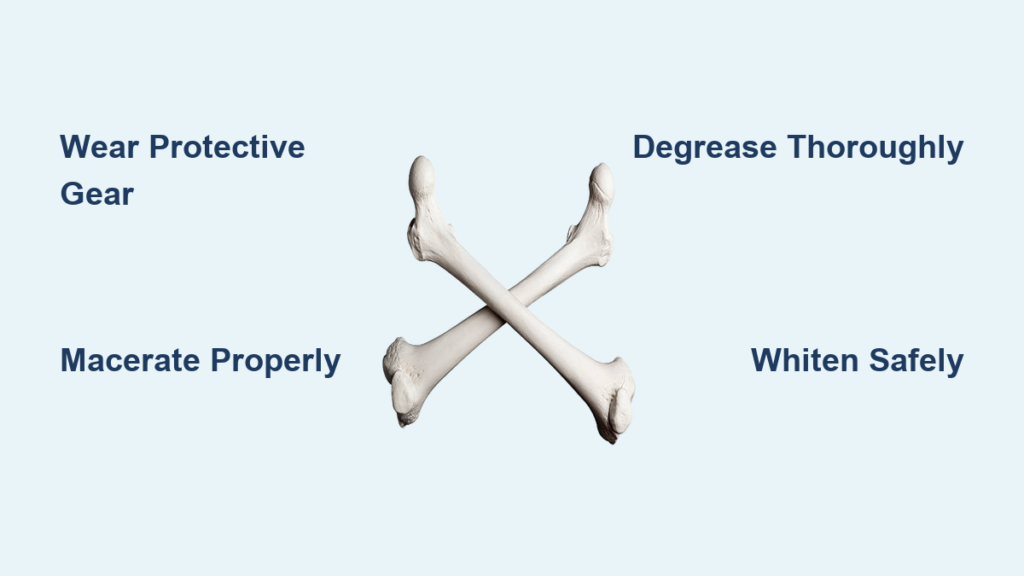
Finding a perfect deer skull in the woods or preserving your pet’s skeleton shouldn’t require professional lab access. Many enthusiasts mistakenly believe bone cleaning demands expensive equipment, but you can transform raw remains into museum-quality specimens using household items and proven techniques. Whether you’ve discovered roadkill or want to honor a beloved animal, learning how to clean bones at home unlocks a fascinating preservation skill. This guide cuts through the confusion with actionable steps that work for everything from tiny mouse skeletons to massive cow skulls—no biology degree required.
The process seems intimidating because improper cleaning causes yellowing, odors, or structural damage. But with systematic tissue removal, degreasing, and whitening, you’ll achieve professional results while avoiding common pitfalls. Most beginners skip critical safety steps or rush degreasing, leading to ruined specimens. By following this guide, you’ll master each phase safely and efficiently, saving weeks of trial-and-error frustration. Let’s transform your raw bones into lasting treasures.
Essential Safety Setup for Bone Cleaning
Never handle animal remains without proper protection—bacteria in decaying tissue and chemical fumes pose serious health risks. Start with nitrile gloves (latex degrades when exposed to ammonia or acetone), a respirator mask with chemical filters, and safety goggles. Wear old clothes under a waterproof apron, and keep a first-aid kit nearby for accidental cuts during tissue removal.
Your workspace must prioritize ventilation and containment. Set up outdoors on a sturdy plastic table, away from food preparation areas. Use separate labeled containers for each cleaning stage: one for maceration, another for degreasing, and a third for whitening. Ensure running water access for rinsing, and designate a shaded drying zone inaccessible to pets and children. Crucially, verify local laws—many states prohibit collecting remains of protected species like eagles or deer without permits, and processing roadkill often requires documentation of the find location.
Initial Tissue Removal Techniques That Prevent Damage
Fresh specimens need immediate attention to avoid bacterial overgrowth. Use sharp scalpels to slice through muscle groups along natural seams, then switch to needle-nose pliers for gripping tendons near joints. For dried specimens, rehydrate in lukewarm water (never hot—it sets proteins) for 24-48 hours before attempting removal. This softens mummified tissue significantly.
Focus on critical areas most beginners miss:
– Extract brain matter through the foramen magnum using flexible wire or a skewer
– Clear nasal passages with pipe cleaners or compressed air bursts
– Remove eyes and tongue completely with tweezers
– Check jaw joints for hidden cartilage using a dental pick
Pro tip: For deer or large mammal skulls, pressure-wash exterior tissue first—this cuts initial prep time by 70%. Always work over a trash can with a liner; bones shed debris constantly.
Maceration: Soaking Methods for Complete Tissue Breakdown

Cold water maceration uses natural bacteria to dissolve residual tissue safely. Submerge bones in an airtight container filled with cool water and one teaspoon of Dawn dish soap per gallon (the soap encourages beneficial bacteria). Change the murky water every 2-3 days for the first week, then weekly until the water stays clear. Most small specimens finish in 10-14 days, while deer skulls may take 4 weeks.
For faster results with smaller bones (under 5 lbs), use warm maceration: Maintain 80-85°F water with an aquarium heater. Monitor daily—tissue dissolves in 3-7 days, but change water immediately if odors become overwhelming. Critical warning: Never exceed 85°F; higher temperatures cook proteins onto bones, causing permanent stains.
Degreasing Methods to Prevent Yellowing

Even “clean” bones contain trapped oils that cause yellowing within months. Test for grease by pressing a white paper towel to the bone; any stain means you need degreasing. For most specimens, soak in a solution of one tablespoon Dawn dish soap per cup of warm water for 1-4 weeks, changing the solution weekly. Small bones like birds finish in 7-10 days, while bear skulls may need 3 weeks.
For stubborn grease, switch to ammonia degreasing: Mix one part clear household ammonia (no additives!) with ten parts water. Soak no longer than 48 hours, rinse thoroughly, and retest with paper towels. Never use nail polish remover—impurities in acetone-based products damage bone structure. If grease persists, alternate between warm and cool degreasing cycles; sudden temperature shifts help release oils.
Whitening and Disinfection Without Damage
Hydrogen peroxide is the only safe whitening agent—chlorine bleach permanently weakens bones. Submerge degreased bones in 3% pharmacy peroxide for 12-48 hours (check hourly to prevent over-bleaching). For faster results with large specimens, dilute 35% food-grade peroxide at 1:10 with water—but wear chemical-resistant gloves and work outdoors due to fumes.
Sun bleaching offers a chemical-free alternative: Place bones in indirect sunlight for 1-4 weeks, rotating daily. While gentle, this method often causes gradual yellowing and works best for display pieces rather than study specimens. Key insight: Whitening only works on fully degreased bones; grease blocks peroxide penetration, leading to patchy results.
Troubleshooting Persistent Problems

Grease stains that won’t lift? Extend degreasing time by 50% before increasing chemical strength—aggressive solutions crack delicate bones. For persistent odors, return bones to maceration; smells usually indicate hidden tissue in sinus cavities. Use a syringe to flush peroxide into nasal passages.
Discoloration requires specific fixes:
– Yellowing: Continue degreasing (not whitening)
– Brown spots: Apply rust remover with a cotton swab
– Gray/black patches: Check for remaining tissue in crevices
– Green/blue stains: Treat copper contamination with citric acid solution
If bones crack during drying, you dried them too fast—next time use desiccant packs in humid climates and rotate specimens daily.
Drying and Preservation for Long-Term Display
Air-dry bones on paper towels in a well-ventilated area, rotating daily. Small bones dry in 2-3 days; large skulls take 10-14 days. Never use hair dryers or ovens—rapid drying causes warping. Once completely dry (no cool spots to the touch), preserve with one of these methods:
- Paraloid B-72: Mix 10% solution in acetone for museum-grade protection
- Clear acrylic spray: Apply 3 light coats 20 minutes apart
- Beeswax polish: Rub warmed wax into bone with a soft cloth for natural luster
Store preserved bones at 60-70°F with 35-50% humidity, wrapped in acid-free tissue. Display cases with UV-filtering glass prevent sun damage.
Timeline and Cost-Saving Strategies
A basic bone cleaning project takes 6-10 weeks using cold maceration, but you can accelerate it to 2-3 weeks with warm methods—ideal for impatient beginners. Start small: A squirrel skull teaches essential skills in just 14 days, while deer skulls need 4+ weeks. Budget under $50 for containers, safety gear, and Dawn soap—no need for expensive enzyme cleaners initially.
Time-saving shortcut: After tissue removal, freeze specimens for 72 hours before macerating. This kills bacteria that cause foul odors during soaking. For repeated projects, save a cup of “bacterial starter” from your first maceration batch—it cuts subsequent processing time by 30%.
Final Preservation Checklist
Your cleaned bones deserve proper care to last decades. Before storage, confirm complete degreasing with the paper towel test and ensure zero odor after rinsing. For display, mount skulls using museum putty (never glue directly to bones), and dust monthly with a soft makeup brush. Most importantly, document your process—note solution ratios and soak times for each specimen. This builds your personal reference guide, turning early mistakes into future expertise. Remember: Patience with degreasing separates amateur curios from professional-quality specimens. Start your first project today, and within weeks, you’ll hold a gleaming testament to nature’s architecture—crafted entirely by your hands.