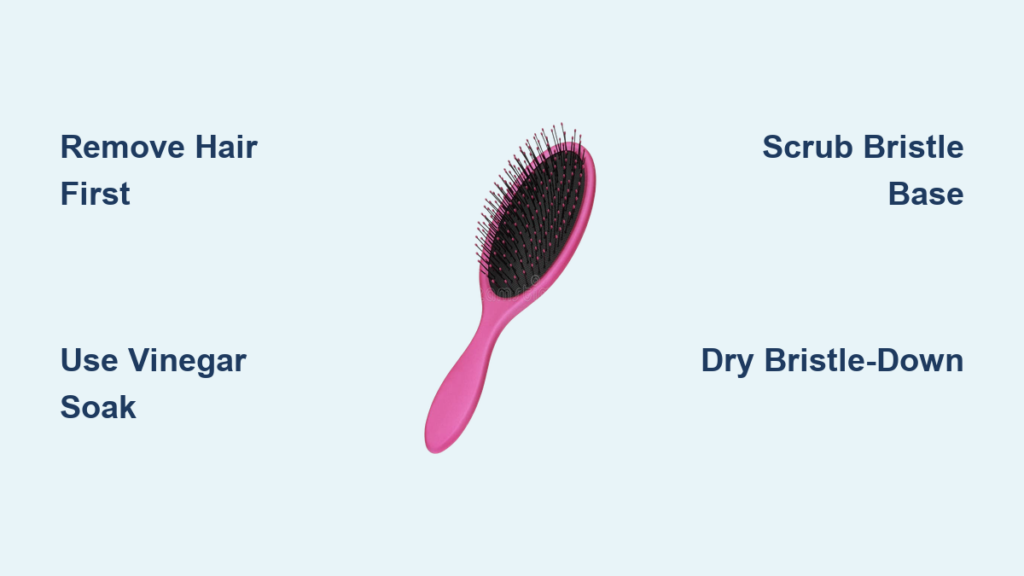
Your freshly washed hair turns greasy within hours—not because of your shampoo, but because your hairbrush is clogged with week-old oils, dead skin, and hairspray residue. Every stroke redistributes this gunk onto clean strands, sabotaging your styling efforts and potentially causing scalp irritation or breakage. Ignoring this hygiene hazard means constantly fighting frizz, odor, and product buildup despite perfect haircare routines. In this guide, you’ll learn exactly how to clean a hairbrush at home using only household items, transforming grimy tools into hygienic styling partners in under 30 minutes.
Most people don’t realize their brush becomes a bacterial breeding ground after just three uses. When bristles trap shed hair, natural scalp oils, and styling products, they create the perfect damp environment for mold and bacteria to thrive. The result? Itchy scalps, dull hair, and even dandruff outbreaks. But here’s the good news: deep cleaning takes less time than your morning coffee routine and costs nothing extra. By the end of this guide, you’ll master brush-specific techniques that prevent damage while eliminating stubborn buildup—no special tools required.
Match Your Cleaning Method to Brush Type: Wood, Plastic, or Boar Bristle?

Your brush’s materials dictate whether water will save or destroy it. Paddle brushes with cushioned bases need gentle handling to avoid waterlogging the air pockets, while round styling brushes require aggressive scrubbing to clear barrel crevices. Crucially, boar bristle brushes demand cornstarch or dry shampoo instead of water to prevent warping, whereas synthetic plastic brushes tolerate full submersion. Never assume all brushes clean alike—misidentifying your type causes irreversible damage like cracked wooden handles or melted glue holding bristles.
Check Handle Materials Before Wetting
- Wooden handles: Wipe with damp cloth only—never soak
- Plastic handles: Fully submerge for deep cleaning
- Metal bases: Dry within 5 minutes to prevent rust
- Cushion pads: Tilt bristles-down during rinsing to drain trapped water
Gather These 6 Household Items for Hairbrush Cleaning
Skip expensive specialty cleaners. For 95% of brushes, these pantry staples work better: mild shampoo (not conditioner), white vinegar, baking soda, sharp scissors, an old toothbrush, and towels. The vinegar dissolves product residue faster than commercial sprays, while baking soda lifts stubborn oils without scratching bristles. Keep tea tree oil on hand if you have sensitive skin—it disinfects without harsh chemicals. Avoid bleach or ammonia unless tackling extreme mold, as they degrade bristle glue.
Why Vinegar Beats Store-Bought Cleaners
White vinegar’s acetic acid breaks down hairspray and serum residues that soap alone can’t touch. Mix equal parts vinegar and warm water for synthetic brushes, or dilute to 1 part vinegar : 3 parts water for delicate boar bristle tools. This solution sanitizes while neutralizing odors—no lingering chemical smells. For heavy buildup, add 1 teaspoon baking soda to create a fizzing action that lifts gunk from bristle bases.
Remove Hair in 3 Minutes: The Comb-and-Cut Technique
Never skip dry hair removal—it’s the #1 mistake that turns cleaning into a muddy disaster. Wetting a brush packed with hair creates an impenetrable mat that traps debris against the base. Start with your brush bristle-side down over the trash can. Use a rat-tail comb to hook hair near the handle, then pull straight upward (not sideways) to avoid bending bristles. For stubborn tangles around the base, carefully snip hair clumps parallel to the brush surface with sharp scissors—never cut vertically toward bristles.
Cutting Severe Tangles Without Damage
- Insert scissors horizontally under the hair mat
- Snip in ½-inch increments toward the outer edge
- Lift cut sections away with tweezers or a pen tip
- Repeat until base is fully exposed—no hair should snag when running a finger across it
Deep Clean in 15 Minutes: Soap and Vinegar Soak Method

Synthetic brushes: Submerge bristle heads (not handles) in 1 cup warm water + 1 tbsp shampoo + 2 tbsp vinegar for 10 minutes. Wooden or boar bristle brushes: Dip only bristle tips in a shallow dish of this solution for 3 minutes max. Use an old toothbrush to scrub in tight circles at the bristle base where gunk hides—this is where 80% of buildup accumulates. Rinse under running water bristle-down; if water runs cloudy, repeat with fresh solution.
Rinse Until Water Runs Crystal Clear
Hold your brush under lukewarm water with bristles pointing downward for 60 seconds. Cloudy rinse water means residue remains trapped near the base. For paddle brushes, gently squeeze the cushion pad while rinsing to flush hidden debris. Continue until water flows completely transparent—this prevents sticky residue that attracts new dirt. Never use hot water; it melts glue holding bristles.
Break Down Hairspray Residue with Baking Soda Paste
Styling products create a cement-like barrier that regular soap can’t penetrate. Make a paste with 3 parts baking soda + 1 part water, then work it deep into bristle bases using your toothbrush. Let it sit for 15 minutes—the paste draws out oils while the abrasives scrub without scratching. For extreme cases (like brushes used daily with gel), dissolve two denture tablets in warm water and soak overnight. Rinse thoroughly, as leftover baking soda leaves hair feeling gritty.
Wood vs. Plastic Brushes: Critical Cleaning Differences

Wooden brushes fail when water seeps into the handle. Instead of soaking, dampen a cloth with soapy water and wipe the base in circular motions. For bristles, use the shallow-dish method: dip tips only for 30 seconds, then scrub immediately. Plastic brushes thrive in deep soaks—they can even go in the dishwasher’s top rack (after hair removal). If your brush has metal ferrules (the band holding bristles), dry it within 2 minutes of rinsing to prevent rust that loosens bristles.
Dry Brushes in 24 Hours: Avoid Warping and Rust
Shake out excess water, then pat bristles with a microfiber towel—never rub. Place the brush bristle-down in an empty glass (handle elevated) on a dry countertop. This position drains trapped water from cushion pads and prevents handle warping. Never use heat sources: hair dryers melt glue, and radiators crack wood. Check for moisture after 12 hours by squeezing the cushion—dampness breeds mold.
Weekly vs. Monthly Cleaning: When Your Brush Screams for Attention
Clean daily users weekly—signs you’re overdue include:
– Visible white flakes (dead skin) clinging to bristles
– Hair feeling greasy immediately after brushing
– A sour odor when running fingers through bristles
– Product users must clean twice weekly; hairspray creates buildup 3x faster than oil-based serums. For occasional users, monthly deep cleans suffice. Always remove loose hair after every use—this cuts deep cleaning time by 70%.
Fix Odors and Mold: Emergency Hairbrush Rescue Tactics
Persistent smells after cleaning? Sprinkle baking soda on dry bristles, wrap in paper towel, and leave overnight. The powder absorbs odors like a fridge deodorizer. For mold (black spots near the base), soak in 1:3 vinegar-water solution for 30 minutes, then sun-dry for 2 hours—UV light kills spores. If mold covers >10% of bristles, replace the brush; it’s unsalvageable. Never ignore mildew—it spreads to clean hair.
Store Brushes Upright: Prevent Bathroom Humidity Damage
Keep brushes bristle-up in a dry drawer, never in the humid bathroom. Moisture from showers causes wooden handles to swell and metal parts to rust. For travel, use mesh brush guards that allow airflow—plastic cases trap dampness. Pro tip: Place silica gel packets in your brush drawer to absorb ambient moisture. Always clean hands before brushing; dirty fingers transfer oils that accelerate buildup.
Replace Your Brush Now: 5 Signs It’s Beyond Cleaning
Stop using your brush immediately if you see:
– Bent or missing bristles (causes hair snagging and breakage)
– Cracks in the base (harbors bacteria you can’t reach)
– Cushion pad won’t spring back (traps water and mold)
– Glue residue on bristles (indicates disintegration)
– Persistent odor after 3 cleanings (deep contamination)
Invest in two brushes to rotate—this doubles the time between cleanings while extending each brush’s life.
Clean brushes transform your haircare routine from frustrating to flawless. You’ll notice smoother detangling, longer-lasting styles, and fewer scalp issues within days. For best results, remove hair after every use and deep clean weekly—set phone reminders until it becomes habit. Your hair deserves tools as fresh as your shampoo, not a hidden source of grime. Start tonight: grab that grimy brush, and reclaim your clean hair confidence.