Every time you toss a bank statement, medical bill, or credit card offer in the trash, you’re practically inviting identity thieves into your home. Most people don’t realize that identity theft often starts with discarded paperwork rather than online breaches—making a reliable paper shredder your essential first line of defense. Without proper destruction, these documents can be reconstructed and misused for fraud, putting your financial security at risk.
This guide cuts through the confusion of selecting the right shredder for your household needs. You’ll discover exactly which security level matches your documents, how to avoid common purchasing mistakes, and which features actually matter for home use—so you can protect your identity without wasting money on unnecessary capabilities.
Match Document Sensitivity to Security Levels

Strip-Cut vs. Cross-Cut vs. Micro-Cut: Real-World Security Differences
Strip-cut shredders (P-1 to P-2) create long spaghetti-like strips that could potentially be reassembled by determined thieves. While they handle up to 30 pages at once, this minimal security level only suits junk mail and non-sensitive documents. Think twice before using strip-cut for anything containing account numbers or personal details.
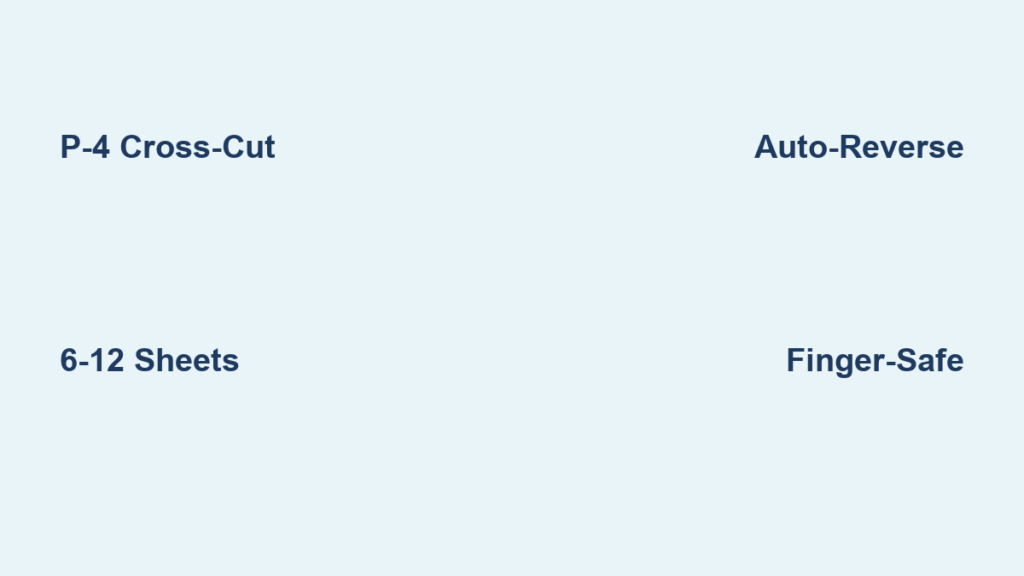
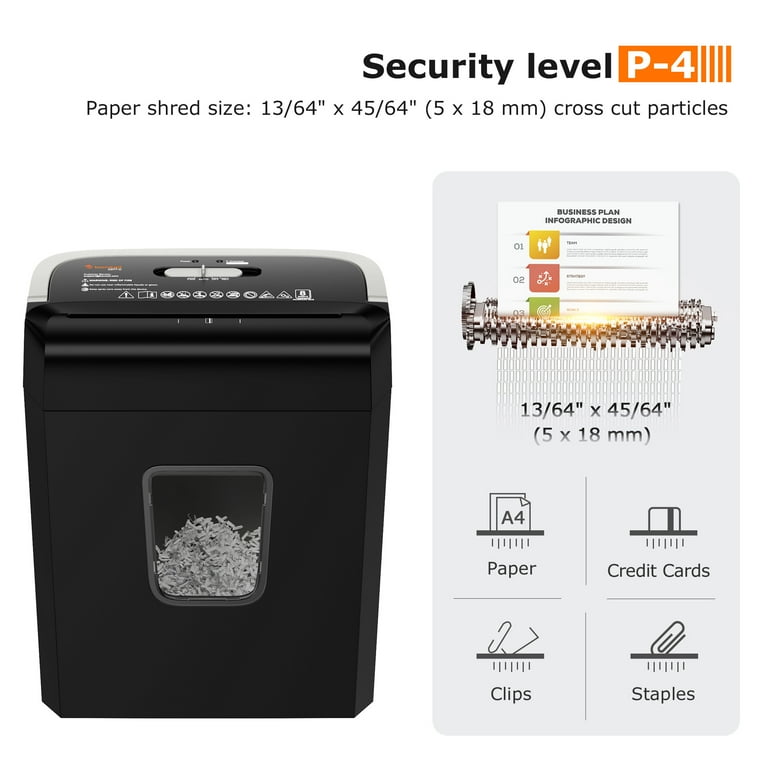
Cross-cut shredders (P-3 to P-4) deliver the sweet spot for most households by slicing paper diagonally into confetti-like pieces. One sheet becomes 400+ tiny particles that are virtually impossible to reconstruct. This security level handles financial records, tax documents, and medical information with 8-20 sheets per pass—perfect for regular home office use.
Micro-cut shredders (P-5 to P-6) turn paper into dust with 3,700+ particles per sheet, making reconstruction impossible even for government agencies. While offering maximum protection for highly sensitive legal documents, they process only 6-12 sheets per pass and require more frequent maintenance.
Security Level Cheat Sheet for Home Users
| Security Level | Best For | Sheets Per Pass | Minimum Price |
|---|---|---|---|
| P-2 (Strip) | Junk mail, delivery labels | 15-30 | Under $100 |
| P-4 (Cross) | Bank statements, tax returns | 8-20 | $100-$250 |
| P-5 (Micro) | Medical records, legal docs | 6-12 | $150-$300 |
Pro tip: If you regularly handle work documents containing client information, micro-cut P-5 is non-negotiable—HIPAA and GDPR violations carry serious penalties even for home-based professionals.
Determine Your Actual Capacity Needs
Sheet Capacity Reality Check: Don’t Overspend on Power You Won’t Use
Most home users mistakenly buy shredders with excessive capacity. For 1-2 people, 5-12 sheets per pass handles monthly bill shredding comfortably. Home offices tackling tax season need 12-18 sheets per pass to efficiently process stacks of financial documents. Large families managing everyone’s paperwork should consider 15-20 sheets per pass.
Warning: Overloading causes 80% of home shredder failures. Always stay 2-3 sheets below the maximum capacity rating to prevent jams and motor strain.
Bin Size: Finding the Emptying Frequency Sweet Spot
Tiny 1-3 gallon bins force weekly emptying but suit compact spaces—common in strip-cut models. The 4-8 gallon range (found in CR’s top models) strikes the perfect balance for most homes, requiring emptying only every two weeks with moderate use. 10+ gallon bins benefit heavy users or those who hate frequent emptying but require significant floor space.
Time-saver: Look for pull-out bins with handles—emptying becomes a 30-second task instead of wrestling with awkward mechanisms.
Must-Have Features for Home Shredders
Jam Prevention: Avoid Frustration Before It Starts
Auto-reverse technology detects jams and instantly reverses direction to clear paper—critical for households with children who might overfeed. Jam-proof sensors measure paper thickness before shredding, preventing common overloading issues. Overload alerts (both visual and audible) warn you when approaching capacity limits.
Critical mistake: Never force paper through a jam—this damages cutting heads. Models with manual reverse give you control to gently clear obstructions.
Family Safety Features You Can’t Skip
Finger-safe sensors stop blades within 0.02 seconds when hands approach the feed slot—essential for homes with curious children. Safety locks prevent accidental activation during storage. Automatic shutoff activates during overheating, protecting both the machine and your home.
Urgent note: If you have toddlers, skip basic models without safety sensors—children’s fingers can reach the feed opening faster than you can react.
Convenience Features That Actually Matter
Quiet operation (65 decibels or less) lets you shred while watching TV without disturbing others—similar to a washing machine’s noise level. Full bin indicators prevent messy overflows with simple LED alerts. Wheels make moving between rooms effortless for multi-purpose households.
Pro tip: Models with credit card slots and CD/DVD shredding capabilities eliminate the need for separate destruction methods—look for HSM Pure series or Fellowes LX22M.
Budget Breakdown: What’s Worth Paying For
$100-200: The Home Office Sweet Spot
The HSM Securio C18 Cross Cut delivers P-4 security at 9-sheet capacity for $150—perfect for tax documents and financial records. Fellowes Powershred LX22M offers whisper-quiet operation under $200, ideal for shared living spaces. These models balance security, capacity, and noise without breaking your budget.
Warning: Avoid no-name brands in this range—they often cut fewer sheets than advertised and fail within months.
$200-300: Maximum Security for Sensitive Documents
The HSM Shredstar X12pro Micro Cut (P-5 security, 12-sheet capacity) costs $275 but provides peace of mind for medical records and legal documents. DestroyIt 225C offers commercial-grade durability with continuous operation for heavy shredding sessions.
Reality check: Micro-cut models require oiling every 20-30 minutes—factor in $10-$15 annual oil costs when budgeting.
Top Home Shredder Brands Ranked

HSM Series: German Engineering for Every Need
SECURIO line delivers premium durability with safety features and noise reduction—ideal for main living areas. Pure series handles higher workloads with energy-efficient standby mode, perfect for busy home offices. Shredstar models provide entry-level personal use at affordable prices, though they lack some advanced features.
Pro tip: HSM’s SECURIO Autofeed models ($300+) save hours during tax season with 100-sheet auto-feeders—worth the investment if you accumulate paperwork.
Fellowes: Quiet Operation Champions
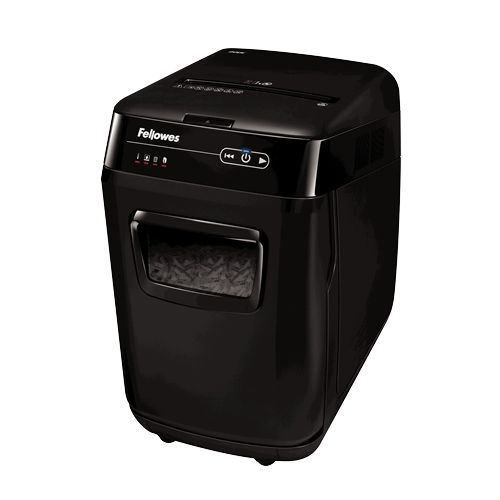
Fellowes Powershred LX22M stands out for home users requiring whisper-quiet operation at 58 decibels—perfect for apartments or shared spaces. Their CX series offers excellent value with P-4 security under $150 for basic home offices.
Critical note: Fellowes models generally require less frequent oiling than competitors—saving maintenance time and costs.
Maintenance Requirements You Must Know
Oil Frequency by Security Level
Strip-cut models need oiling only every 60-90 minutes of use—ideal for occasional shredding. Cross-cut shredders require lubrication every 30-60 minutes to maintain cutting precision. Micro-cut units need oiling every 20-30 minutes due to their complex blade systems.
Time-saver: Keep shredder oil next to your shredder—applying it takes less than 30 seconds but extends your machine’s life by years.
Warranty Must-Haves for Longevity
Insist on minimum 1-year warranty covering both parts and labor—standard for reputable brands. Extended warranties (2-3 years) provide peace of mind for premium models. Verify parts availability before purchasing—some budget brands discontinue support within 2 years.
Critical mistake: Never use vegetable or mineral oils—specialized shredder oil prevents paper dust buildup and corrosion.
Quick 5-Minute Decision Framework
Document Risk Assessment Worksheet
- Sort your papers: Separate into “must shred” (financial, medical) and “can recycle” piles
- Count weekly sheets: Track actual volume for one month—most overestimate needs
- Measure space: Note exact dimensions where shredder will live
- Test noise tolerance: If sensitive to sound, prioritize models under 65 dB
- Set firm budget: Include $10-$15 for annual oil in your calculation
Final Selection Guide Based on Real Needs
- For occasional junk mail: Strip-cut P-2 under $100 (HSM Securio C16)
- For regular home office: Cross-cut P-4 $100-200 (HSM Securio C18)
- For sensitive financial: Micro-cut P-5 $150-300 (HSM Shredstar X12pro)
- For accumulated paperwork: Auto-feed P-4 $200-400 (HSM Securio AF100c)
Remember: The best shredder is the one you’ll actually use consistently. A $50 basic model that sits unused provides zero security—choose something that fits your actual habits and space constraints.
For most households, a cross-cut P-4 shredder in the $100-200 range delivers optimal protection for everyday documents without overwhelming maintenance. The HSM Securio C18 and Fellowes Powershred LX22M consistently top home user reviews for balancing security, noise levels, and ease of use. If you handle sensitive information regularly, investing in micro-cut P-5 technology provides crucial peace of mind—your medical records and financial documents deserve maximum protection. Always prioritize established brands with solid warranty support to ensure your shredder protects your identity for years to come.