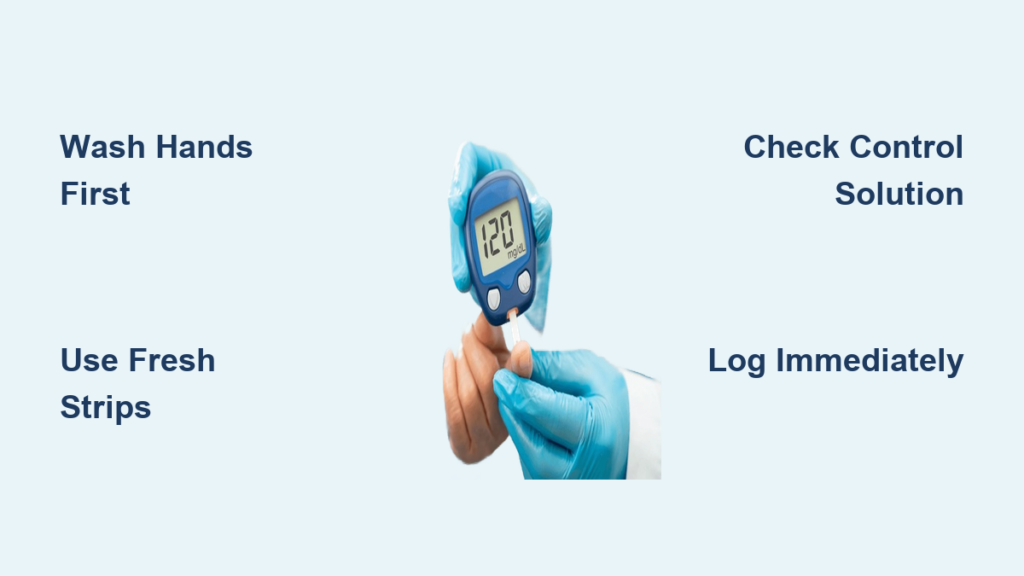
That dizzy spell after lunch isn’t random—it’s your body signaling a blood sugar swing. When you master how to check blood sugar at home correctly, you turn confusion into control. Whether you’re newly diagnosed with diabetes, managing prediabetes, or optimizing fitness recovery, accurate glucose monitoring gives you real-time power over your health. Forget confusing manuals or unreliable online tips. This guide delivers the exact finger-stick protocol, equipment hacks, and pattern-spotting strategies that prevent dangerous errors—all verified by clinical standards. Within minutes, you’ll know precisely how to get trustworthy readings every time.
Why Home Glucose Monitoring Beats Guessing Games
Skipping home checks is like driving blindfolded—you won’t see trouble until it hits you. Blood sugar fluctuations happen silently until symptoms like shakiness or fatigue escalate into emergencies. Regular monitoring transforms vague discomfort into actionable data, revealing exactly how your body reacts to that morning smoothie or afternoon stress meeting.
Daily Patterns That Skew Your Readings
- Breakfast illusions: High-fat meals like avocado toast delay glucose spikes by 3+ hours, making pre-lunch tests misleading.
- Medication timing gaps: Taking metformin after breakfast instead of before can cause 40+ mg/dL higher post-meal readings.
- Stealth exercise: Gardening or grocery shopping burns glucose but may not show effects for hours—tracking catches these hidden dips.
- Illness spikes: Even mild colds can raise levels 50–100 mg/dL due to stress hormones, requiring extra checks.
Immediate Benefits of Reliable Testing
- Stop overcorrecting: Spotting a 165 mg/dL post-meal reading prevents unnecessary insulin that could cause dangerous lows.
- Personalize your diet: Discovering your unique carb tolerance (e.g., “My blood sugar stays steady with ≤30g carbs per meal”) beats generic advice.
- Avoid ER visits: Catching ketones early during illness prevents diabetic ketoacidosis—critical when glucose exceeds 250 mg/dL.
Testing Frequency That Actually Works
| Your Treatment Plan | Minimum Daily Checks | Critical Test Times |
|---|---|---|
| Prediabetes (diet only) | 3x/week | Fasting + 2 hours post-largest meal |
| Metformin or sulfonylureas | 1–2x daily | Pre-breakfast + bedtime |
| Once-daily basal insulin | 2x daily | Fasting + bedtime |
| Multiple daily injections | 4–6x daily | Pre-meal + 2 hours post-meal + bedtime |
| Insulin pump users | 4+ times + CGM | Pre-bolus + 3 AM if unstable |
Essential Tools for Error-Free Testing

Using outdated strips or a poorly stored meter creates dangerous inaccuracies—like mistaking 250 mg/dL for 150 mg/dL. Your equipment must pass three tests: freshness, calibration, and proper handling.
Glucose Meter Must-Knows
Modern meters need just 0.3–0.5 µL blood (smaller than a pinhead), but accuracy plummets if strips are exposed to humidity for >30 seconds. Always check the vial’s silica gel color—orange means dry, green means compromised. Meters with Bluetooth sync (like OneTouch Verio) auto-log data, eliminating manual entry errors that skew pattern analysis.
Continuous Glucose Monitor (CGM) Reality Check
CGMs like Dexcom G7 or Freestyle Libre provide 288 readings daily via a sensor worn on your arm. But they lag 15 minutes behind fingersticks during rapid changes. Use them for trend arrows (↗️↘️) overnight, but always confirm lows ≤70 mg/dL with a finger test. Sensor accuracy drops after day 10—replace on schedule.
Critical Accessories You’re Probably Misusing
- Lancing device: Set depth to “3” for most adults—too shallow causes insufficient blood, too deep causes bruising.
- Test strips: Never store in bathroom cabinets (humidity ruins them) or car glove boxes (heat degrades chemicals).
- Control solution: Run it within 30 seconds of opening a new strip vial—this catches faulty batches before they mislead you.
- Sharps container: Repurpose a ½-full laundry detergent bottle with lid taped shut—pharmacy drop-offs require this seal.
Foolproof Finger-Stick Testing in 90 Seconds
Most “failed” tests happen before the lancet touches skin. Follow this exact sequence to avoid false highs from food residue or false lows from diluted blood.
Pre-Test Setup: Avoid These 3 Costly Mistakes
- Meter code mismatch: Insert the code chip before the strip if required (check manual)—uncoded meters skew results 20%+
- Hand-washing shortcut: Rinsing without soap leaves fruit sugars—scrub 20 seconds with unscented soap, then dry thoroughly
- Cold finger panic: Run hands under warm water for 10 seconds before washing—cold vasoconstriction reduces blood flow by 40%
Blood Collection: The Pain-Free Method
- Site selection: Target the side of your middle or ring finger—fewer nerve endings than pads
- Lancet technique: Press device firmly against skin, then release the trigger (don’t jab)—this creates cleaner punctures
- Blood droplet hack: Squeeze once from knuckle toward tip—excessive milking pulls interstitial fluid, diluting glucose by 15–30%
- Strip contact: Touch blood to strip’s edge before the droplet beads—smearing causes “insufficient sample” errors
Post-Test Protocol That Prevents Errors
- Log within 10 seconds: Note exact time and meal context (e.g., “post-15g carb snack”)—memory fails fast
- Dispose immediately: Drop lancet while still in device into sharps container—never leave it on counters
- Recheck if: Meter shows “E-3” (insufficient blood) or fluctuates >20 mg/dL from previous reading
Real-Time Troubleshooting Table
| Symptom | Immediate Fix | Prevention Tip |
|---|---|---|
| “Error” message | Discard strip, wash hands, restart | Always check strip expiration date before opening vial |
| Painful stick | Switch to 33-gauge lancet (thinner) | Warm hands for 30 seconds pre-test |
| Inconsistent readings | Run control solution | Store strips in original vial with desiccant |
Know Your Personal Target Zones

Standard ranges (80–130 mg/dL fasting) fail 30% of people. Your ideal targets depend on age, diabetes duration, and hypoglycemia history—never guess.
Critical Glucose Landmarks
- Fasting/pre-meal: 70–130 mg/dL—below 70 requires fast-acting carbs now
- Peak post-meal: <180 mg/dL at 1–2 hours—higher indicates carb overload or missed medication
- Bedtime: 100–140 mg/dL—below 90 risks overnight lows; above 180 suggests dinner adjustment needed
A1C Translation Cheat Sheet
| Your A1C | Daily Average Glucose | Action Required If |
|---|---|---|
| 6.0% | 126 mg/dL | Maintain current plan |
| 7.5% | 169 mg/dL | Review post-meal spikes |
| 9.0% | 212 mg/dL | Urgent medication adjustment |
Red flag: Consistent readings >250 mg/dL require immediate ketone testing—untreated, this risks diabetic ketoacidosis.
Alternate Testing Sites: When They’re Safe (and When They’re Not)

Forearm or palm testing hurts less but lies during glucose swings. Use this rule: Alternate sites only when levels are stable for 2+ hours (e.g., pre-breakfast). During rapid changes—like after insulin or exercise—fingertips are non-negotiable.
Fingerstick-Only Emergencies
- Glucose ≤70 mg/dL (hypoglycemia)
- Post-insulin dose (peaks at 60–90 minutes)
- During/after exercise (drops can accelerate)
- Illness or stress (hormones cause wild swings)
Urine Ketone Testing Protocol
Test every 4 hours if:
– Blood sugar >250 mg/dL for 2+ readings
– You have nausea/vomiting without stomach bug
– Positive result? Drink 8oz water hourly and call your doctor—do not exercise.
Logging Secrets That Reveal Hidden Patterns
Recording “145 mg/dL” is useless. Track these 4 elements to uncover why it happened:
- Exact meal composition: “1 slice toast + 1 egg” beats “breakfast”
- Insulin timing: “Rapid-acting taken 10 min after eating”
- Activity intensity: “10-min walk post-meal” vs. “sedentary”
- Stress triggers: “Work deadline” or “argument”
Pro tip: Use free apps like Glucose Buddy to tag readings with emojis (🥑=high fat, 💊=medication). Review weekly for clusters—e.g., “Every Tuesday lunch hits 200+ mg/dL” signals a recurring issue.
Equipment Safety Checks You Can’t Skip
A 2019 FDA study found 47% of home meters give inaccurate results due to user error—not device failure. Protect yourself with these monthly habits:
- Control solution test: Run it within 30 seconds of opening new strips—if outside range, discard entire vial
- Strip storage audit: Keep vials in a kitchen drawer (not bathroom)—open only when ready to test
- Sharps container rule: Stop filling at ¾ capacity—overpacked containers cause needle-stick injuries
Critical warning: Never share lancets—even with family. One drop of blood can transmit hepatitis or HIV.
Partner With Your Healthcare Team Smarter
Bring this data to appointments to get actionable advice, not generic lectures:
- Ask: “My glucose always spikes to 190 at 10 AM—should I adjust my breakfast insulin?”
- Request: A referral to a certified diabetes educator (CDE) for hands-on meter training
- Demand: CGM coverage if you have hypoglycemia unawareness (can’t feel lows)
Final tip: Every reading is data—not a report card. That 160 mg/dL post-pizza isn’t failure; it’s intel showing your carb limit. Master how to check blood sugar at home precisely, and you’ll transform anxiety into authority over your health. Start today: wash your hands, prick that finger, and claim your power.