Finding your home’s original blueprints unlocks critical information for renovations, repairs, or understanding your property’s structural integrity. Without these detailed architectural drawings, you risk costly mistakes—like accidentally removing a load-bearing wall during a remodel or incorrectly rerouting electrical systems. This guide reveals exactly where to search, who to contact, and what to expect when tracking down home blueprints. Whether you’re planning a kitchen expansion or need to locate plumbing lines before installing new flooring, these actionable strategies will help you secure the documentation you need.
Homeowners typically discover they need blueprints when starting renovations, troubleshooting structural issues, or preparing for additions. Original construction documents contain precise measurements, material specifications, and system layouts that standard property records don’t provide. The process requires methodical searching across multiple channels, but with the right approach, you can locate these valuable documents even for older properties. This guide cuts through the confusion to deliver a clear roadmap for finding blueprints of homes, saving you time, money, and potential renovation disasters.
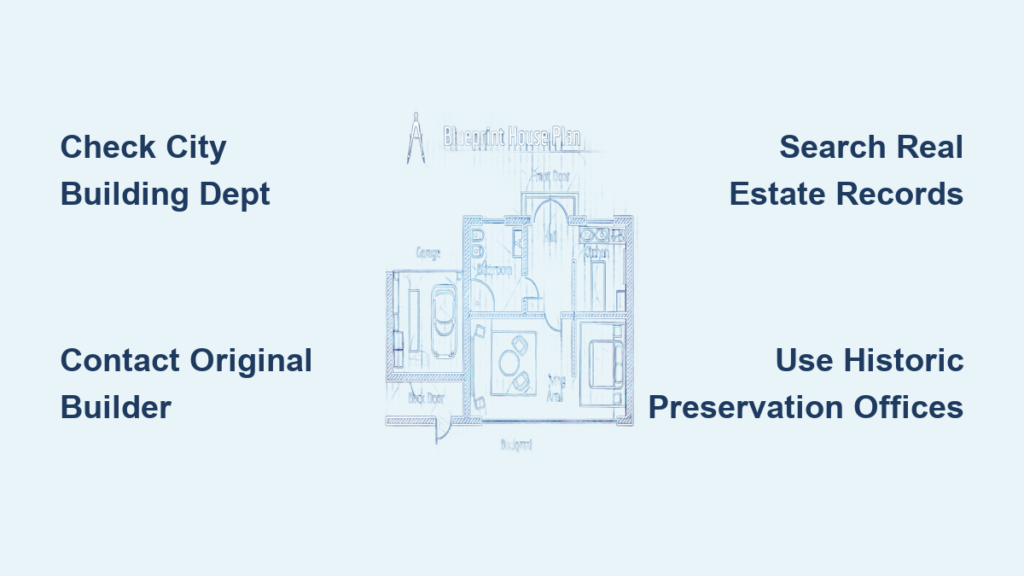
Retrieve Home Blueprints from City Building Department
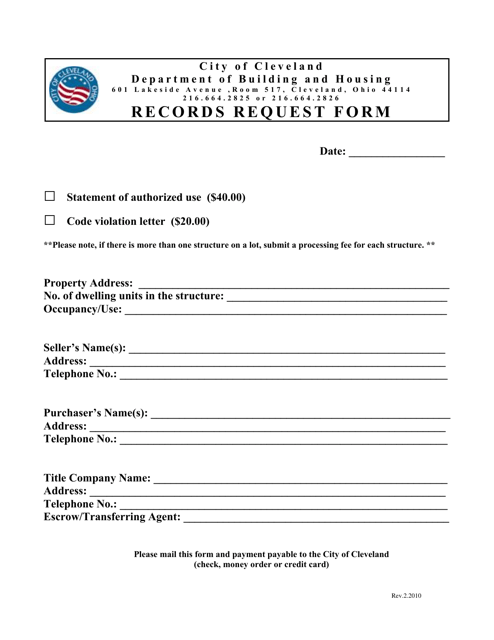
Your local building department holds the most reliable source for original home blueprints, as municipalities require approved plans for all permitted construction. Bring your property address, government-issued ID, and proof of ownership when visiting in person—most offices won’t release documents without verification. Expect to pay $10-50 per document set, with retrieval typically taking 1-5 business days. Call ahead to confirm current fees and operating hours, as requirements vary significantly between jurisdictions.
Search County Records Online Before Visiting
Many counties now offer digital building permit databases searchable by address or parcel number. Check your county assessor’s website for “property records” or “GIS mapping” sections where you can access basic plot plans and permit histories. These online systems often reveal whether blueprints exist in the archives before you make the trip. When searching, use your legal property description from tax records for the most accurate results—street addresses alone sometimes yield incomplete matches.
Visit Planning Department for Site Plans and Easements
While the building department maintains construction blueprints, the planning department houses site plans showing property boundaries, easements, and setback requirements. These documents prove invaluable when planning additions or landscaping projects that must comply with zoning regulations. Request both departments’ records simultaneously to get a complete picture of your property’s approved layout. Planning department staff can also identify any historic preservation restrictions that might affect your renovation plans.
Track Down Original Builder for Home Blueprint Copies
Builders typically retain project files for 20-30 years, making them a prime source for recently constructed homes. Search your property records or warranty documents for the original builder’s name, then verify their current status through your state’s contractor licensing board. Even if the company has closed, their records often transfer to successor firms or storage facilities that still honor document requests from property owners.
Contact Architectural Firms Using Title Block Information
Examine any partial blueprints you’ve found for the title block—usually in the bottom right corner—which contains the architect’s name and license number. State architectural boards maintain searchable directories of licensed professionals who can provide contact information for the original design firm. Many architects retain residential project files for 7-10 years minimum, and some keep historical archives indefinitely for significant projects. When calling, mention you’re the current property owner for better cooperation.
Access Home Blueprints Through Real Estate Records
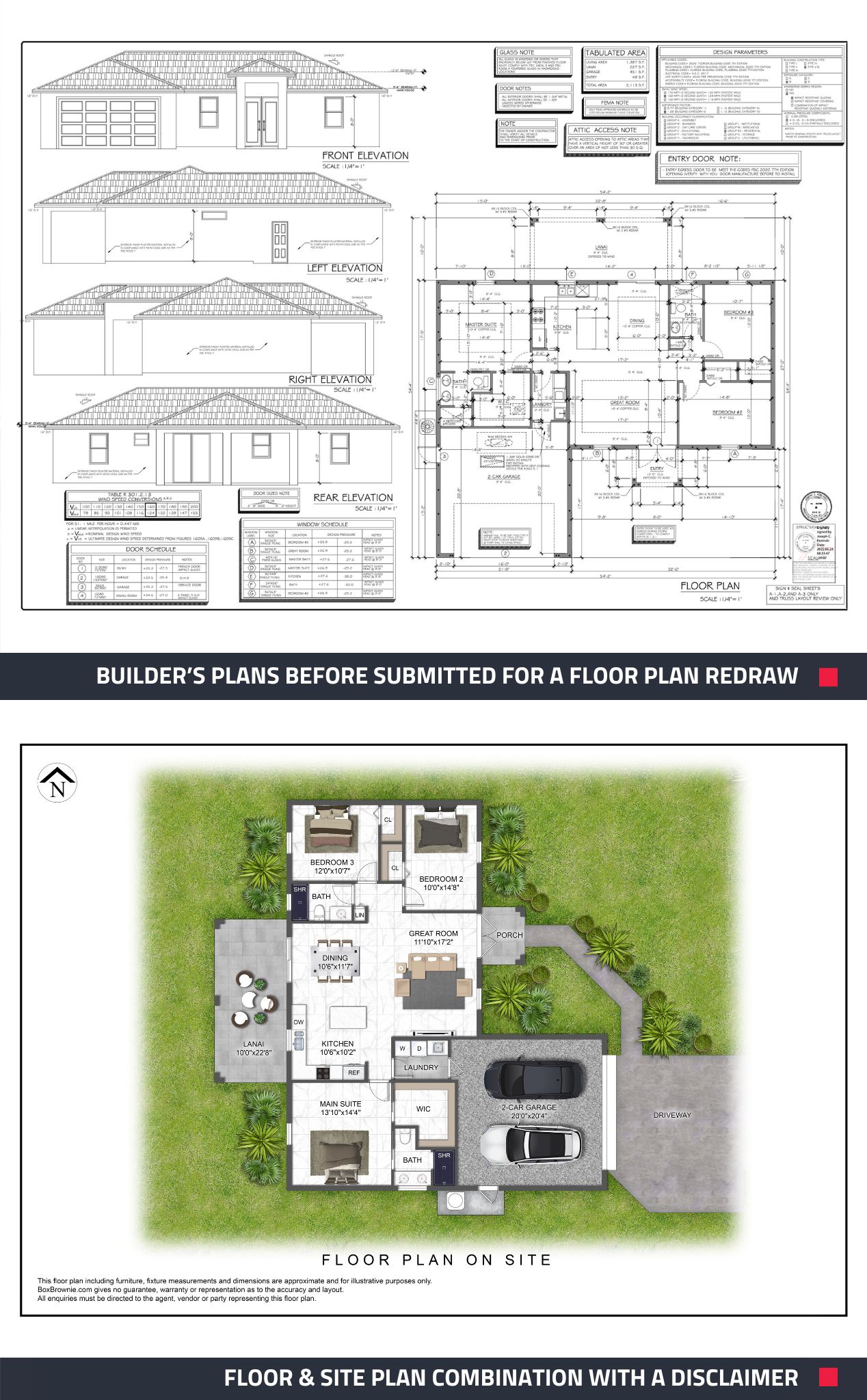
Previous owners often store blueprints in basements, attics, or filing cabinets—documents they no longer need but might readily share. Your real estate agent can facilitate contact with past owners through sales records, or you can find contact information via county tax records. When reaching out, offer to cover reproduction costs or provide digital copies in return—this goodwill gesture frequently yields positive results as former owners appreciate knowing their documentation supports proper property maintenance.
Request Builder’s Plans from Your Real Estate Agent
Experienced agents maintain extensive networks that include previous listing agents who might possess builder’s plans or marketing materials with detailed floor plans. During property transitions, agents often exchange documentation that includes simplified architectural drawings. Ask your agent specifically about “as-built” plans or “builder specifications” from past sales—they may have resources you haven’t considered. This approach works particularly well for homes in planned communities where builders used standard designs.
Follow This Step-by-Step Blueprint Search Process
Begin your search by gathering essential property details: your complete address, parcel identification number from tax records, legal description from your deed, and approximate construction year. Check county assessor records for the exact build date—this information proves critical when requesting documents from offices that organize records chronologically. Having these details ready streamlines your search and prevents multiple trips to government offices.
Contact Multiple Government Departments Simultaneously
Don’t limit your search to just the building department. Visit or call the planning department for site plans, public works for utility connections, and county recorder’s office for property surveys. Request that staff check microfilm archives for older properties—many municipalities transitioned to digital records only recently. When making requests, specify you need “original construction blueprints including floor plans, electrical layouts, and structural details” rather than just permits to ensure comprehensive document retrieval.
Handle Special Cases: Historic and New Construction Homes
Homes built within the last five years typically include complete blueprint packages in the builder’s warranty documentation. During your new home orientation, request digital CAD files—they’re increasingly standard and allow easy sharing with contractors. If the builder hasn’t provided these yet, contact their customer service department with your property address and closing date. Modern construction companies often maintain electronic archives that make blueprint retrieval straightforward.
Locate Documentation for Historic Properties Through Preservation Offices
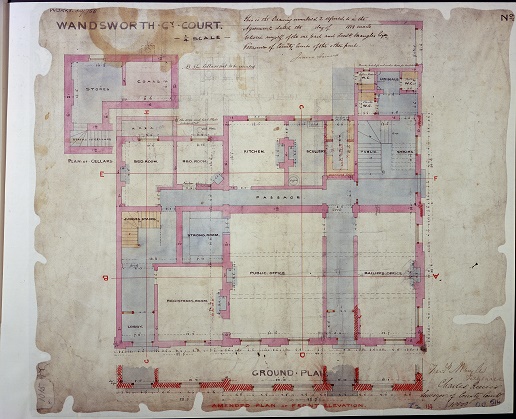
For homes over 50 years old, contact your State Historic Preservation Office (SHPO) and local historical societies—they frequently maintain architectural archives for significant properties. Homes listed on the National Register of Historic Places include detailed architectural documentation in their nomination files. While access procedures may require additional steps, these offices specialize in preserving historical building records that standard government offices might not maintain.
Budget Smartly for Blueprint Retrieval and Reproduction
Government offices typically charge $0.50-$5.00 per page for blueprint copies, while professional reproduction services cost $1-$3 per square foot. Bundle all your document requests into a single visit to secure reduced per-page rates—many offices offer volume discounts you won’t find when making multiple small requests. As the property owner, always verify if you qualify for reduced fees compared to third-party researchers.
Create Cost-Effective Digital Backups
When paying for reproductions, request digital scans instead of physical copies—they’re often cheaper and immediately usable by contractors. Store these files in multiple secure locations: cloud storage for easy access, a home hard drive for offline backup, and a printed copy in a fireproof safe. Proper documentation preservation prevents future search costs if you need blueprints again during renovations or property sales.
Solve Common Blueprint Search Problems
When municipal records have been destroyed by fires or floods, professional measurement services become your most reliable option. These specialists create accurate “as-built” drawings by meticulously measuring your existing structure, typically costing $1,000-$5,000 depending on home size. For budget-conscious homeowners, start with room-by-room measurements using smartphone apps like MagicPlan before committing to professional services.
Verify Blueprint Accuracy Before Renovating
Always cross-reference multiple document sources and measure actual spaces against blueprint dimensions—renovations over decades often create discrepancies. Pay special attention to load-bearing walls, plumbing lines, and electrical panels where outdated plans could cause dangerous mistakes. When in doubt, consult a structural engineer to verify critical elements before making irreversible changes to your home’s infrastructure.
Finding blueprints of homes demands persistence across multiple channels, but systematic searching pays off when planning renovations or repairs. Start with your city building department, expand to original construction sources, and leverage real estate networks to maximize success. Remember that professional measurement services provide reliable fallback documentation when original plans prove elusive. With these proven strategies, you’ll secure the architectural information needed for confident, informed home improvements—avoiding costly mistakes while preserving your property’s structural integrity for years to come.