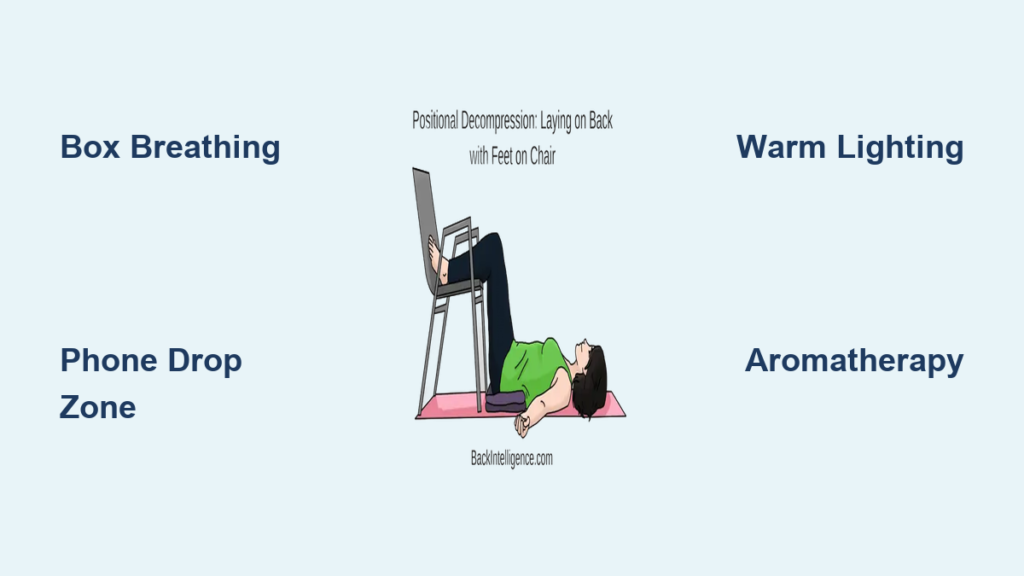
Stepping through your front door after a demanding workday should feel like crossing a threshold into calm—but without intentional decompression techniques, that transition rarely happens naturally. Your nervous system remains stuck in “on” mode, carrying work stress into your personal time and sabotaging your ability to truly recharge. The good news is you don’t need hours of free time or expensive equipment to shift from work mode to rest mode. With the right evidence-based strategies, you can create a personalized decompression routine that fits your space and schedule, transforming your home into an active recovery zone that works with your body’s natural rhythms.
This practical guide reveals specific techniques you can implement immediately to reset your nervous system the moment you walk through the door. From 30-second breathing exercises to environmental tweaks that trigger instant calm, you’ll discover how to build an evening routine that actually works with your lifestyle—not against it.
Stop Stress Momentum with Quick Reset Techniques
Implement 30-Second Box Breathing Immediately
The moment you step inside, your first action should activate your parasympathetic nervous system to halt stress momentum. Box breathing creates immediate physiological shifts that help transition from fight-or-flight to rest-and-digest mode.
Follow this exact sequence:
– Exhale completely through your mouth to empty your lungs
– Inhale through your nose counting slowly to four
– Hold your breath for a count of four
– Exhale steadily for another count of four
– Hold empty before your next inhale for four counts
– Repeat this cycle four to six times
Pro tip: Place a small visual reminder at eye level near your entryway—like a sticky note with “4-4-4-4″—to trigger this habit automatically every time you arrive home. This simple cue makes the technique impossible to forget when you’re mentally exhausted.
Release Stored Tension with Progressive Muscle Relaxation
Your body physically holds stress in predictable patterns that create chronic tension. Target these specific areas with a two-minute release sequence you can perform while still standing near your doorway.
Work through these tension hotspots:
– Jaw release: Gently clench for five seconds, then completely release
– Shoulder reset: Lift shoulders toward ears, hold briefly, then drop
– Hand unclench: Make tight fists, hold, then release fingers fully
– Abdominal softening: Tense stomach muscles briefly before relaxing
– Foot liberation: Curl toes tightly, then let them spread wide
Critical detail: Focus on the sensation of release rather than the tension itself. The contrast between tension and complete relaxation creates the decompression effect.
Transform Your Home Environment for Instant Calm

Create a Lighting Transition Protocol
Your circadian rhythm responds directly to light temperature, making strategic lighting your most powerful environmental tool for signaling “work is over.” Implement these specific changes to trigger your body’s natural wind-down process.
Immediate lighting adjustments:
– Replace bright white bulbs in entryways with warm 2700K lighting
– Install dimmer switches in main living areas to gradually reduce brightness
– Use table lamps with warm-toned shades instead of overhead lighting
– Position salt lamps or candles where they’ll be in your direct line of sight
Smart home integration: Program lights to automatically shift to 30% brightness when you arrive home. This visual cue begins your relaxation response before you consciously decide to unwind.
Establish Your Personal Sound Environment
Background noise either perpetuates stress or accelerates recovery—your choice of sound environment makes a dramatic difference in your ability to decompress. Create an audio sanctuary that actively lowers your stress response.
Build your sound profile:
– Nature soundtracks: Ocean waves or rain mask disruptive urban noise
– Binaural frequencies: Specific sound waves promote cellular relaxation
– White noise machines: Block sudden disruptive sounds from outside
– Silence zones: Designate at least one area as completely device-free
Quick implementation: Place a small Bluetooth speaker near your entry point and create a “Home” playlist that automatically plays when you connect your phone upon arrival.
Break the Digital Stress Cycle with Targeted Detox

Create a Phone Drop Zone Protocol
Your smartphone acts as a portable stress delivery system, constantly triggering dopamine-driven distraction cycles. Establish physical separation with a strategic drop zone to break this pattern immediately.
Build your phone station:
– Position the zone at least ten feet from your primary seating area
– Use an attractive bowl or tray as a visual cue for phone placement
– Activate “Do Not Disturb” before placing your phone in the zone
– Include a charging cable to reinforce the habit loop
Boundary reinforcement: Add a small sign stating “Phone stays here until [specific time]” to prevent unconscious scrolling during your critical decompression window.
Implement a Gradual Screen Time Shutdown
Blue light exposure suppresses natural melatonin production, keeping your brain wired when you need rest. Follow this timed protocol to create a digital sunset that supports your body’s natural wind-down process.
30-minute wind-down schedule:
– 30 minutes before decompression: Enable night mode on all devices
– 20 minutes before: Disable all non-essential notifications
– 10 minutes before: Close work-related applications completely
– At decompression time: Place phone in designated drop zone
Alternative activity list: Keep a visible reminder of what to do instead—read physical books, stretch, journal, or simply sit quietly observing your breath.
Build Your Personal Sensory Sanctuary
Activate Aromatherapy for Instant Calm

Scent bypasses conscious thought to directly influence your emotional state. Strategic aromatherapy creates an immediate environmental trigger that signals “work is over.”
Effective scent combinations:
– Lavender and Bergamot: Classic relaxation blend for immediate calming
– Frankincense and Orange: Grounding with subtle mood elevation
– Cedarwood and Ylang Ylang: Earthy stress relief for deep tension
Application methods: Use a diffuser near your entry point, roller bottles for pulse points, linen spray for seating areas, or shower steamers for post-work reset.
Leverage Temperature for Rapid Decompression
Your core body temperature naturally drops as part of your sleep preparation cycle. Strategic temperature adjustments accelerate this process to trigger relaxation faster.
Temperature manipulation techniques:
– Cooling: Lower thermostat by 2-3 degrees upon arrival
– Warm bath: 10-minute soak creates temperature rise then drop
– Cold face splash: Triggers physiological calming response
– Localized heat: Apply heating pad to neck/shoulders for tension release
Timing strategy: Schedule thermostat changes to coincide with your typical arrival time. The automatic temperature shift becomes another environmental cue signaling transition to rest mode.
Create Recovery Rituals That Actually Stick
Build Your 5-Minute Transition Routine
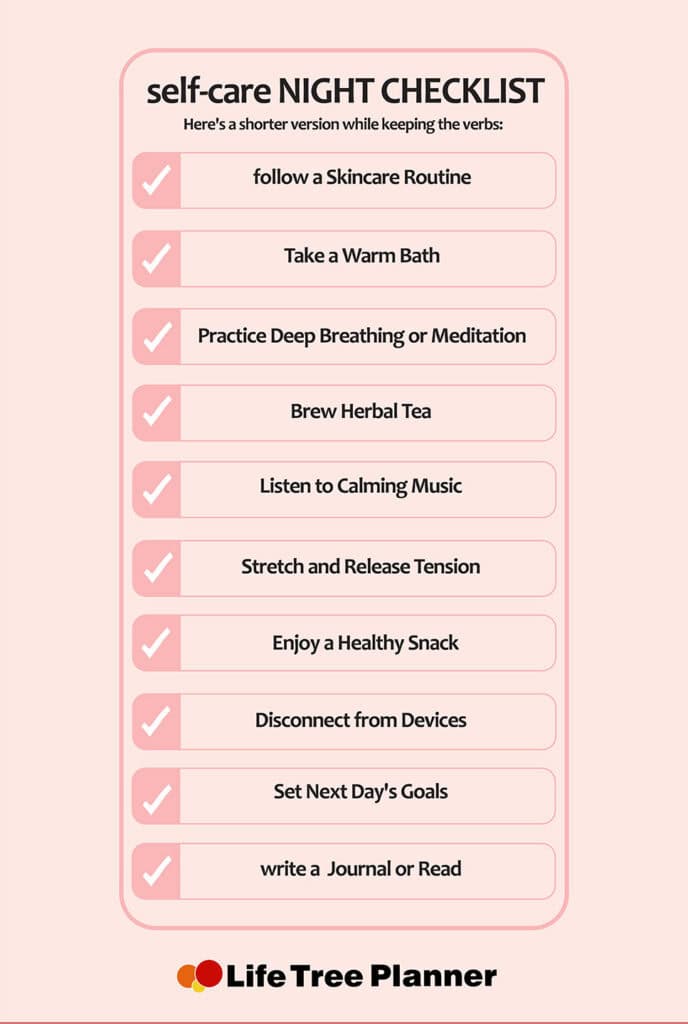
Your brain thrives on predictable patterns. Create a consistent ritual that signals “work is over, recovery begins” with this specific five-step sequence:
- Change clothes immediately to separate work identity from home self
- Drink water (8-10 ounces) to rehydrate and refresh
- Open windows to clear mental fog with fresh air
- Conduct body scan to notice where tension resides
- Set recovery intention for your evening
Habit stacking: Attach this routine to an existing behavior like making tea or feeding pets to ensure consistency even on your most exhausted days.
Design Your Personal Recovery Zone
You don’t need a separate room to create meaningful psychological separation. Designate a specific spot for deep decompression with these essential elements:
- Comfortable seating that supports relaxation posture
- Soft, indirect lighting that avoids visual strain
- Minimal distractions with only restorative items present
- Clear boundaries from work areas using visual dividers
Small space solution: In studio apartments, use a folding screen, tall plant, or strategically placed furniture to create psychological separation between work and recovery zones.
Final Note: Your Home Should Work for Your Recovery
Your living space can transform from mere shelter into an active recovery system that supports your nervous system’s need to reset. Start with just one technique from each section—master it for a week before adding another layer. Within 30 days, you’ll have built a personalized decompression protocol that makes arriving home the most relaxing part of your day. Remember that consistency matters more than perfection—even implementing two or three of these strategies will dramatically improve your evening recovery and prepare you for whatever tomorrow brings.