Your chef’s knife glides through nothing but frustration—mashing tomatoes instead of slicing them, crushing herbs instead of chopping cleanly. That dull blade isn’t just annoying; it’s dangerous. When you press harder to compensate for poor sharpness, slips happen. But you don’t need a $100 professional service to fix this. Learning how to sharpen knives at home transforms your kitchen experience, making prep faster, safer, and more enjoyable. In just 10 minutes with basic tools, you can revive any knife’s edge. This guide cuts through the confusion with field-tested methods that actually work, whether you’re using a $20 whetstone or repurposing household items.
Most home cooks mistake honing for sharpening—that steel rod in your block only straightens a bent edge, it doesn’t create new sharpness. True sharpening removes metal to form a new cutting edge. Skip this step, and even frequent honing won’t save your knives. By mastering home knife sharpening, you’ll extend blade life, improve food presentation, and eliminate the #1 cause of kitchen cuts: excessive force from dull blades. Let’s turn your tired tools into precision instruments.
Pick the Right Home Knife Sharpening Method for Your Skill Level
:max_bytes(150000):strip_icc()/how-to-sharpen-knife-with-whetstone-995817_FINAL-5c3facdec9e77c00019976bf.png)
Whetstone Mastery for Complete Edge Control
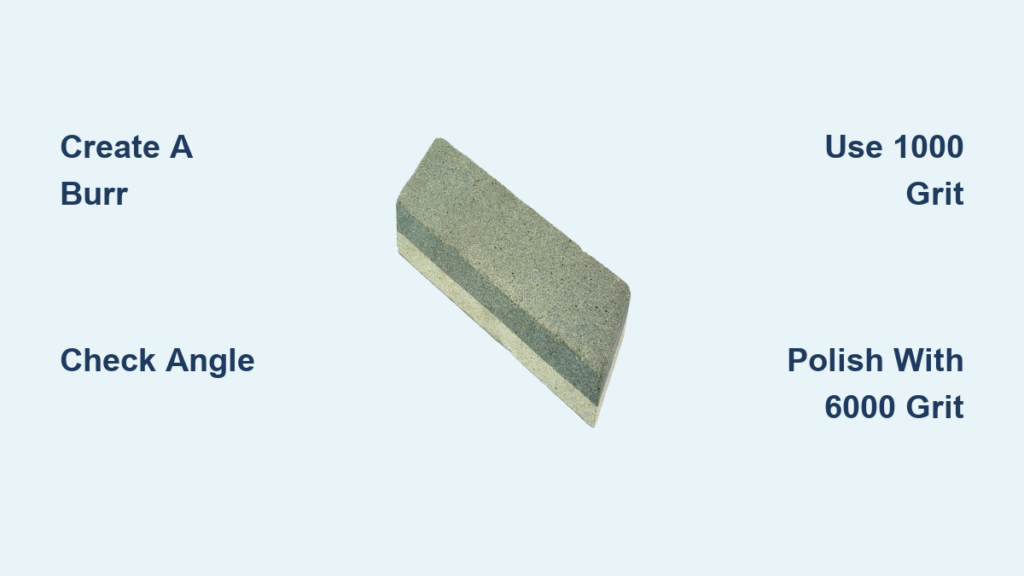
Water stones deliver professional results by reshaping your blade’s edge geometry. Start with a single combo stone (1000/6000 grit) instead of overwhelming yourself with multiple grits. Western knives like Wüsthofs need 20° per side, while Japanese blades like Shuns require 15°—mismatched angles cause weak edges. Critical mistake: Skipping the burr check. That faint wire edge tells you when metal removal is complete. Without it, you’re just polishing a dull blade. Soak water stones 10-15 minutes until bubbling stops, then place them lengthwise on a damp towel (no fancy holder needed).
Honing Rod Reality: It’s Not Sharpening
Your steel rod is a maintenance tool—not a sharpener. Use it after every cooking session to realign microscopic bends in the edge. But if your knife still struggles through paper after 6-8 rod passes per side, actual sharpening is required. Pro tip: Ceramic rods work better than steel for home use—they provide slight abrasion to handle minor dullness. Hold the rod vertically, place the knife heel at the top at your blade’s angle (20° for German knives), then draw the blade down in a smooth arc while moving from heel to tip. Five passes per side maintains edges between sharpenings.
Pull-Through Sharpeners: Emergency Use Only
These gadgets remove metal aggressively through preset slots, often creating rough, uneven edges that dull faster. Reserve ceramic-slot versions for cheap knives or last-minute guest emergencies—never use carbide slots on quality blades. Red flag: If your knife pulls toward you during sharpening, the angle is wrong. Proper technique requires pulling the blade straight through with light, consistent pressure. Even then, limit use to 3 passes per slot to avoid excessive metal removal.
Build a $30 Home Knife Sharpening Station in 5 Minutes

Essential Starter Kit Components
Forget expensive setups. Your first kit needs just three items:
– King 1000/6000 combo stone ($25): Handles chip repair to mirror finishes
– Angle guide ($3): Prevents inconsistent sharpening angles
– Non-slip base: Folded damp kitchen towel (free)
Place stones near your sink for easy soaking and cleanup. Good lighting is non-negotiable—position under an overhead light to spot edge reflections. If you don’t own an angle guide, fold a business card corner-to-corner twice for a perfect 22.5° template (ideal for Western knives).
Angle Accuracy Without Tools
Japanese knives (15° per side): Rest your index finger on the spine—your knuckle should barely clear the stone.
Western knives (20° per side): Tilt the blade until the edge reflection disappears.
Test instantly: Mark the edge with permanent marker. After 5 strokes, check for uniform ink removal—patchy marks mean inconsistent angles.
Whetstone Knife Sharpening at Home: Step-by-Step Guide
Establish the Critical Burr
- Start coarse-side down: Use 1000-grit for moderately dull blades
- Heel-to-tip motion: Begin at the blade’s base, pushing forward while moving toward the tip
- Burr check every 10 strokes: Run your thumb perpendicular to the edge (not along it!) to feel for the wire edge
- Flip when burr forms: Continue on the opposite side until burr runs the full length
Warning: Excessive pressure creates uneven bevels. Your palm should rest lightly on the blade—let the stone do the work. If no burr forms after 30 strokes, your angle is too high.
Refine and Polish for Lasting Sharpness
After establishing the burr on both sides:
– Progress to 6000-grit: Use feather-light pressure (10% of coarse stage)
– Alternate single strokes: One pass per side prevents edge rocking
– Remove the burr: Finish with edge-trailing strokes on cardboard
Sharpness test sequence:
1. Paper test: Clean slice through printer paper (no tearing)
2. Tomato test: Cuts skin without pressure or rolling
3. Herb test: Chives separate cleanly without bruising
Fix These 3 Common Home Sharpening Mistakes Immediately

Over-Sharpening Warning Signs
Your blade shouldn’t look needle-thin after sharpening. Excessive metal removal weakens the edge and creates poor geometry. Stop immediately if:
– The edge becomes translucent under light
– Knife flexes abnormally when pressure is applied
– Sharpness fades after one kitchen use
Solution: Switch to finer grits instead of pressing harder. Count strokes religiously—15 per side at each grit maintains symmetry.
Uneven Edge Diagnosis
Check under bright light: A properly sharpened edge won’t reflect light. Shiny spots indicate low points needing more work. Common causes:
– Rocking the blade during strokes
– Using a dished (sunken) stone
– Inconsistent pressure distribution
Fix: Flatten stones monthly with 220-grit sandpaper on glass. Mark the edge with marker to visualize contact points.
Wire Edge Elimination
That ultra-thin “sharp” edge folds over on first contact. Remove it by:
1. Stropping on leather with edge trailing
2. Alternating single strokes on 8000-grit stone
3. Using cardboard with minimal pressure
Pro tip: Apply olive oil to cardboard for smoother stropping—it reduces friction and prevents edge rolling.
Daily Home Knife Maintenance to Extend Sharpness
Post-Use Routine That Takes 30 Seconds
After every cooking session:
1. Hone on ceramic rod: 3-5 passes per side
2. Hand-wash immediately with mild soap
3. Dry thoroughly before storage
Weekly touch-up: One light pass per side on 6000-grit stone. Never skip honing—regular realignment extends time between sharpenings by 300%.
Storage Solutions That Prevent Dullness
Magnetic strips are non-negotiable—they keep edges isolated and visible. If using a knife block:
– Match blade length to slot size (no forcing)
– Insert knives vertically, never at an angle
– Clean slots monthly to remove metal shavings
Never store knives loose in drawers. Even careful users cause edge damage when reaching past other utensils.
When Home Knife Sharpening Isn’t Enough: Call a Pro
Seek professional help immediately for:
– Chips larger than 1mm (requires coarse 200-grit reset)
– Broken tips or bent blades
– High-end Japanese single-bevel knives
– Ceramic blades (diamond abrasives required)
Cost reality check: Most shops charge $5-10 per knife—worth it for premium blades. If your $200 knife feels “off” after home sharpening, stop. One mistake with aggressive tools can destroy the edge geometry.
Home Knife Sharpening Kits: Budget Options for Every Cook
| Skill Level | Tool Kit | Total Cost | Best For |
|---|---|---|---|
| Beginner | 1000/6000 stone + ceramic rod + angle guide | $35 | Occasional home cooks |
| Intermediate | 400/1000/4000 stones + leather strop + diamond plate | $120 | Serious enthusiasts |
| Expert | Full grit progression + guided system + compounds | $350 | Knife collectors |
Start with the beginner kit on a cheap knife—master burr formation before touching your chef’s knife. Within 3 practice sessions, you’ll develop muscle memory for consistent angles.
Test Your Home-Sharpened Knife: 4 Performance Checks
Your knife passes the home sharpening test if it:
✅ Slices paper cleanly with no drag
✅ Cuts tomato skin without pressure or rolling
✅ Separates herbs without bruising
✅ Feels safer due to reduced cutting force
Remember: Sharp knives prevent accidents. That “scary sharp” edge requires less force, so slips become glides instead of cuts. Spend 10 minutes weekly maintaining your blades, and you’ll never dread chopping onions again. Grab your $25 whetstone tonight—your future self (and fingertips) will thank you.