Finding a tick crawling across your pillow or embedded in your pet’s fur triggers immediate panic. These blood-feeding parasites don’t just hitch rides—they establish stubborn infestations that persist for months. Unlike fleas, ticks play the long game, hiding in baseboards for weeks before emerging when they sense body heat. This guide delivers battle-tested methods to remove ticks from home permanently, covering immediate removal, pet treatment, and critical prevention steps you can’t skip.
Spot Tick Infestations Before They Spread
Identify Ticks by Physical Features
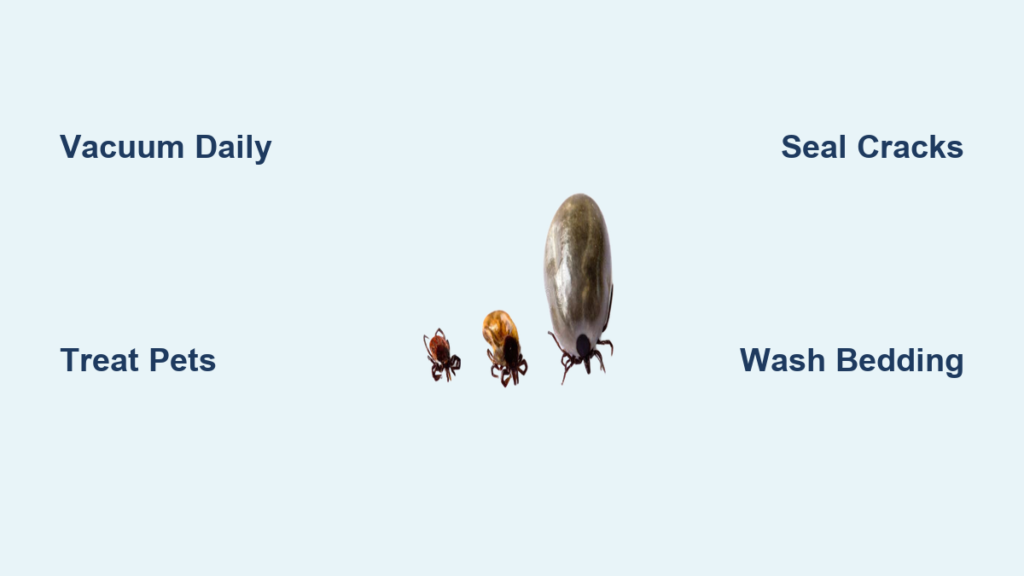
Adult ticks measure 1/8 to 3/8 inch—poppy seed to apple seed size—with eight legs and flattened oval bodies. American dog ticks appear reddish-brown, deer ticks are dark brown, and lone star ticks feature a distinctive white spot. Crucially, their mouthparts protrude forward (unlike spiders), making them visible when crawling on light surfaces.
Critical Warning Signs Inside Your Home
- Moving black specks on walls or curtains that aren’t dust
- Tiny brown egg clusters in baseboard cracks or window tracks
- Unexplained bites on ankles, waistlines, or scalp (especially in clusters)
- Ticks on pets after they’ve been indoors for hours
High-Risk Zones Ticks Target
Ticks hide where hosts rest: behind furniture against walls, along carpet edges, in pet bedding, and within hardwood floor cracks. Check under couches, behind picture frames near sitting areas, and in closet corners—these warm, undisturbed spots harbor eggs and hungry adults.
Immediate Tick Removal That Prevents Disease

Safe Human Tick Extraction
Never use heat, nail polish, or petroleum jelly—these force ticks to regurgitate disease-causing pathogens. Instead:
1. Grasp firmly with fine-tipped tweezers as close to skin as possible
2. Pull straight upward with steady pressure (no twisting)
3. Sanitize immediately with rubbing alcohol or soap
4. Dispose of ticks in alcohol-filled container or sealed bag
Pet Tick Removal Protocol
Work in bright light and secure squirmy pets with a helper. Part fur completely to expose the tick’s body. Use tweezers to pull straight up, then reward your pet. Critical step: Inspect ears, between toes, and under collars—common hiding spots.
Save Ticks for Disease Testing
Place removed ticks in a sealed container with rubbing alcohol. Note the bite date and location. This aids doctors if flu-like symptoms or bullseye rashes develop weeks later.
Treat Pets to Break the Infestation Cycle
Effective Medication Options
Topical treatments (fipronil or permethrin for dogs) kill ticks on contact. Oral preventives (veterinary chewables) disrupt reproduction internally. Tick collars provide backup protection but must be combined with other treatments—never relied on alone.
Deep-Clean Pet Environments Daily
- Wash all bedding in 130°F+ water weekly
- Dry on high heat for 30+ minutes to destroy eggs
- Vacuum pet areas daily, sealing and disposing of bags immediately
- Steam-clean favorite resting spots weekly
Natural Pet Protection Alternatives
For chemical-sensitive animals, apply cedar oil sprays to bedding or food-grade diatomaceous earth to outdoor kennels. These create physical barriers without toxins.
Eliminate Ticks in Your Home Environment

Vacuuming Protocol That Actually Works

Vacuum daily for 14 consecutive days—less time won’t break the life cycle. Focus on:
– Baseboard perimeters in every room
– Under furniture using crevice tools
– Carpet edges and upholstery seams
Non-negotiable step: Seal vacuum bags in plastic before removing them—ticks escape standard bags.
Targeted Chemical Treatments
Pyrethrin sprays kill adults on contact, while insect growth regulators (IGRs) prevent eggs from hatching. Apply to:
– All floor-wall junctions
– Furniture undersides and cracks
– Window/door frame interiors
– Pet resting zones (after pets leave)
Pro tip: Treat every room simultaneously—even guest bedrooms harbor ticks.
Fogging for Severe Infestations
Reserve total-release foggers for heavy infestations. Requires:
– Evacuating people/pets for 2-4 hours
– Treating all rooms at once
– Vacuuming dead ticks within 24 hours
Warning: Foggers won’t reach ticks in deep cracks—combine with vacuuming.
Natural Solutions for Chemical-Free Homes
Essential Oil Repellent Recipes
- Eucalyptus spray: 20 drops in 4 oz water—apply daily to entry points
- Lemongrass oil: Creates barriers on baseboards
- Cedar oil: Repels and kills on contact—safe for pet areas
Diatomaceous Earth Barrier Application
Sprinkle food-grade DE in a thin line:
– Along all baseboards
– In hardwood floor cracks
– Under furniture edges
Leave 48 hours, then vacuum. Reapply monthly—this fossilized algae shreds tick exoskeletons physically.
Heat Treatment That Kills All Life Stages
Steam-clean carpets/upholstery above 130°F. For washable items (curtains, rugs), use high-heat drying for 30+ minutes—this eliminates eggs invisible to the eye.
Prevent Reinfestation Through Yard Management
Modify Your Outdoor Habitat
- Mow grass to ≤3 inches tall weekly
- Remove leaf litter within 20 feet of your house
- Install 3-foot wood chip barriers between lawn and woods
- Spray yard perimeter with bifenthrin monthly
Block Wildlife Entry Points
Seal gaps >¼ inch in foundations. Move bird feeders 20+ feet from the house. Install deer fencing—these animals carry ticks into your yard.
Verify Your Home Is Tick-Free
Post-Treatment Monitoring Schedule
- Days 1-7: Daily flashlight checks in high-risk zones
- Weeks 2-4: Weekly inspections with magnifying glass
- Ongoing: Monthly preventive checks during peak seasons
Confirmation You’ve Won
- Zero ticks found for 7+ consecutive days
- Pets remain bite-free during grooming
- White cloth traps placed near walls stay clean
- No new household member bites
Critical Safety and Prevention Checklist
Immediate Actions (Do Today)
✅ Remove visible ticks using tweezers—never heat or polish
✅ Vacuum all edges and dispose of bag immediately
✅ Wash pet bedding in hot water
Week 1 Protocol
✅ Apply pyrethrin spray to baseboards
✅ Start daily vacuuming for 14 days
✅ Begin pet topical/oral treatment
Long-Term Defense
- Weekly: Vacuum edges, inspect pets, wash bedding
- Monthly: Reapply outdoor perimeter treatment, seal new cracks
- Seasonal: Increase vigilance in spring/fall; maintain winter pet treatments
Ticks won’t vanish overnight, but this systematic approach removes ticks from home permanently. The key is simultaneous treatment of pets, indoor spaces, and yard—plus relentless consistency after the last tick disappears. Within 14 days of diligent execution, your home will be tick-free and stay that way with ongoing prevention. Remember: One missed vacuum session or skipped pet treatment restarts the infestation clock. Stay vigilant, and reclaim your safe haven.