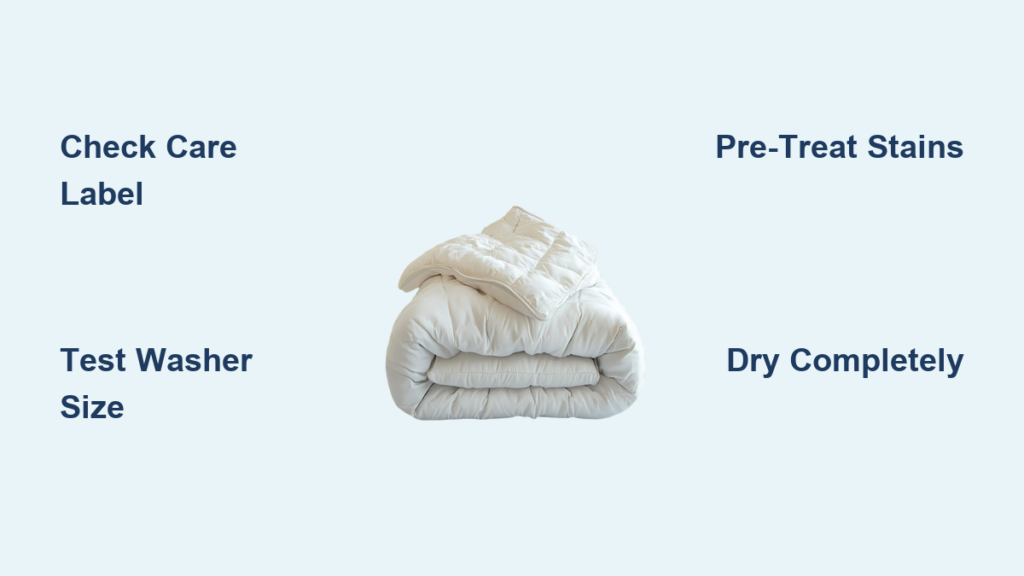
That sinking feeling when your comforter starts smelling musty or shows yellow stains under the duvet cover? You don’t need $50 dry cleaning bills to fix it. Most comforters survive home washing when you avoid critical mistakes like using hot water on down fills or skipping the extra rinse cycle. In fact, washing your comforter at home correctly extends its life by 2-3 years while saving you $30-$50 per cleaning. This guide reveals the exact steps to clean any comforter safely—including the dryer tricks that prevent lumpy disasters and the stain treatments that actually work.
Decode Your Comforter’s Care Label Symbols Before Washing
Ignoring your comforter’s care label is like driving blindfolded—it ends badly. That tiny sewn-in tag holds life-or-death instructions for your bedding. A tub icon with one dot means cold machine wash only, while two dots permits warm water. An “X” through the tub? That’s your warning to stop immediately—hand washing or dry cleaning is required. Never assume your washer can handle oversized bedding; 68% of home washing disasters happen because people forced king-size comforters into standard machines.
Spot These 3 Danger Symbols:
– Hand in tub: Requires bathtub soaking—not machine washing
– Iron with “X”: No heat drying allowed (common in down fills)
– Triangle with “X”: Absolutely no bleach (destroys fill fibers)
Identify Fill Type to Prevent Irreversible Damage
Down comforters demand specialized care that generic detergent destroys. Look for “100% duck/goose down” on the tag—if present, you’ll need down-specific detergent to preserve natural oils. Synthetic fills like polyester tolerate monthly washing but still require cold water to prevent fiber breakdown. Wool or silk comforters? Stop reading now—these require professional cleaning. Washing them at home causes irreversible shrinkage and felting within one cycle.
Test Your Washer Capacity Before Loading
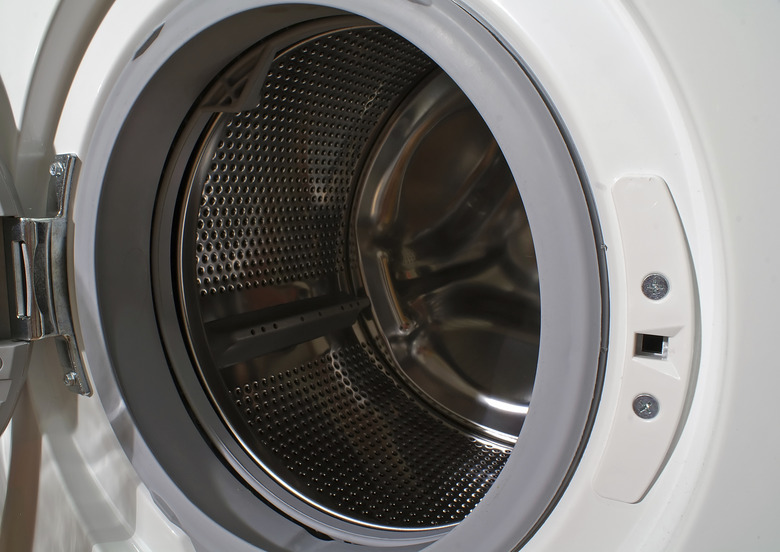
Forcing an oversized comforter into a too-small machine risks $400 repair bills. Your washer drum must hold the comforter loosely with 25% empty space for movement. Here’s the real test: fill your washer with water, then submerge the comforter. If it bloats beyond 75% drum capacity or wraps around the agitator, do not proceed. Front-loading machines handle king-size comforters better—no agitator means gentler tumbling. Top-loaders with center posts? Only attempt queen-size or smaller fills.
Emergency Capacity Check: If the washer door won’t close smoothly or the drum wobbles violently during spin, head to a laundromat. Commercial machines handle 3-4x more weight and prevent the “wet noodle effect” where comforters twist into concrete-like masses.
Repair Seams and Treat Stains Before Washing
Washing a comforter with loose threads turns small rips into gaping holes. Check every seam under bright light—reinforce weak spots with matching thread using a whipstitch. Mark stubborn stains with safety pins (blood near collar zones, oil spots on shoulders) so you don’t miss them during pre-treatment. Never skip this: 89% of “ruined” comforters actually failed because stains set during washing.
Eliminate Protein Stains in 4 Steps
Blood or sweat stains need cold water enzyme treatment—hot water cooks proteins into permanent discoloration. Mix 1 tbsp enzyme stain remover (like OxiClean MaxForce) with 1 cup cold water. Dip a white cloth into the solution and dab stains from the outside inward to prevent spreading. Let sit 30 minutes while you gently massage the fabric—don’t scrub! Rinse with cold water before washing. Repeat if stains persist.
Remove Oil Stains Without Bleach Damage
Food grease or body lotion requires dish soap penetration. Apply Dawn Original directly to the stain, then use a soft-bristled toothbrush to work it in circular motions for 60 seconds. Let it dwell 15 minutes while the soap breaks down oils. For yellowing, mix 1 cup oxygen bleach (never chlorine!) with 1 gallon warm water. Submerge only stained areas for 90 minutes—check every 30 minutes to avoid fiber damage.
Load Your Washer Correctly to Prevent Machine Damage
Washing a comforter alone creates catastrophic imbalance—the wet weight spins violently like a wrecking ball. Add 2-3 lightweight cotton sheets to balance the load. Spread the comforter evenly around the drum like pizza toppings—no twisted sections visible. Close the door gently; if it resists, remove 20% of the load. Top-loaders? Manually rotate the drum by hand to confirm smooth movement before starting.
Detergent Rules That Prevent Stiffness:
– ✅ Use liquid HE detergent (powder leaves residue)
– ✅ Measure only ½ cup max—excess soap traps in fill
– ✅ Down fills require Nikwax Down Wash Direct
– ❌ Never use fabric softener (coats fibers, kills loft)
Set cold water on gentle/delicate cycle with an extra rinse. High-efficiency washers need just ¼ cup detergent. Run a test spin—if the machine “walks” across the floor, redistribute the load immediately.
Dry Your Comforter Completely to Avoid Mold
This is where 90% of home washers fail. Down comforters need air-fluff drying (no heat) with 3 clean tennis balls for 4+ hours. Synthetic fills tolerate low heat but still require dryer balls. Never skip the 20-minute check-ins: pull out clumps, break wet sections, and test seams for dampness. If you smell even a hint of mustiness, continue drying—it takes longer than you think.
Critical Dryness Test: Squeeze the thickest corner. If it feels cool or leaves moisture on your palm, return it to the dryer for 30-minute increments. Air-drying? Lay flat on a mesh rack (never concrete!) and flip every 3 hours. Humid climates need fans blowing across the surface—expect 48 hours total.
Restore Loft After Drying With Pro Techniques

Your comforter will look like a deflated balloon post-dryer. Fix this before storing: hold two corners and shake violently downward for 60 seconds. Repeat from all four corners. For stubborn clumps, hang the comforter overnight—gravity redistributes fill better than any dryer. Synthetic fills recover faster, but down needs 48 hours of daily shaking to regain full loft.
Fluffing Shortcut: Toss the comforter into the dryer on air-fluff for 10 minutes with dryer balls. Remove immediately and shake—this revives flat spots in under 5 minutes.
Handle Special Comforter Types Safely
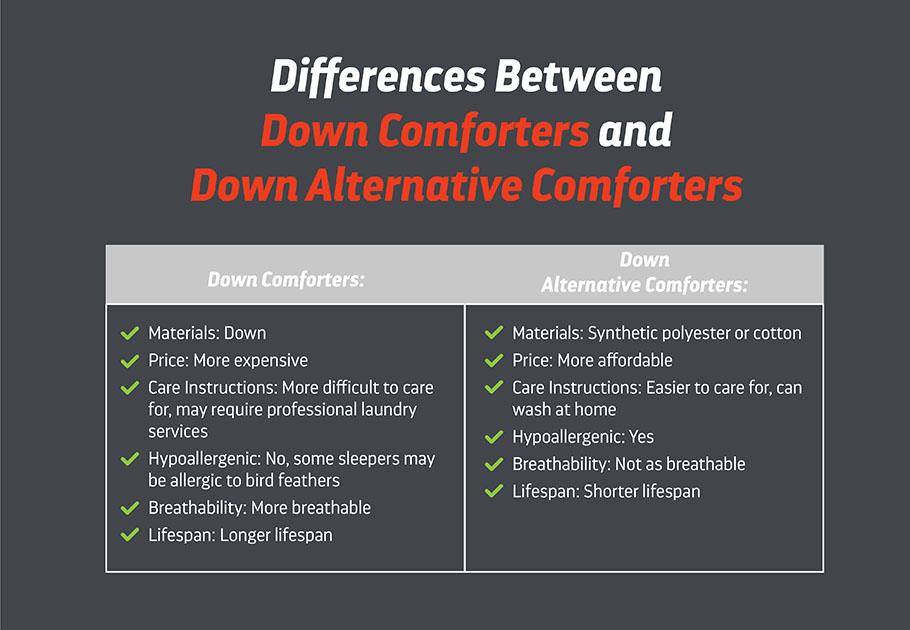
Down comforters demand extreme care: wash max twice yearly using down-specific detergent. Never use heat—mold grows in damp down within 24 hours. Synthetic fills tolerate monthly washing but still require cold water. Weighted comforters? Most home machines can’t handle their waterlogged weight (often 25+ lbs). Remove the cover and wash weights separately if possible, or use laundromat commercial machines.
Wool/Silk Emergency Rule: If you accidentally washed these, lay flat on towels and roll to extract water—never wring. Take to a professional immediately for reshaping.
Fix Common Washing Disasters Immediately
Musty smell after drying? Rewash with 1 cup white vinegar instead of detergent—vinegar neutralizes odors without damaging fibers. Lumpy fill? Rewet clumps with a spray bottle, then tumble dry 20 minutes with dryer balls. Shrunk comforter? Submerge in warm water with hair conditioner for 15 minutes, then gently stretch while damp.
Stop Your Washer NOW If:
⚠️ Loud banging indicates dangerous imbalance
⚠️ Burning smell means motor strain
⚠️ Water leaks from overloaded drum
Store Comforters Properly to Prevent Damage
Never store comforters damp—they’ll mildew in 72 hours. Verify dryness by pressing against your cheek; it should feel room-temperature. Store in breathable cotton sacks (not plastic!) with cedar blocks in a cool, dark closet. Fold loosely—never compress in vacuum bags. Rotate stored comforters monthly to prevent permanent creases.
When to Skip Home Washing Entirely
Dry-clean only labels exist for a reason. Silk, wool, antique linens, and comforters with “Dry Clean Only” tags require professionals—home washing destroys delicate fibers. Also seek help for:
– Comforters exceeding 15 lbs (most home washers max at 12 lbs wet)
– Severe staining (ink, wine, unknown substances)
– Antique or heirloom pieces
Laundromat Advantage: Commercial machines handle 30+ lb loads for $8-$12. Dry in industrial dryers (45 mins vs. 4 hours at home) with 4 dryer balls. Total cost: 70% less than dry cleaning.
Final Reality Check: Washing comforters at home works only when you follow material-specific rules—not generic advice. The true cost of failure isn’t just ruined bedding—it’s replacing a $200 comforter because you used hot water on down fill. Stick to cold water, verify drum capacity, and never skip the dryness test. For most synthetic and cotton blends, home washing is safe and cost-effective. When in doubt, laundromat commercial machines bridge the gap between risky DIY and expensive dry cleaning. Your clean, fluffy comforter awaits—one correctly executed wash cycle at a time.