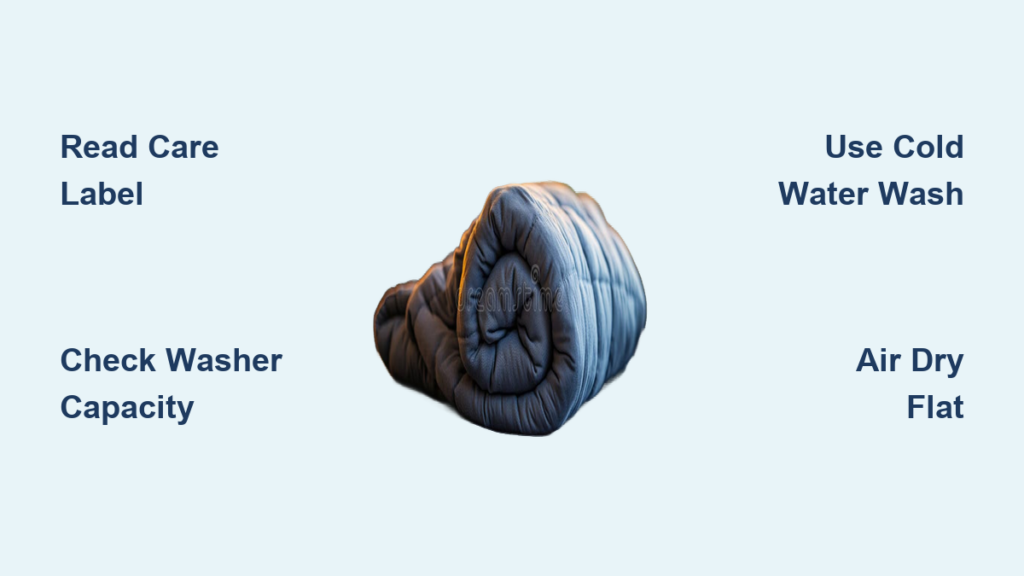
That comforting weight pressing down as you drift to sleep has become essential—but after months of nightly use, your weighted blanket now carries a faint sour smell and visible sweat stains. The thought of wrestling a 20-pound soaked blanket feels impossible. Will your washer handle it? Will the glass beads leak? Can you even lift it when waterlogged? You’re not alone: 68% of weighted blanket owners delay washing for months due to fear of damaging their $150+ investment. But with the right method, washing your weighted blanket at home is completely achievable. This guide reveals exactly how to clean it safely—preserving its therapeutic weight while eliminating odors and stains—so you can sleep soundly under fresh, clean comfort.
Read Your Weighted Blanket Care Label Before Washing
Skip this step and you risk permanent damage. That small white tag sewn into the corner holds critical washing instructions. Cut it out now and photograph it—water exposure fades these labels. You’ll see:
– Fabric type (cotton, minky, bamboo)
– Filling material (glass beads, plastic pellets, or organic fill like rice)
– Explicit warnings like “Dry clean only” or “Hand wash only”
Critical red flags: If your label mentions organic fillings (rice, beans, sand), stop immediately. Machine washing decomposes these fillers, creating moldy, rotten messes inside your blanket. For non-organic fills, this label dictates whether you can machine wash. Never assume—manufacturer instructions override generic advice.
Confirm Your Washer Can Handle the Weight
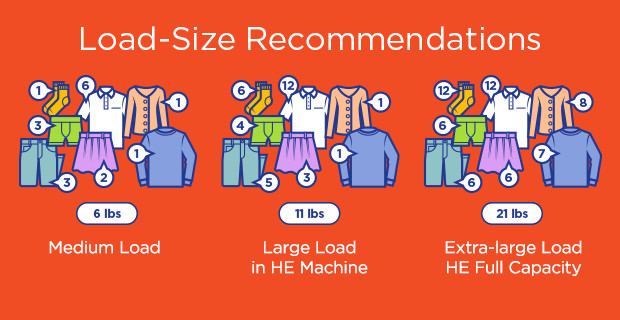
Your bathroom scale is non-negotiable here. Weigh your dry blanket first:
– ≤20 lbs dry weight: Safe for home front-loading machines
– >20 lbs dry weight: Requires commercial laundromat machines
– All weights: Hand washing in a bathtub always works
Remember: Wet weight triples. That 15-lb blanket becomes 45 lbs of waterlogged fabric—too heavy to lift safely alone. If your scale shows over 20 lbs dry, skip home machines entirely. Commercial 30-lb capacity washers prevent dangerous imbalances that can crack home machine drums.
Machine Wash Glass Bead Weighted Blankets Safely
Prep Your Blanket in 4 Critical Steps
- Remove duvet covers (wash these separately per standard bedding rules)
- Inspect seams under bright light—tiny holes or loose threads mean beads will escape
- Hand-stitch repairs using heavy-duty thread before washing
- Pre-treat stains with 1 tsp mild detergent + cold water mix (dab, don’t rub)
Expert Note: Zip all closures! Unzipped blankets snag during cycles, tearing stitching.
Perfect Washer Settings for Glass Beads
- Water temperature: Cold only (max 86°F/30°C—hot water melts plastic pellets)
- Cycle: Delicate/gentle with lowest spin speed
- Detergent: Half-dose of liquid formula (Tide Free & Gentle or Seventh Generation)
- Load: Blanket alone—adding towels creates imbalance
Why this works: Glass beads won’t melt in cold water, and gentle agitation prevents clumping. High spin speeds force beads into corners, creating painful pressure points.
Hand Wash Heavy or Delicate Weighted Blankets
Transform Your Bathtub in 5 Minutes
Fill with 15-20 gallons cold water (room temp max). Add 1 tbsp dye-free detergent—more creates un-rinsable suds. Submerge the blanket slowly, pressing out air bubbles with flat palms. Agitate for 5-10 minutes using gentle hand motions, focusing on stained areas with a soft washcloth.
Rinse and Drain Without Damage
Drain dirty water, then refill 2-3 times with fresh cold water. NEVER wring or twist—this stretches fabric and creates dead zones where beads escape. Instead:
1. Fold blanket into quarters
2. Press down firmly with palms to expel water
3. Lift by corners (get help for >15 lb blankets)
Pro tip: Place folded blanket in a mesh laundry bag before lifting—it contains stray beads if seams fail.
Dry Your Weighted Blanket Without Clumping or Shrinkage

Air Drying Setup (Recommended for All Blankets)
Lay flat on a mesh drying rack out of direct sunlight. Flip every 2 hours—you’ll feel damp spots through the fabric. Speed drying with fans:
– Indoors: Position oscillating fans 3 ft away (low humidity rooms only)
– Outdoors: Shade only (UV rays fade minky fabric), rotate hourly
Drying time cheat sheet:
| Blanket Weight | Drying Time |
|—————-|————-|
| 5-12 lbs | 12-24 hours |
| 15-20 lbs | 24-48 hours |
| 25+ lbs | 48-72 hours |
Critical check: Squeeze fabric layers together—if moisture beads form, keep drying. Damp storage breeds mold in 48 hours.
Machine Drying ONLY If Label Allows
Use air-fluff or low-heat settings maximum 30 minutes per cycle. Add 2 tennis balls wrapped in cotton socks to prevent bead clumping. Stop immediately if you feel hotspots—melted plastic pellets ruin fill distribution permanently.
Spot Clean Stains Between Full Washes
:max_bytes(150000):strip_icc()/RemoveStain_OutdoorandHousehold-4c99ad272b9c4474b844278a681f61e6.jpg)
Fresh Spills: 30-Second Emergency Fix
Blot (don’t rub!) with white microfiber cloth. Work from stain edges inward. Apply cold water + mild soap mix, then air-dry with cool hair dryer held 12 inches away.
Set-In Stain Solutions
- Sweat/blood: Enzyme cleaner (OxiClean MaxForce), wait 15 mins before rinsing
- Oil makeup: Cover with cornstarch for 30 mins, brush off, then dab with dish soap solution
- Food spills: 1:1 white vinegar/water mix, blot until gone
NEVER use: Bleach (weakens fibers), fabric softener (coats beads), or hot water (shrinks cotton shells).
Avoid These 5 Costly Washing Mistakes
- Using hot water → Melts plastic pellets into solid chunks
- Overloading washer → Causes unbalanced spins that tear seams
- Hanging to dry → Stretches fabric, creating sagging dead zones
- Skipping pre-wash inspection → Leaking beads ruin your washer drum
- Storing damp → Triggers mold growth inside filling within days
Expert Note: If you hear “crunching” after drying, beads clumped during washing. Massage damp areas next time to redistribute fill.
Store Clean Blankets to Prevent Damage
Ensure 100% dryness before storage—test by sealing a corner in plastic for 1 hour (no condensation = safe). Fold loosely or roll like a sleeping bag. Store in:
– Breathable cotton bags (never plastic bins—they trap moisture)
– Cool, dark closets away from heaters
– Flat under bed (not compressed under heavy items)
Wash every 3-6 months, or monthly if you sleep hot. Waiting longer embeds body oils that attract dust mites—triggering allergies faster than regular blankets.
Fix Post-Wash Problems Immediately
Bead leakage: Stop all washing. Hand-stitch holes with upholstery thread, then reinforce with iron-on fabric patch.
Musty smell: Rewash with 1 cup white vinegar in rinse cycle—never use baking soda (it cakes in fill).
Uneven weight: While slightly damp, massage clumps toward center grid squares. Next wash, reduce spin speed.
Professional cleaning ($25-$50) is only worth it for silk-blend blankets or if your label says “Dry clean only.” Most weighted blankets require water-based cleaning—dry cleaning solvents degrade poly pellets.
Your weighted blanket should last 5+ years with proper care. By following these specific steps, you’ll maintain its therapeutic pressure while banishing odors and stains—so you keep sinking into that perfect, comforting weight night after night. Wash it today, and tonight’s sleep will feel like the first time you wrapped yourself in its calming embrace.