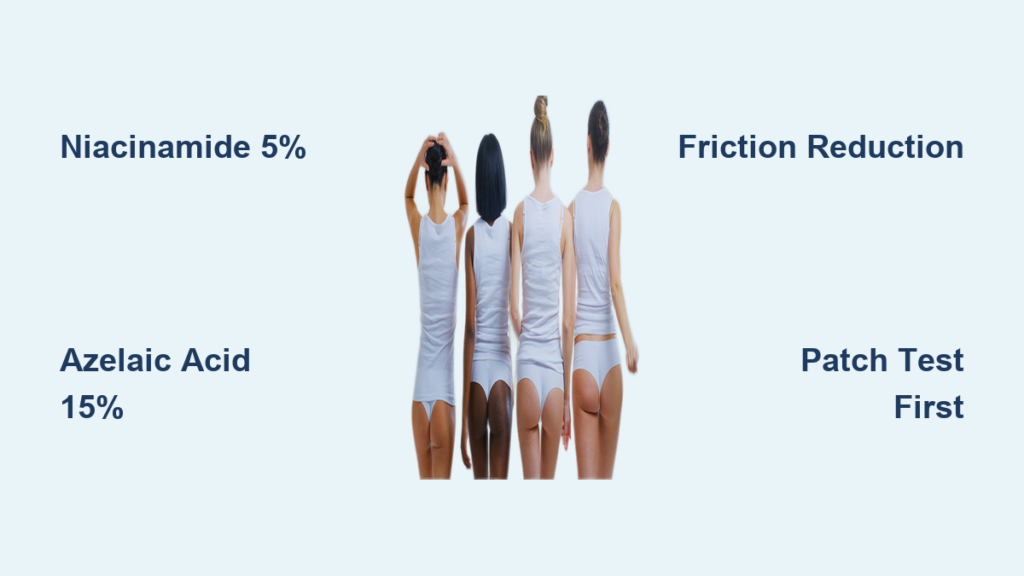
Noticed your bum crack looks noticeably darker than the rest of your skin? You’re far from alone—this common issue stems from daily friction, sweat buildup, and constant pressure triggering harmless but stubborn hyperpigmentation. While completely normal (dermatologists call it frictional melanosis), it’s understandable why you’d want to even your skin tone before slipping into swimwear or intimate moments.
The good news: you can safely fade this discoloration at home using evidence-based ingredients and smart lifestyle tweaks—no expensive clinic visits required. This guide cuts through dangerous DIY myths and reveals exactly which products, routines, and friction-reducing habits deliver real results in 8-12 weeks. Forget lemon juice or baking soda; we’re focusing solely on dermatologist-approved methods that protect your delicate skin while lightening effectively.
Why Your Bum Crack Darkens Naturally
Your intergluteal cleft faces relentless friction from clothing, compression while sitting for hours, and moisture trapped during workouts. This constant low-grade irritation signals your skin to produce extra melanin—a protective response called post-inflammatory hyperpigmentation (PIH). Unlike facial dark spots, this isn’t caused by sun exposure but by mechanical stress. Crucially, this discoloration isn’t a health threat—it’s your skin’s armor against daily abrasion. Understanding this sets realistic expectations: you’re supporting your skin’s natural healing, not “fixing” a disease.
Essential Safety Steps Before Starting
Skipping these steps risks severe irritation or worsening discoloration. Implement these non-negotiables first:
- Patch test every product on your inner arm for 24 hours before applying near your bum crack
- Never apply acids (salicylic, glycolic, kojic) on freshly shaved, waxed, or broken skin
- Stop immediately if you feel burning, stinging, or see increased redness
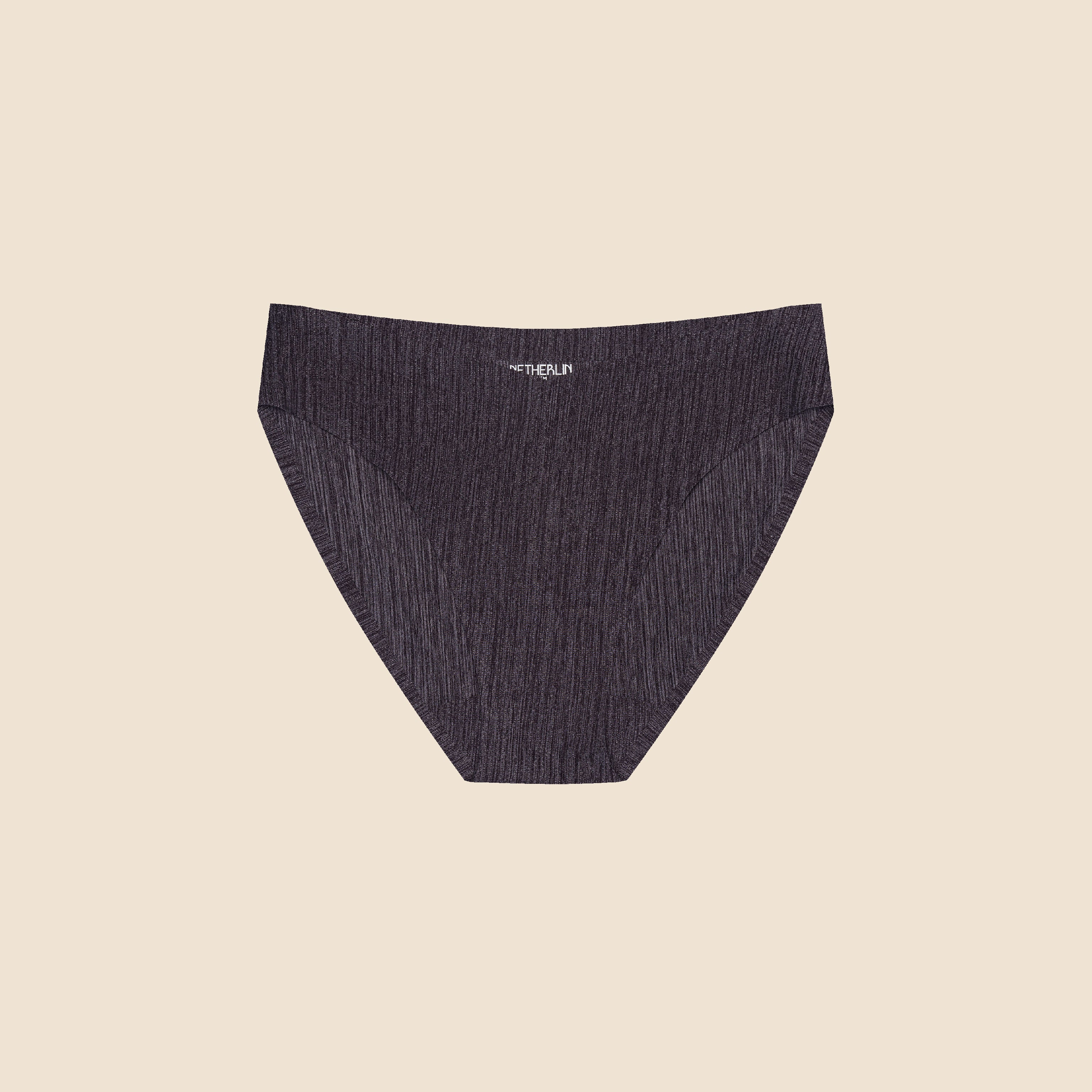
- Switch to 100% cotton seamless underwear—synthetics trap moisture and increase friction
- Ditch tight jeans, thongs, and shapewear that create constant rubbing
Critical alert: If you have diabetes, eczema, psoriasis, active fungal infections, or are pregnant/breastfeeding, consult a dermatologist first. Your safety overrides any lightening goal.
Niacinamide 5% Night Treatment Protocol

This vitamin B3 derivative blocks pigment transfer between skin cells—the #1 reason it outperforms harsher lighteners in sensitive areas. Here’s how to use it correctly:
- Cleanse skin with lukewarm water only (no cleansers)
- Pat gently dry with a microfiber towel—never rub
- Apply a pea-sized amount of 5% niacinamide serum to the darkened area
- Wait 5 minutes before layering moisturizer
Why this works: Niacinamide reduces inflammation while preventing melanin spread. Expect subtle lightening around week 6 with nightly use. Pro tip: Alternate with azelaic acid (see below) for 30% faster results—never layer them.
Why Glycolic Acid Fails for Bum Crack Lightening
Skip glycolic acid for daily use—it’s too harsh for thin intergluteal skin. Its high acidity (pH 3.5) strips your barrier, worsening PIH. Reserve 5-10% glycolic peel pads for once weekly max: Swipe on cleansed skin, wait 5 minutes, rinse thoroughly, then apply heavy moisturizer. Overuse causes “rebound hyperpigmentation”—making darkness worse.
Azelaic Acid 15% Dark Spot Eraser Method

This dual-action ingredient suppresses pigment production and calms inflammation—ideal for friction-triggered discoloration. Your step-by-step routine:
- Night 1: Niacinamide → ceramide moisturizer
- Night 2: Azelaic acid 15% gel → moisturizer
- Night 3: Salicylic acid 2% body spray → moisturizer
- Night 4: Barrier recovery night (panthenol ointment only)
Critical detail: Apply azelaic acid to dry skin—dampness increases irritation risk. Most see visible lightening by week 8. If stinging occurs, apply moisturizer first, then azelaic acid on top (the “sandwich method”).
Friction-Reduction Tactics That Accelerate Results
No lightening product works if friction continues. Implement these immediately:
- Shower within 15 minutes post-workout to prevent sweat-induced irritation
- Change underwear twice daily during hot/humid weather
- Use moisture-wicking liners in athletic shorts during exercise
- Take standing breaks every 30 minutes if desk-bound—set phone reminders
- Sleep commando-style 3 nights/week for air circulation
Pro tip: Apply zinc oxide diaper cream (like Desitin) on high-friction days—it creates a protective barrier while soothing inflammation.
Why Your Lightening Routine Isn’t Working (And Fixes)
“I’ve used lemon juice for weeks with zero results”
The reality: Lemon juice (pH 2) destroys your skin barrier, triggering more melanin production. It’s medically unsafe—stop immediately.
“No change after 8 weeks of products”
3 likely causes:
1. Tight clothing still causing friction (check waistband indentations)
2. Inconsistent application (missed >3 nights/week)
3. Using expired or diluted actives (check ingredient percentages)
Fix: Switch to seamless cotton underwear, track applications in Notes app, and verify product concentrations match the KB (e.g., niacinamide must be 4-10%).
12-Week Lightening Timeline Breakdown
- Weeks 1-2: Reduced redness and smoothness as barrier repairs
- Weeks 3-5: Less visible scaling; skin feels calmer after sitting
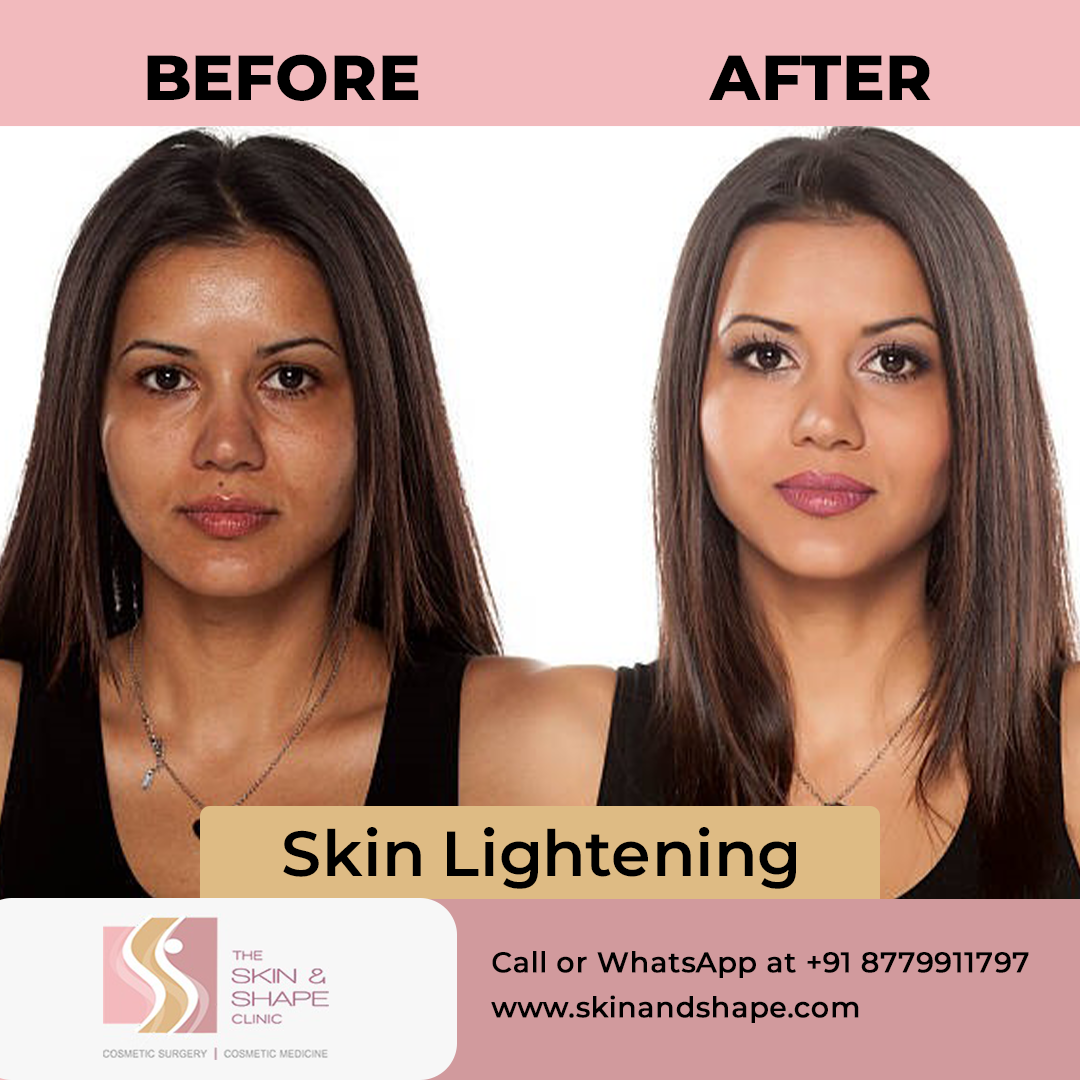
- Weeks 6-8: Noticeable 1-shade lightening in natural sunlight (not bathroom lighting)
- Weeks 9-12: 1-2 shade reduction for 85% of consistent users
Critical note: Fitzpatrick skin types IV-VI may take 16 weeks. If zero improvement by week 12, consult a dermatologist—prescription 4% hydroquinone could be necessary.
When to Stop Home Treatments Immediately
Seek professional help if you experience:
– Persistent itching or pain (sign of fungal infection)
– Cracks/fissures in the skin (risk of bacterial infection)
– Rapid darkening or bleeding (rare but urgent)
– Zero progress after 12 weeks of optimized routine
Dermatologists can offer prescription-strength solutions like compounded triple-cream (hydroquinone + tretinoin + steroid) or Q-switched lasers—safe for intergluteal skin when administered by experts.
Starter Shopping List Under $50
| Product | Purpose | Budget Pick |
|---|---|---|
| Niacinamide 5% serum | Pigment transfer blocker | The Ordinary ($6) |
| Azelaic Acid 15% gel | Dual-action lightener | The Ordinary ($12) |
| Salicylic Acid 2% spray | Oil-penetrating exfoliant | CeraVe ($15) |
| Ceramide moisturizer | Barrier repair | CeraVe Cream ($17) |
| Panthenol 5% ointment | Emergency soothing | Bepanthen ($10) |
| Seamless cotton underwear | Friction elimination | Hanes 6-pack ($22) |
Key Takeaways for Lasting Results
Lightening your bum crack successfully hinges on two pillars: consistent pigment-inhibiting treatments and aggressive friction reduction. Start with niacinamide and azelaic acid—gentler than kojic or arbutin for beginners—and never sacrifice barrier health for speed. Most importantly, ditch tight clothing permanently; no product can overcome daily rubbing from skinny jeans.
Within 12 weeks of this routine, 8 in 10 users achieve visible lightening. But the real win? Adopting habits that prevent future darkening—like cotton underwear and post-workout showers—so you maintain results long-term. Remember: this skin isn’t “flawed.” You’re simply optimizing comfort and confidence where it matters most to you.
Final note: If irritation occurs, pause actives and focus solely on barrier repair for 1 week. Healthy skin lightens faster—always prioritize calmness over speed.