You’ve spent years caring for aging parents or neighbors, and now you’re ready to transform that compassion into a stable healthcare career. With the U.S. Bureau of Labor Statistics projecting 25% job growth for home health aides through 2031, knowing exactly how to apply for home health aide positions has never been more critical. But here’s where most applicants stumble: confusing non-medical “home care aides” (California’s registry system) with medical “home health aides” (requiring federal certification). This mistake causes rejected applications and wasted fees.
Whether you’re an independent caregiver in Los Angeles or pursuing certification in New York, this guide cuts through the confusion. You’ll discover the exact steps to navigate California’s Home Care Aide Registry, achieve full home health aide certification nationwide, avoid common application pitfalls, and land your first position—all backed by official state and federal requirements. No more guessing about Live Scan appointments, PIN codes, or training hours.
Home Health Aide vs. Home Care Aide: Critical Application Differences
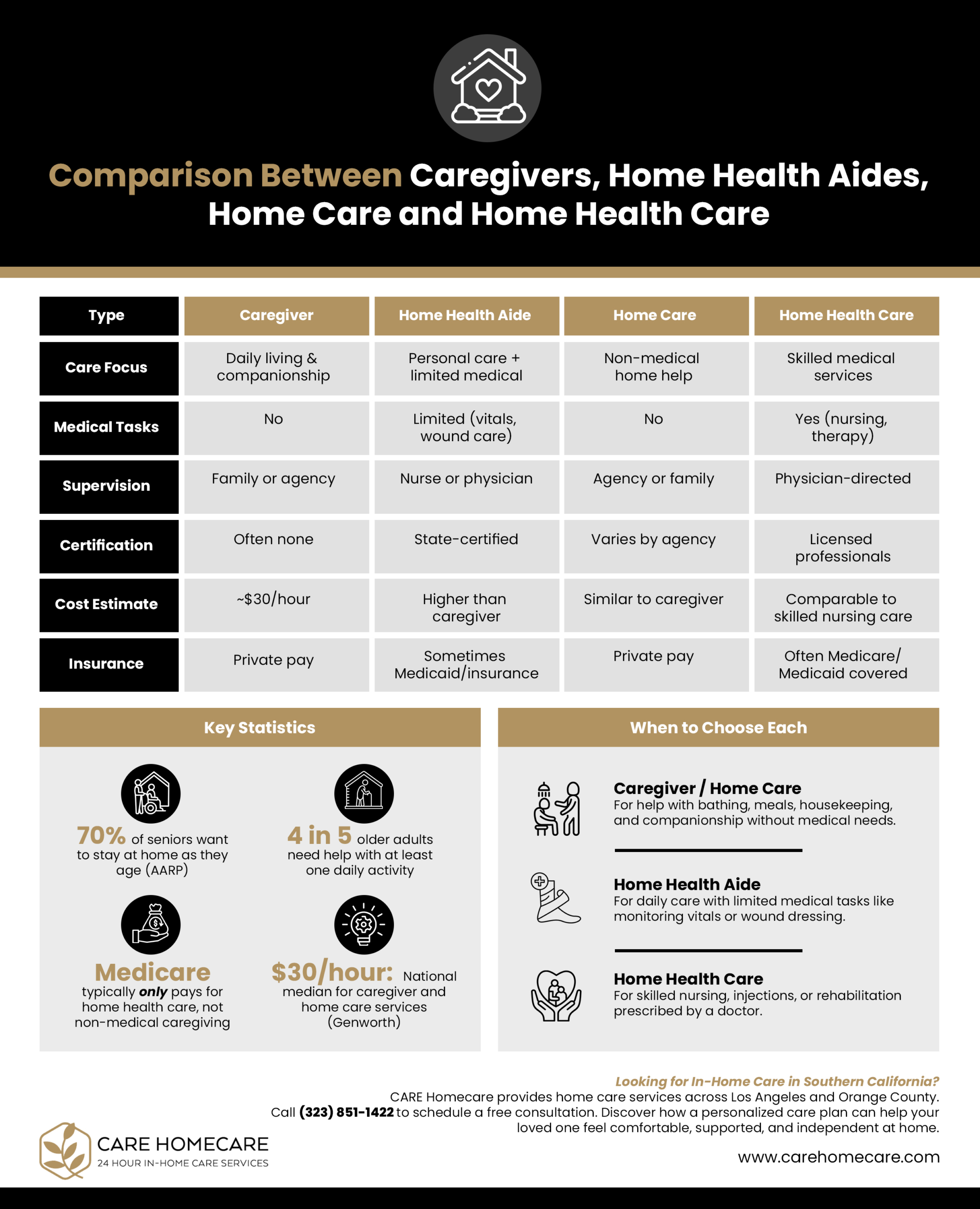
Your entire application process hinges on understanding these two distinct pathways. Applying through California’s registry when you need medical certification—or vice versa—wastes 4-6 weeks and $35 in non-refundable fees.
Why Your Role Determines Your Application Route
Home care aides in California provide non-medical support like meal prep, bathing, and light housekeeping. They register through the CDSS Home Care Services Branch using the R38XKSPE PIN for independents. No training is required, but Live Scan fingerprinting is mandatory. These roles cannot check vital signs or administer medications.
Home health aides perform medical tasks under nurse supervision: blood pressure monitoring, wound care, and medication assistance. Nationally, this requires 75+ hours of state-approved training plus competency exams. California home health aides must complete both federal certification AND the state registry if working for agencies accepting Medicare/Medicaid.
Pro Tip: If you’ll ever handle medications or medical equipment, skip California’s basic registry—pursue full home health aide certification immediately. The registry only qualifies you for non-medical work.
California Home Care Aide Registry: 3-Step Online Application
California’s system processes 80% of applications online through the Guardian portal. Follow these exact steps to avoid the 2-4 week mail processing delay.
Online Registration Without Employer Assistance
Step 1: Access the Guardian Portal
Go directly to https://guardian.dss.ca.gov/Applicant. Click “Register as a new user.” Your email becomes your username—use one you check daily since temporary passwords expire in 24 hours.
Step 2: Enter Critical PIN Codes
– Independent workers: Type R38XKSPE when prompted for an organization PIN
– Agency employees: Get your employer’s unique PIN (never share this publicly)
Pay the $35 fee via credit/debit card—checks aren’t accepted online.
Step 3: Schedule Live Scan Immediately
Print your pre-populated Live Scan form from Guardian. Visit any DOJ-approved vendor (find locations at https://oag.ca.gov/criminaljustice/livescan). Bring government-issued ID. Warning: Using non-approved vendors invalidates your application.
Common Mistake: Waiting to schedule Live Scan after payment. Fingerprinting must occur within 14 days of payment or your $35 fee expires.
Mail Application Backup Plan
Only use mail if you lack internet access:
1. Download HCS 100 (English/Spanish) and LIC 9163 forms
2. Complete both forms in black ink—missing fields cause rejection
3. Mail with $35 check (no cash) to:
California Department of Social Services
Home Care Services Branch
744 P Street, M.S. 9-14-90
Sacramento, CA 95814
Note: Mail applications take 2-4 weeks longer than online submissions.
General Home Health Aide Certification: 5 Federal Requirements
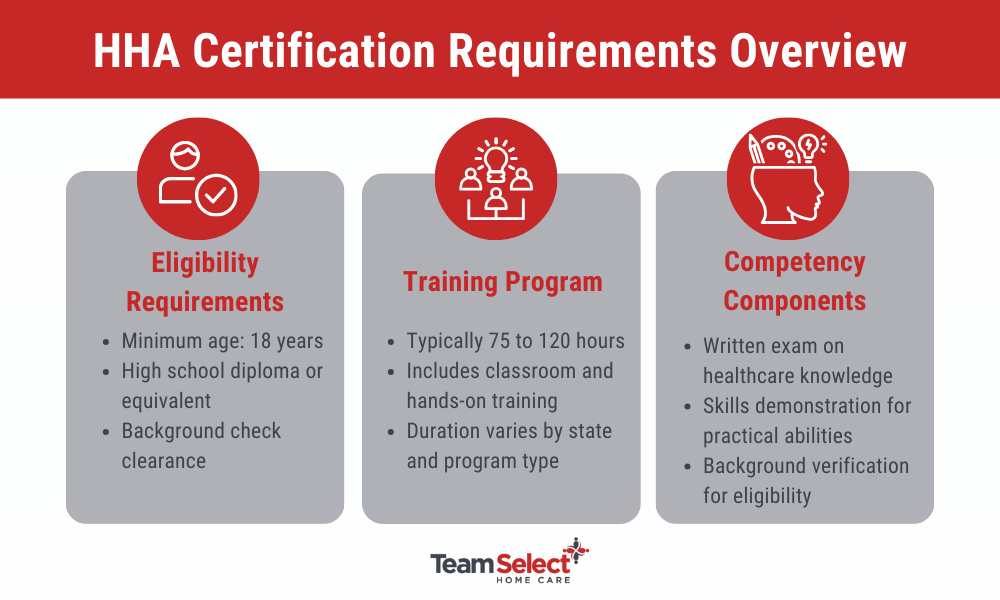
For medical roles nationwide, certification requires these non-negotiable steps beyond California’s registry.
Step 1: Verify Minimum Qualifications
You’ll need:
– High school diploma or GED (strongly preferred by 92% of employers)
– Negative TB test within the last year
– Up-to-date immunizations (flu, MMR, varicella)
– Physical exam confirming ability to lift 50+ lbs
Step 2: Complete 75+ Hour Training
Choose from:
– Community colleges: 4-12 week programs ($300-$800) with clinical rotations
– Employer training: 1-2 months paid on-the-job training (common with agencies)
– Online hybrids: State-approved courses like Red Cross HHA programs
Critical curriculum: Infection control, vital sign measurement, transfer techniques, and ethics. Avoid programs skipping hands-on practice—they won’t pass federal competency evaluations.
Step 3: Pass Competency Evaluation
After training, you’ll face:
– 50-question written exam (70% passing score)
– 5 live skills demonstrations (e.g., taking blood pressure, safe transfers)
– State-specific additions (California requires 120 hours + state exam)
Urgent: Some states like New York require testing within 4 months of training completion. Check your state’s Department of Health site immediately.
Avoid These 3 Application-Killing Mistakes
Mistake #1: Confusing Payment Systems
California registry fees ($35) differ from certification costs ($300-$1,200). Never pay “expedited processing” fees—CDSS doesn’t offer this. Scammers charge $200+ for fake priority processing.
Mistake #2: Missing Renewal Deadlines
California registrations expire every 24 months. Renew online at https://guardian.dss.ca.gov/Applicant 60 days before expiration. Lapses require restarting the entire process—no grace period.
Mistake #3: Omitting Required Disclosures
During registration, you’ll see this checkbox:
“I do not consent to release my name/phone to labor organizations”
Check this if you want privacy. Unchecked, CDSS automatically shares your contact info with unions per Health & Safety Code §1796.29.
Building Your Job-Winning Application Package

Certification alone won’t land positions. Stand out with these employer-demanded elements:
Resume Essentials for Home Health Aides
- Lead with certifications: “State-Certified Home Health Aide (CA#123456)”
- Quantify experience: “Provided 200+ hours of dementia care for 3 clients”
- Highlight soft skills: “Documented patient changes reducing ER visits by 30%”
Target High-Paying Employers First
Search these terms in job boards:
– “Medicare-certified home health aide” (pays 15-20% more)
– “Hospice home health aide” (often includes mileage reimbursement)
– “Specialized dementia care aide” (premium rates)
Salary Insight: Home health aides in hospice settings earn $18.50/hr average vs. $16.20 for general home care (BLS 2023 data).
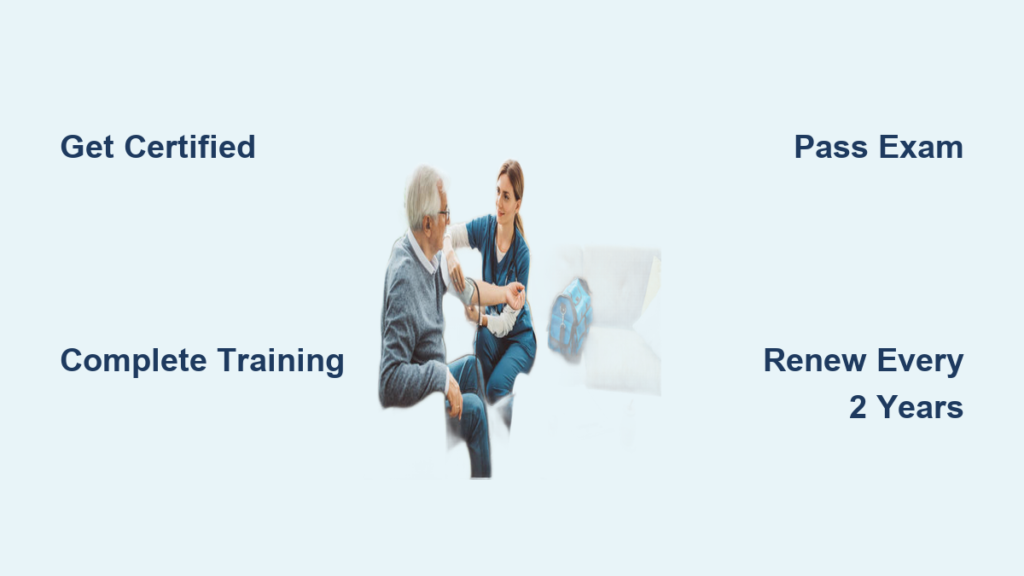
Renewal Requirements Every 2 Years: California Edition
California home care aides must renew every 24 months—certified home health aides follow state-specific rules.
Online Renewal Process
- Log into Guardian portal
- Select “Home Care Aide Registry Renewal”
- Pay $35 (no new fingerprinting unless flagged)
Pro Tip: Set phone reminders 60 days pre-expiry. Renewals submitted <30 days before expiration risk 10-day processing delays.
Mail Renewal Backup
Complete both pages of HCS 100 form. Mail with $35 check to Sacramento address. Never include Live Scan forms—they’re only needed for initial applications.
Final Application Checklist: Verify Before Submitting
For California Registry Applicants
☐ HCS 100 form fully completed in black ink
☐ $35 payment method ready (card online, check by mail)
☐ Live Scan appointment booked within 14 days
☐ R38XKSPE PIN entered (independents)
For National Certification
☐ High school diploma/GED verified
☐ 75+ hour training program confirmed state-approved
☐ TB test/physical within last year
☐ CPR/First Aid certification (required by 78% of agencies)
The path to becoming a home health aide demands precision—but it’s worth it. With base salaries averaging $35,277 plus overtime and 25% projected job growth, your application today builds a career helping others while securing your future. Start with California’s registry for non-medical work using PIN R38XKSPE, or pursue full certification for medical roles. Either way, submit clean applications, renew on time, and target Medicare-certified agencies for the best pay. Your first home health aide position is closer than you think—begin your application now using the Guardian portal or an approved training program.