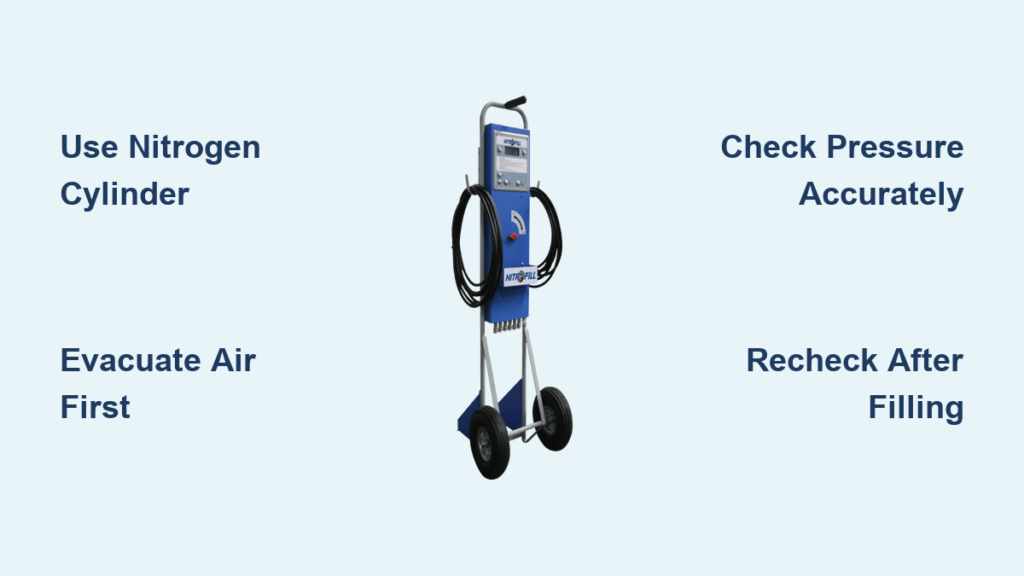
You just paid $30 at the tire shop for nitrogen fill-ups, and now your TPMS light is blinking again. This frustrating cycle repeats every few months—especially if you drive multiple vehicles or need seasonal adjustments. While dealerships promise nitrogen-filled tires deliver better pressure retention, the recurring service fees add up fast. The good news? You can fill nitrogen tires at home with the right equipment, potentially saving hundreds annually. This guide reveals exactly how to set up your garage system, execute safe fills, and determine if it’s truly worth your investment based on real-world testing data.
Forget marketing hype: scientific studies show nitrogen’s benefits are modest for daily drivers but significant in specific scenarios. Consumer Reports found nitrogen-filled tires lost only 2.2 PSI annually versus 3.5 PSI for air-filled tires—a measurable difference, but not revolutionary. For true cost savings, you need a practical home system that avoids expensive commercial services. Whether you drive a commuter sedan or track-day sports car, this actionable roadmap cuts through the noise.
Choose Your Home Nitrogen System: Cylinders vs Generators
Cylinder Systems: The Budget-Friendly Entry Point
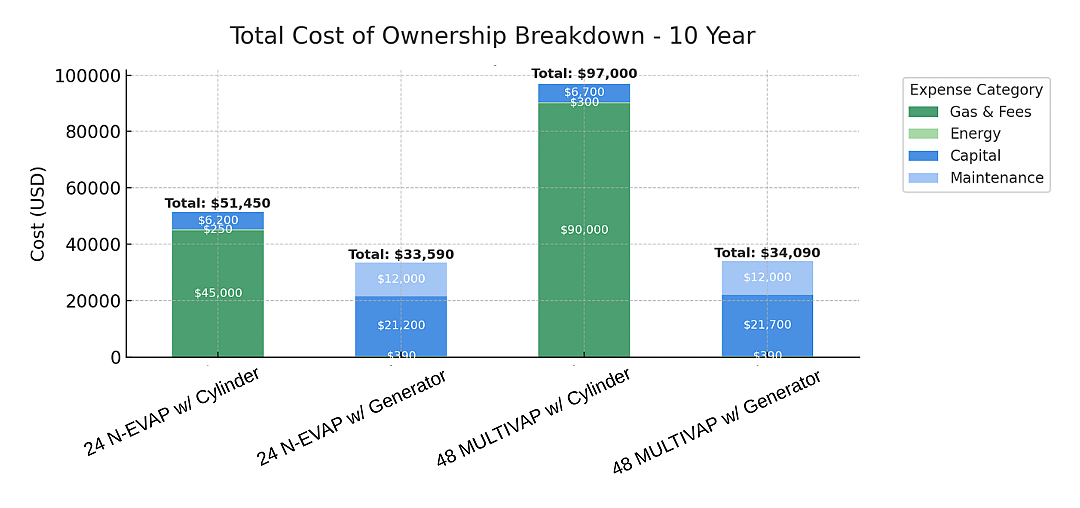
Skip expensive generators if you’re starting small. A standard 2700 PSI nitrogen cylinder (54″×9″) costs under $100 and fills hundreds of tires before needing a refill. Pair it with a pressure regulator ($50-100) and high-pressure hose ($20-50) for a complete under-$250 setup. Refills cost under $100 at welding supply shops like Airgas or Praxair—far cheaper than paying $30-45 per vehicle at tire centers.
Critical compatibility note: Ensure your regulator fits automotive valve stems. Industrial regulators often require a separate adapter ($8-15). Avoid “rental” cylinders from welding suppliers—after 3-4 years, rental fees exceed buying outright.
Nitrogen Generators: When They’re Actually Worth It
Generators extract nitrogen from air using membrane separation or pressure swing adsorption (PSA). But they’re rarely practical for home use. Automotive-grade units cost $500-2000+ and require a high-pressure air compressor ($300+). You’ll also face ongoing costs: $25 filter replacements every 6 months and annual calibration.
Only consider generators if:
– You already own one for welding or shock rebuilding
– You service 10+ vehicles monthly (e.g., small fleet)
– You need continuous nitrogen for racing prep between events
Gather Essential Nitrogen Filling Equipment for Your Garage
Must-Have Gear for Safe, Accurate Fills
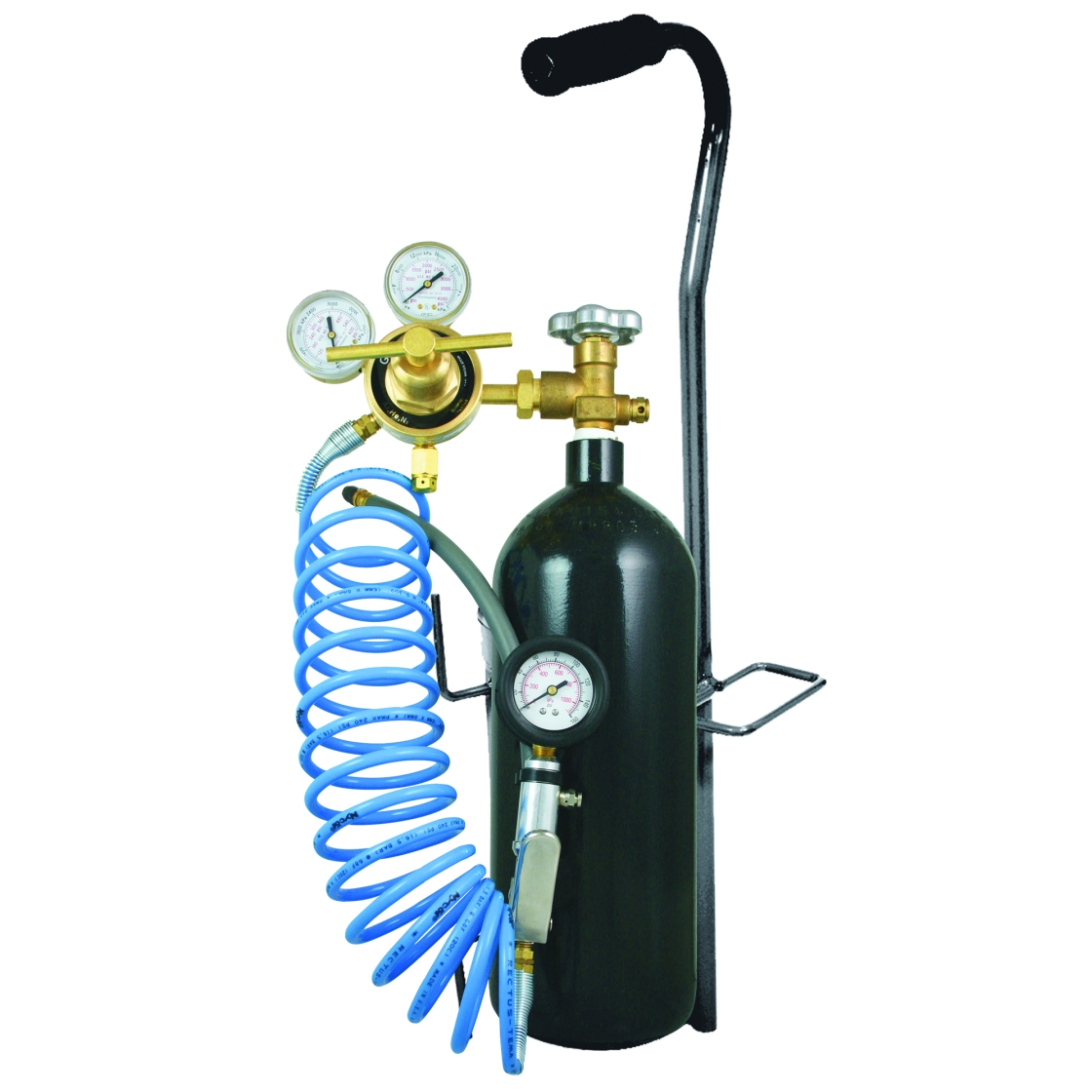
Your core kit needs these five components:
– 2700 PSI nitrogen cylinder: Industrial-grade (95% purity) is sufficient—skip overpriced 99.99999% semiconductor-grade
– Adjustable pressure regulator: Look for dual gauges (tank pressure + output) and 0-100 PSI range
– High-pressure hose: Minimum 3,000 PSI rating with leak-proof SwivelGrip™ fittings
– Digital tire pressure gauge: Calibrated to ±0.5 PSI (like the Accu-Gage AG2500)
– Tire inflator nozzle: With built-in pressure regulator for precise inflation
Pro tip: Add a Harbor Freight AC vacuum pump ($80) if you want 95%+ nitrogen purity. Without it, simple deflation only achieves 78-85% purity.
Prepare Safely: Critical Steps Before Filling Nitrogen Tires
Safety Checks That Prevent Costly Mistakes
Park on level ground with the engine off and parking brake engaged. Never skip this: Check current pressure with your digital gauge—don’t trust your TPMS. Compare readings to the door jamb sticker or owner’s manual (e.g., 33 PSI cold for a Honda Civic).
Danger zone: Industrial nitrogen cylinders store at 2700 PSI. Always:
1. Wear safety glasses when connecting/disconnecting
2. Crack the cylinder valve open slowly
3. Verify regulator settings before attaching to tires
Never exceed the max PSI on your tire sidewall (usually 44-51 PSI).
Evacuate Air Completely for Maximum Nitrogen Purity
The Vacuum Method vs Quick Deflation
For 95%+ nitrogen concentration, you must purge oxygen-rich air. Simple deflation only gets you to 85% purity—still beneficial but not optimal. Here’s the high-purity method:
- Remove valve cores using a Presta valve tool (speeds deflation 3x)
- Attach AC vacuum pump to the valve stem for 2 minutes
- Seal the stem immediately after disconnecting the pump
Time estimate: 8 minutes per tire. Without vacuum, basic deflation takes 2 minutes but leaves 15-22% oxygen. Residual moisture from tire mounting lubricant negates some benefits—so skip “100% pure” claims.
Fill Tires with Nitrogen: 6 Precise Steps for Home Users
The Leak-Proof Filling Procedure
Follow this exact sequence to avoid pressure errors:
- Set regulator to 2-3 PSI above target pressure (e.g., 36 PSI for a 33 PSI tire)
- Connect hose securely—listen for hissing (indicates leaks)
- Open cylinder valve slowly while watching your digital gauge
- Fill to target +2 PSI (accounts for pressure drop when disconnecting)
- Recheck with secondary gauge after 30 seconds (critical step!)
- Bleed excess pressure using the valve stem until exact PSI is reached
Pro tip: Fill all four tires sequentially, then recheck pressures. Temperature changes during filling cause 1-2 PSI fluctuations—rechecking ensures consistency.
Calculate Your Savings: Home Nitrogen vs Commercial Service Costs
Break-Even Analysis by Vehicle Count
Your home system pays for itself faster than you think. Compare these real numbers:
| Cost Factor | Home Setup | Commercial Service |
|---|---|---|
| Initial cost | $250 (cylinder + regulator) | $0 |
| Per-vehicle cost | $0.25 after setup | $35 |
| 3 vehicles, 4x/year | $30/year | $420/year |
Break-even point: After servicing 3 vehicles twice yearly, you recoup costs in 14 months. For a single daily driver? It takes 28 months—making nitrogen less cost-effective than a quality air compressor.
Avoid These 3 Nitrogen Tire Filling Mistakes at Home
Critical Errors That Wreck Purity and Safety
Mistake #1: Skipping vacuum evacuation for “quick top-offs”
– Consequence: Purity drops below 80% after 2-3 air top-offs
– Fix: Fully evacuate tires every 18 months to restore 90%+ purity
Mistake #2: Using uncalibrated gauges
– Consequence: 5+ PSI errors that affect handling and tire wear
– Fix: Validate gauges monthly against a master reference
Mistake #3: Ignoring temperature effects
– Consequence: Overinflation when tires heat during driving
– Fix: Always check/set pressure when tires are “cold” (parked 3+ hours)
Consider Dry Air Systems: Cheaper Alternatives to Nitrogen
The $150 Solution for 90% of Benefits
For most drivers, a moisture-controlled air system outperforms nitrogen economically:
– Setup: $120 for a California Air Tools 8010 compressor + dryer ($95) + digital inflator ($55)
– Performance: Removes 90% of moisture—mimicking nitrogen’s key advantage
– Maintenance: Replace dryer filters annually ($15)
Real-world proof: FIA and ACO racing series use dried compressed air, not nitrogen. Consumer Reports confirmed moisture control matters more than gas type for pressure stability.
Decide: Should You Fill Nitrogen Tires at Home?
The Final Recommendation by Use Case
Don’t bother if:
– You drive one daily commuter vehicle
– You skip monthly pressure checks (nitrogen won’t fix neglect)
– Your budget is under $200
Invest immediately if:
– You manage 5+ vehicles (break-even in 8 months)
– You store classic cars 6+ years (reduces wheel corrosion)
– You race competitively (circle track/kart where 0.5 PSI affects lap times)
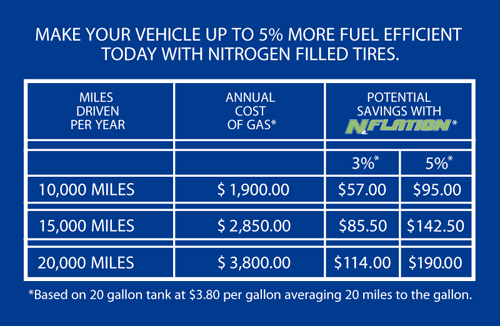
The hard truth: For 85% of drivers, a $150 air compressor with auto shut-off delivers nearly identical results to nitrogen at 1/10th the cost. Nitrogen’s real value isn’t the gas—it’s the forced discipline of regular pressure checks. If you commit to monthly monitoring with quality air, you’ll see better tire life and fuel economy than inconsistent nitrogen top-offs.
Final tip: Start with a digital tire inflator (like the AstroAI model) that auto-stops at your target PSI. At $55, it solves the core problem—human error in inflation—for less than one commercial nitrogen service. Save nitrogen for scenarios where documented ROI exists: large fleets, long-term storage, or competitive racing. For everyone else, consistent maintenance beats gas type every time.