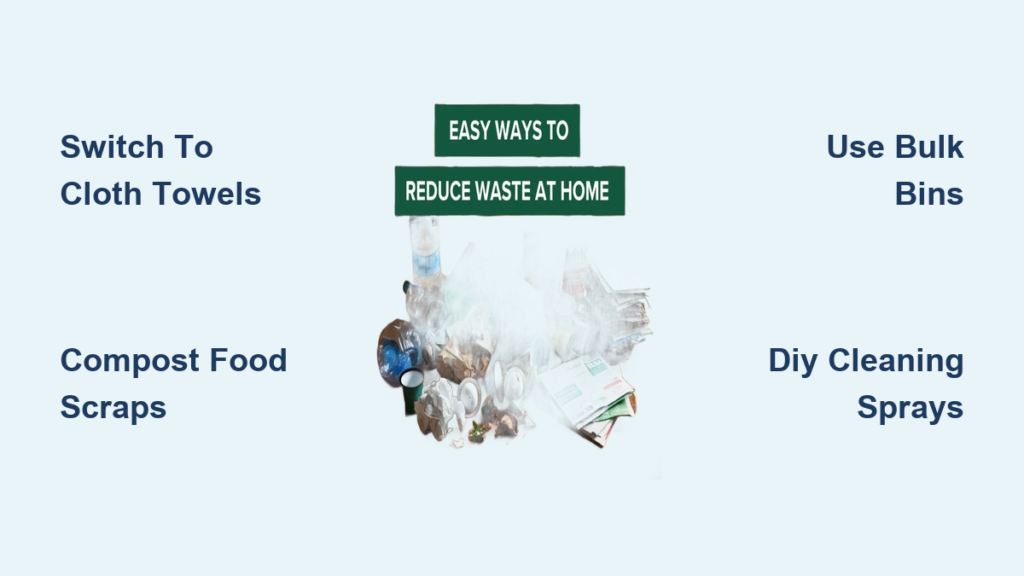
You’re staring at your overflowing trash can after just two days, wondering how so much waste accumulates. The reality is jarring: American households generate 4.9 pounds of trash daily—nearly 1,800 pounds yearly per family. But here’s the empowering truth: how to reduce waste at home doesn’t require radical lifestyle changes. By targeting specific problem areas with actionable solutions, you’ll slash your waste footprint while saving hundreds annually. This guide delivers proven, room-specific tactics that eliminate the most common waste streams without overwhelming your routine. You’ll discover how small swaps in your kitchen, bathroom, and shopping habits create massive cumulative impact—starting today.
Kitchen Waste Elimination Plan
Replace Paper Products Immediately
Your kitchen likely generates 40% of household waste through paper towels, napkins, and plastic wrap. Switch to reusable cotton cloths stored in a dedicated basket—they withstand hundreds of washes and eliminate $150+ in annual paper product costs. When old towels wear out, cut them into cleaning rags for zero-cost replacements. Pair this with beeswax wraps or silicone lids to ditch plastic wrap entirely. These simple swaps prevent chlorine-bleached paper waste while reducing your exposure to dioxins from conventional paper production.
Master Food Storage Science
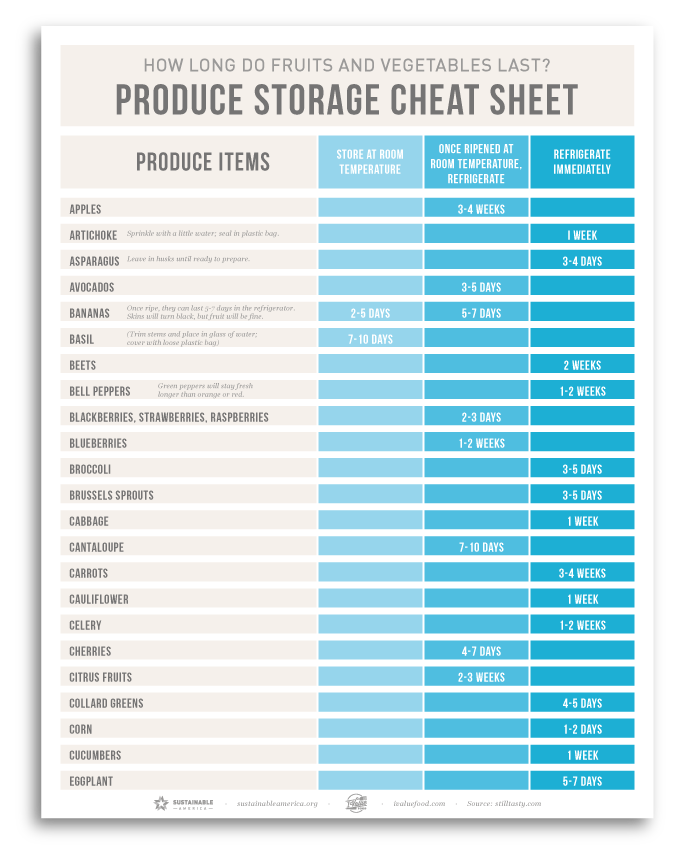
Stop tossing wilted produce by implementing science-backed storage: Store leafy greens in high-humidity drawers (crisper settings at 90-95% humidity), while fruits like peppers need low-humidity settings (80-85%). Crucially, separate ethylene-producing items (apples, bananas) from ethylene-sensitive vegetables—they accelerate spoilage. Freeze surplus bread and berries in airtight glass containers; properly stored, they last 3-12 months. This single practice cuts the average family’s $3,000 annual food waste by up to 50% according to EPA data.
Start Composting Today
Food scraps create methane in landfills—a greenhouse gas 84x more potent than CO₂. Choose your composting method based on space:
– Countertop pail (5-minute setup): Ideal for apartments; freeze scraps to prevent odors before municipal drop-off
– Backyard bin (2-hour setup): Layer greens (food scraps) and browns (dry leaves) in 3:1 ratio; turn weekly
– Worm bin (1-hour setup): Use red wigglers indoors; avoid citrus overload
Begin with a simple newspaper-lined pail—most cities now offer curbside pickup or drop-off locations. This tackles the 30% of household waste that’s compostable.
Bathroom Zero Waste Swaps
Eliminate Virgin Paper Products
Ditch chlorine-bleached toilet paper processed from virgin forest fibers. Switch to 100% post-consumer recycled, processed-chlorine-free (PCF) options—just one household making this change saves 423,900 trees nationally. Replace disposable tissues with washable cotton handkerchiefs stored in a small basket. Keep a designated laundry bag for used cloths to streamline washing. These swaps eliminate deforestation-linked waste while reducing dioxin exposure from conventional paper processing.
DIY Cleaning Solutions
:max_bytes(150000):strip_icc()/homemade-and-natural-cleaning-products-1900456_final_3-cd0d455d6bee4370ae9aaefd902493ca.png)
Conventional cleaners make indoor air 2-5x more polluted than outdoor air due to VOCs. Create effective alternatives in under 5 minutes:
– All-purpose spray: 1:1 vinegar/water + 10 drops lemon oil
– Scrub paste: Baking soda + castile soap
– Glass cleaner: 2 cups water, ½ cup vinegar, ¼ cup rubbing alcohol
Store in labeled glass bottles to avoid accidental ingestion. Nationwide adoption would cut VOC emissions by 9.3 million pounds annually—while saving $200+ per household.
Laundry Room Efficiency Fixes
Stop Using Single-Use Products
Dryer sheets release carcinogenic fragrances and create unnecessary waste. Replace them with:
– Wool dryer balls (add 3-5 drops lavender oil for scent)
– Vinegar-soaked washcloth as natural fabric softener
– Microfiber filter bag to capture plastic fibers from synthetics
These eliminate plastic waste while reducing microfiber pollution in waterways. Pair this with cold-water washing and full loads to maximize efficiency.
Air-Dry for Maximum Savings
Electric dryers rank second in household energy use. Install an indoor rack or outdoor line to save $85 annually—Colorado households report even higher savings. Sun-drying naturally disinfects clothes while extending garment life. This simple shift prevents 270 kg of CO₂ emissions yearly per household, equivalent to planting three trees.
Smart Shopping Strategies
Master the Bulk Section
Bring tared mason jars or cloth sacks to bulk bins for 15-50% savings versus packaged goods. Focus on high-impact items: rice, beans, spices (in tiny jars), and cleaning refills. Always check local store policies—many now offer shampoo/conditioner refills too. This eliminates #3 PVC, #6 polystyrene, and #7 polycarbonate plastics that contaminate recycling streams.
Create Your Reusables Kit
Keep this essentials kit by your door:
– Collapsible mesh produce bags
– Wide-mouth mason jars for wet bulk items
– Compact cloth shopping bags
– Beeswax wraps for bakery items
Having these ready prevents impulse plastic purchases during unplanned shopping trips. One reusable bag replaces 700 single-use plastic bags annually.
Reuse & Repurpose Projects
Transform Common Waste Items
Before trashing anything, consider these upcycles:
– Glass jars: Store bulk goods or soups (avoid heating plastic containers)
– Old t-shirts: Cut into produce bags or cleaning rags
– Newspapers: Use as drawer liners or compost browns
– Cardboard boxes: Build drawer organizers or garden weed barriers
These projects eliminate packaging waste while creating useful household items—turning potential trash into valuable resources.
Proper Recycling Techniques
Know Your Local Rules
Recycling contamination rates exceed 25% due to common mistakes. Always search “[your city] recycling guidelines” for exact rules. Key tips:
– Plastic bags: Take to grocery store drop-offs—never in curbside bins
– Pizza boxes: Recycle clean top; compost greasy bottom
– Plastic caps: Remove from bottles (different plastic types)
– Shredded paper: Bag separately or compost
Rinsing containers and flattening cardboard prevents contamination that sends entire truckloads to landfills.
Track Your Progress
Conduct a Waste Audit
Measure your impact with this 5-step process:
1. Collect all trash/recycling for one week
2. Sort into food waste, plastic, paper, other
3. Identify your top 5 repeated items
4. Target one item to eliminate monthly
5. Weigh monthly trash to track progress
The EPA’s Food: Too Good to Waste toolkit provides free measurement sheets that help households reduce food waste by 50%. Pair this with our savings tracker:
| Action | Annual Savings |
|---|---|
| Meal planning + storage | $1,500-$3,000 |
| Air-drying laundry | $85 |
| Reusable water bottles | $200-$600 |
30-Day Implementation Roadmap
Week 1: Kitchen Foundation
Place a countertop compost pail and freeze scraps to prevent odors. Switch to cloth towels and beeswax wraps. Plan three meals using existing pantry items to slash food waste immediately.
Week 2: Bathroom Swap
Replace toilet paper with recycled-content rolls. Create DIY cleaners using vinegar and baking soda. Buy bar soap and shampoo bars—each lasts 2-3 times longer than liquid versions.
Week 3: Shopping Shift
Assemble your reusables kit and visit bulk bins with containers. Try farmers markets using mesh produce bags. Download the TooGoodToGo app for discounted surplus food.
Week 4: Deep Dive
Conduct a full waste audit. Join a local Buy Nothing group. Host a clothing swap with friends. Plan a zero-waste meal using upcycled ingredients.
Success comes from consistent small steps, not perfection. Start with one room or waste stream, then expand. Remember: every pound of waste you prevent saves 71 pounds of upstream waste from resource extraction through disposal. Your home becomes part of the solution—not the problem—in building a sustainable future.